What is a Laser Marking Machine? A Comprehensive Guide to Laser Marking Technology
A laser marking machine is a high-tech device that uses laser beams to create permanent marks on various material surfaces. With the advancement of industrial manufacturing, laser marking technology has become the preferred choice across industries for marking product information, brand logos, and anti-counterfeiting marks due to its high precision, efficiency, and wide applicability. This article will provide a comprehensive introduction to laser marking machines, their advantages, and applications.
Working Principle of a Laser Marking Machine
Laser marking machines utilize focused high-energy laser beams to etch, evaporate, or discolor the surface of materials, forming patterns, texts, barcodes, QR codes, and other marks. This non-contact processing method ensures the accuracy and durability of the marks without causing mechanical damage to the material surface.
Main Types of Laser Marking Machines
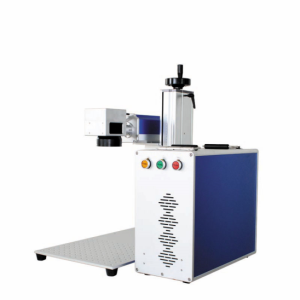
Fiber Laser Marking Machine:Fiber laser marking machines use fiber lasers, known for their high beam quality and reliability. They are suitable for precise marking of metals and some non-metal materials such as stainless steel, aluminum, copper, and plastics.
Fiber Laser Marking On Metal
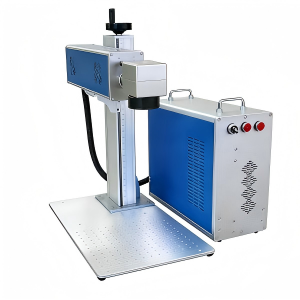
CO2 Laser Marking Machine:CO2 laser marking machines use carbon dioxide lasers with longer wavelengths, primarily used for marking organic materials like paper, wood, leather, fabrics, and plastics.
CO2 Laser Marking Machine Engraving on Wood
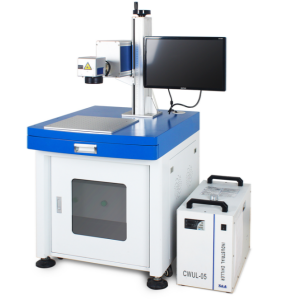
UV Laser Marking Machine:UV laser marking machines use ultraviolet lasers, offering a cold processing effect, making them suitable for materials with high thermal sensitivity requirements, such as glass, polymers, and electronic components.
UV Laser Marking Machine Printing on Plastic
Advantages of Laser Marking Machines
High Precision and Resolution:Laser marking can perform high-precision markings on very small areas, suitable for intricate and complex patterns and texts, ensuring clear and aesthetically pleasing marks.
Non-Contact Processing:Laser marking uses beams to mark without contacting the material surface, thus avoiding mechanical stress or damage and preserving the material’s integrity.
Wide Applicability:Laser marking machines can be used on various materials, including metals, plastics, ceramics, glass, wood, leather, and more, covering almost all common industrial materials.
Strong Durability:Laser markings are permanent, resistant to wear, fading, and tampering, making them suitable for long-term use and tracking, especially for anti-counterfeiting and brand protection.
High Efficiency and Automation:Laser marking is fast, suitable for mass production, and can be integrated with automated production lines, improving production efficiency and saving labor costs.
Applications
Laser marking solutions have proven to be a game-changer in various industries, offering a blend of precision, efficiency, and sustainability. As industries evolve, the demand for such reliable marking solutions will only grow, making laser marking an indispensable tool in the modern manufacturing landscape.
- High-tech and Heavy Industry Applications
- Medical, Jewelry, and Daily Consumer Goods
- Tools, Plastics, and Security Applications
Electronics: Such as integrated circuits, mobile communications, and household appliance labels.
Aerospace: Marking aircraft components to ensure their origin and quality.
Automotive Industry: Marking on parts, such as brake discs, bearings, gears, and car glass.
Metal Processing: Marking on various metals, such as stainless steel, aluminum, copper, and alloys.
Solar Industry: Marking on solar panels.
LED Industry: Marking on LED chips.
Medical Devices: Used for marking serial numbers, production dates, barcodes, etc., to ensure traceability and compliance.
Jewelry: Used for personalized designs, brand identification, and other detailed information.
Daily Consumer Goods: Such as packaging, plastic containers, and bottle cap production dates and batch numbers.
Tools and Cutting Tools: Marking specifications, brands, and other important information.
Plastic and Rubber Industry: Permanent marking on various plastic and rubber products.
Security IDs and Bank Cards: Used for marking personal information, barcodes, QR codes, etc.