

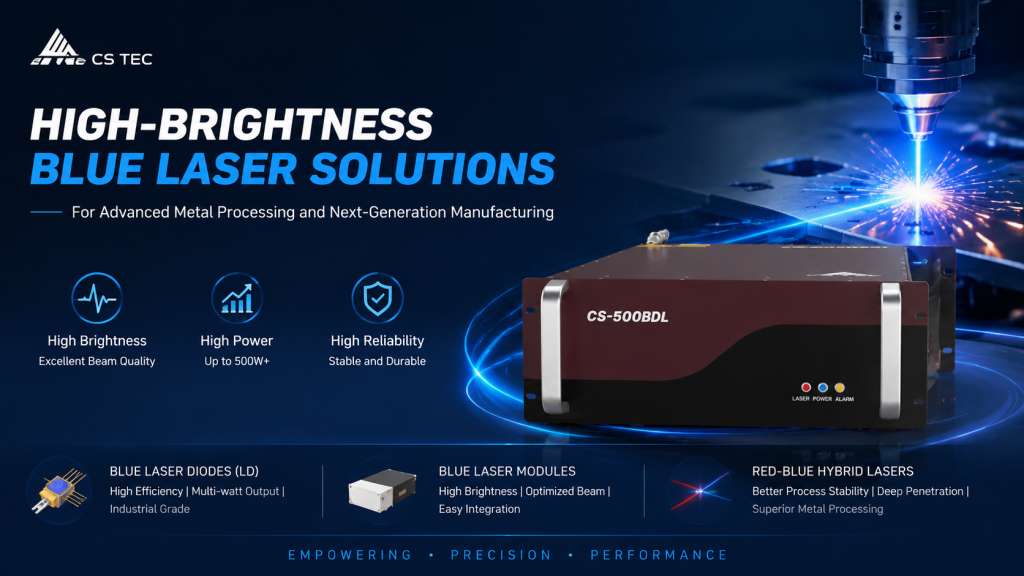
Blue semiconductor lasers based on GaN technology have rapidly become a key enabling technology in high-value industrial applications such as copper welding, aluminum processing, 3D copper printing, and advanced micro-manufacturing. Compared with conventional near-infrared (1 μm) fiber lasers, blue wavelength (around 445–460 nm) lasers exhibit significantly higher absorption in copper and other highly reflective non-ferrous metals, enabling more efficient energy coupling and more stable processing behavior.
This combination of material physics and device engineering has driven strong global interest in high-brightness blue laser development, where the focus has shifted from simple power scaling to brightness optimization, i.e., achieving higher power while maintaining excellent beam quality.
1. From Power Scaling to Brightness Engineering
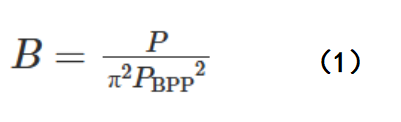
Brightness is a comprehensive metric that combines output power, beam quality, and wavelength. In practical terms, it determines how effectively laser energy can be delivered over distance and focused into a small spot for high-precision processing.
For semiconductor lasers, simply increasing chip power by widening the emitter stripe often leads to degraded beam quality. As a result, brightness improvement becomes a trade-off problem between:
- Increasing output power
- Maintaining low beam parameter product (BPP)
- Preserving beam symmetry and stability
This fundamental limitation is the reason why modern blue laser development is no longer focused only on single-chip power scaling, but increasingly on system-level beam combining technologies.

2. Key Technological Routes Toward High Brightness
2.1 High-Performance GaN Blue Laser Chips
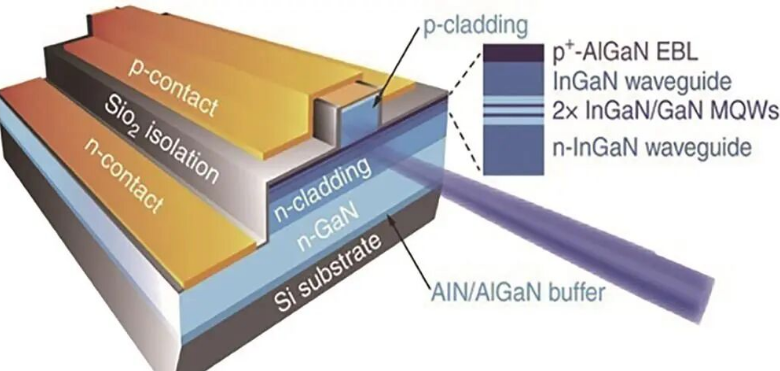
Since the first GaN-based blue laser diode demonstrated by Nichia in 1999, significant progress has been made in chip structure optimization, thermal management, and packaging innovation.
Recent developments show:
- Single emitters reaching ~10 W class output
- Advanced packaging (e.g., junction-down TO packages) improving thermal dissipation
- Wall-plug efficiency exceeding 50% in optimized designs
- Trade-off between stripe width and beam quality remains the key challenge
These advances demonstrate that chip-level innovation alone is approaching a practical limit in brightness scaling.

2.2 Beam Combining: The Dominant Path to High Brightness
To overcome the intrinsic limitations of single emitters, beam combining technologies have become the most effective route to higher brightness systems.
Among them, spectral beam combining (SBC) using diffraction gratings has emerged as one of the most promising approaches for blue lasers.
Recent research highlights include:
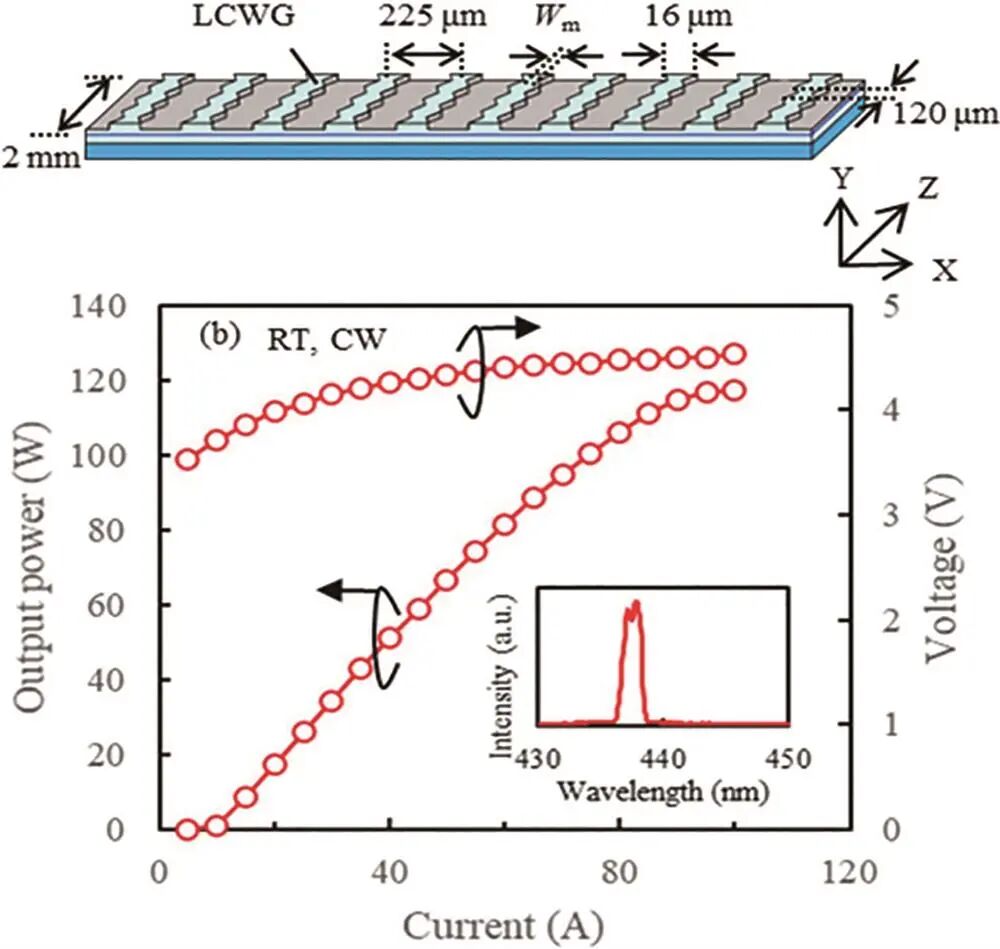
- Multi-emitter arrays (tens of emitters) combined into a single output beam
- Output power scaling to the 100 W class
- Significant improvement in beam quality after spectral combining
- Achieving brightness levels far beyond single-chip limitations
In particular, systems based on grating spectral combining demonstrate excellent scalability, enabling multiple wavelength-stabilized emitters to be merged into a single high-brightness beam with controlled divergence.
![Structure and packaging of blue LD chip[25]. (a) Schematic diagram of the blue LD structure; (b) diagram of mounting the junction-down into a TO-Φ9 mm package](https://whcstec.com/wp-content/uploads/2026/06/390b723d0d84ff885443eed000bc2198.jpg)
3. Industry Trend: High-Brightness Blue Laser Systems
Leading global research institutions and companies are actively developing next-generation blue laser architectures:
- Narrow-stripe high-efficiency GaN laser chips
- High-density diode arrays
- Spectral beam combining modules
- Hybrid systems integrating thermal and optical optimization
The direction is clear: system-level brightness engineering is replacing individual chip power competition.
4. CS Tec Industrial Blue Laser Solutions
Building on these technological trends, CS Tec focuses on delivering practical high-performance laser systems for industrial users worldwide.

Our product portfolio includes:
● High-Power Blue Laser Diodes (LD)
Designed for industrial integration and OEM applications, offering:
- Stable multi-watt output per emitter
- Optimized thermal design for continuous operation
- Suitable for copper welding, brazing, and fine processing
● Blue Laser Modules (High Brightness Systems)
- Industry-Leading Brightness
- Advanced thermal management system
- Unrivaled Stability
- Compatibility for External Optics
● “CP” Hybrid Laser Systems
- Industry-Leading Brightness
- 10x higher absorption in cooper/relective metals
- Reduced significantly Heat Input
- Industry-Leading Brightness
- Minimized Spatter
- Hybrid for multi-material processing
5. Application Outlook
High-brightness blue laser technology is rapidly expanding into:
- Copper welding for EV batteries and power electronics
- Micro-joining of reflective metals
- Additive manufacturing of copper components
- Precision electronics assembly
- High-efficiency industrial cleaning and surface treatment
As brightness continues to improve through both chip innovation and beam combining, blue laser systems are expected to become a core enabling tool in next-generation manufacturing.
6. Conclusion
The evolution of blue semiconductor lasers clearly shows a transition from single-chip power scaling to system-level brightness optimization. While GaN laser diodes continue to improve in efficiency and output power, spectral beam combining and advanced system integration are now the decisive technologies for achieving industrial-grade high brightness.
CS Tec continues to focus on delivering practical, high-performance blue laser solutions—including high-power LDs, blue laser systems, and red-blue hybrid technologies—to support global customers in advanced metal processing applications.