
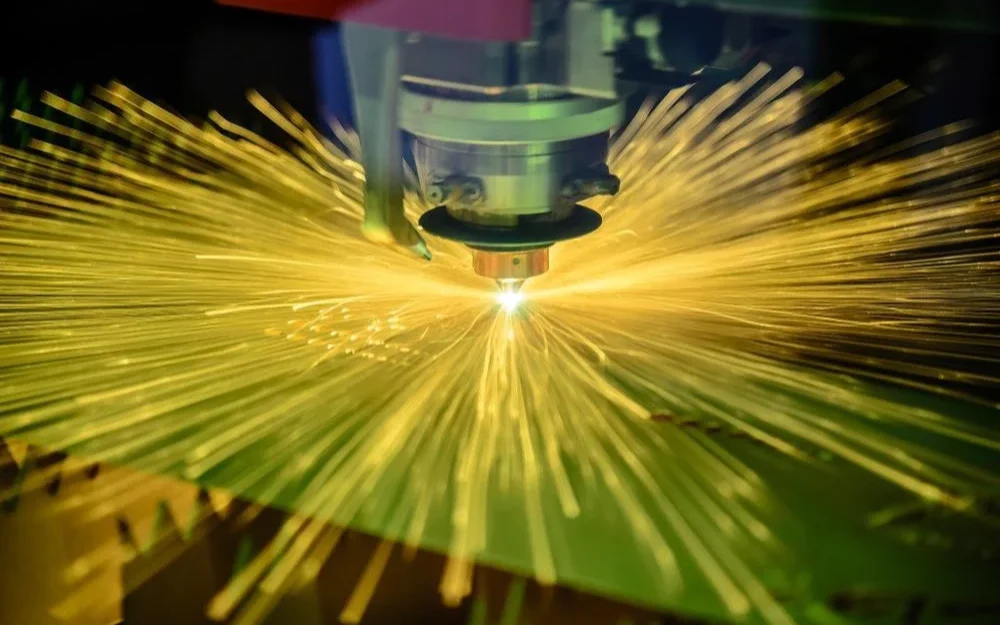
When a laser cutting machine changes hands on the used equipment market, the laser source is one of the first things a serious buyer asks about — its brand, its operating hours, and its documentation history. This guide breaks down exactly how source quality translates into resale price, what buyers are actually evaluating when they ask about the source, and what sellers can do to capture the full value their source has retained.
Does the laser source actually affect what a used cutting machine sells for?
Yes — the laser source is a standard line item in buyer due diligence for used laser cutting equipment, and its condition and documentation directly affect both the asking price a buyer will accept and how much negotiating room exists in the transaction. Beyond the fiber laser specification itself, buyers evaluate the complete machine carefully, requesting operating hours, maintenance logs, and service history — machines with clear documentation are lower risk and typically command better resale value.
This is not a minor checkbox in the sale process. The laser source represents the component most directly tied to the machine’s remaining productive capability — a worn-out source means reduced cutting speed, reduced thickness capacity, or an expensive replacement on the horizon for the buyer. Every other system in the machine (motion, control, structure) typically has a longer effective service life than the source’s pump diodes, which means the source’s condition often becomes the limiting factor in how a buyer values the whole machine.
How much of a used machine’s value comes from the machine body vs. the laser source?
These are two separate value streams that buyers evaluate independently, even though they appear as a single purchase price. The machine body — frame, motion system, control, cutting head — contributes precision retention, mechanical reliability, and brand trust built over years of field performance. The laser source contributes the remaining cutting capability itself, and it is the component most likely to require a major capital expenditure (replacement) within a foreseeable time horizon.
This separation matters because the two value streams depreciate on different curves. A well-built machine frame from a reputable manufacturer can retain mechanical accuracy for fifteen to twenty years with routine maintenance. A laser source, by contrast, follows the degradation curve described by its MTBF rating — a curve that is measured in operating hours, not calendar years, and that depends heavily on how intensively the machine has been used. Two identical machine models, one used for light single-shift work and one run continuously across three shifts for the same number of years, can have dramatically different source value remaining despite having the same “age” on paper.
Sophisticated buyers — particularly used equipment dealers and brokers who handle laser cutting machines regularly — price these two components somewhat independently, even when negotiating a single transaction price. Understanding this separation is the foundation for everything that follows in this guide.
How does laser source brand specifically affect buyer perception in the used market?
Why recognized brands command buyer confidence even in the secondary market
Brand reputation does not disappear when equipment moves to the secondary market — if anything, it becomes more important, because the buyer has less direct ability to verify condition than someone purchasing new with a manufacturer warranty. A parallel pattern is well-documented in the broader CNC machine tool market: premium-tier machine tool brands command 60–75% of original list price even after several years, while mid-tier brands hold 50–65% for well-maintained machines in the 3–7 year range — a meaningful spread driven substantially by buyer confidence in brand reliability and parts availability, independent of the machine’s actual measured condition.
The same dynamic applies to laser sources within a used cutting machine listing. A buyer evaluating a used machine with a recognized source brand has access to independently published specifications, known reliability data, and an established parts and service network if something needs attention after purchase. A buyer evaluating the same machine with an unfamiliar or unbranded source has none of these external reference points — they are relying entirely on the seller’s representations, which increases perceived risk and, correspondingly, decreases what a rational buyer will offer.
Does an unbranded or OEM source create resale friction?
It can, and the mechanism is information asymmetry rather than any inherent quality difference. A buyer cannot independently verify an unbranded source’s actual remaining service life, its true power output relative to when new, or its component-level history, the way they can cross-reference a recognized brand’s published specifications and reliability data against the unit in front of them.
This friction shows up in practice as longer negotiation cycles, more aggressive price discounting requests, and in some cases buyers walking away from otherwise suitable machines because they cannot get comfortable with the unknown source. This is a real cost of choosing an unbranded source strategy that surfaces specifically at the resale stage — a cost that does not appear anywhere in the original purchase decision but materializes years later when the machine owner is ready to sell or upgrade.
How does laser source operating hours translate into resale value?
Why “hours used” alone isn’t enough information for a buyer
A source with 40,000 operating hours sounds like a specific, useful data point — but on its own, it tells a buyer very little. What matters is how that figure compares to the source’s MTBF rating, because the MTBF figure defines the statistical point at which the source typically reaches approximately 20% output power degradation — the threshold most commonly used to describe meaningful end-of-life performance loss, as covered in depth in our guide to fiber laser source lifespan.
A 3 kW source rated at 100,000-hour MTBF with 40,000 hours on it has used roughly 40% of its statistical service life. A 6 kW source with a more conservative 60,000-hour MTBF rating (common for higher-power multi-mode configurations operating at higher thermal loads) with the same 40,000 hours has used roughly two-thirds of its rated life — a meaningfully different position even though the raw hours figure is identical. Buyers who understand this distinction will ask for the source’s rated MTBF specifically, not just its hours — and sellers who can provide both figures are positioned to negotiate from a stronger, more informed footing.
A practical framework for estimating remaining source value at resale
A useful starting approximation is: remaining value fraction ≈ 1 − (operating hours ÷ rated MTBF). This is a simplified model — actual remaining capability depends on measured power output, operating conditions, and maintenance history, not hours alone — but it gives both buyer and seller a defensible starting point for discussion rather than relying on hours figures with no context.
| Source configuration | Rated MTBF | Hours on source | Hours as % of MTBF | Approximate remaining value fraction |
|---|---|---|---|---|
| 3 kW recognized-brand single-mode | 100,000 hrs | 20,000 hrs | 20% | ~80% |
| 3 kW recognized-brand single-mode | 100,000 hrs | 60,000 hrs | 60% | ~40% |
| 6 kW recognized-brand multi-mode | 80,000 hrs | 40,000 hrs | 50% | ~50% |
| 6 kW value-brand multi-mode | 60,000 hrs | 40,000 hrs | 67% | ~33% |
| Unbranded / OEM source, unknown MTBF | Unknown | Claimed 40,000 hrs | Cannot verify | Buyer applies risk discount regardless of claimed hours |
This table illustrates why the same “40,000 hours” figure produces very different buyer assessments depending on the source’s rated MTBF and brand verifiability. It also illustrates concretely why an unverifiable MTBF — the situation with most unbranded sources — does not simply default to a middle-ground estimate; it typically triggers a risk discount applied independently of whatever hours figure the seller provides.
What documentation actually moves the needle on resale price?
Documentation quality affects used equipment value more than most sellers realize, and the effect is large enough that it has been studied specifically in the broader CNC machine tool market. Equipment condition and maintenance history create depreciation variance far exceeding differences between machine brands or models — a meticulously maintained machine with complete service records commands premium pricing relative to an equivalent machine with intermittent problems and no records, regardless of brand reputation.
For the laser source specifically, the documentation that matters most includes: the source’s brand, model number, and rated specifications (power, MTBF, beam quality); cumulative operating hours, ideally tracked from a machine log rather than estimated; any maintenance, recalibration, or repair events involving the source, with dates; and the most recent measured output power, if available, compared against the rated specification. Buyers requesting operating hours, maintenance logs, and service history are signaling that documentation directly affects what they are willing to pay and how quickly they are willing to close.
A seller who can produce this documentation is not just providing information — they are reducing the buyer’s perceived risk, which is the single biggest lever in any negotiation over a depreciating capital asset. The absence of this documentation does not necessarily mean the source is in poor condition, but the buyer has no way to know that, and will price the uncertainty into their offer.
Does a machine with a recently replaced or upgraded laser source sell for more?
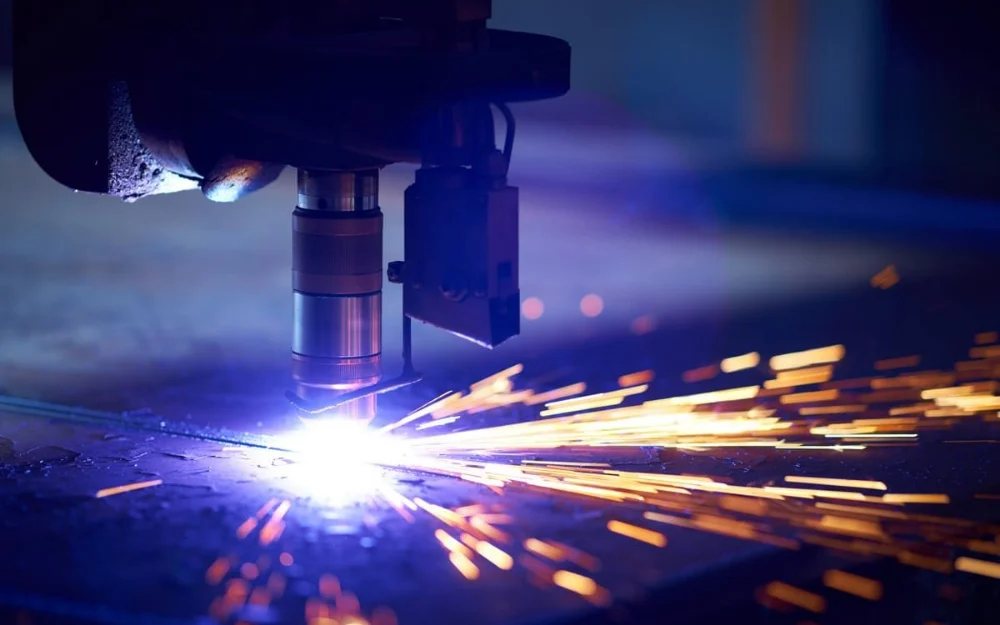
In most cases, yes — and the laser source presents a distinctive opportunity among machine components because it is comparatively modular and replaceable relative to structural or motion-system components, which makes a pre-sale source investment a more targeted lever than most other pre-sale upgrades.
If a machine’s laser source is approaching the latter portion of its rated MTBF — showing measurable power degradation or simply carrying a high hours count relative to its rating — replacing it before sale directly resolves the single biggest question mark in a buyer’s evaluation. Unlike a full machine rebuild, which is expensive and addresses many components a buyer may not have been worried about, a source replacement targets precisely the concern most likely to depress the offer or extend negotiations.
The economics depend on the gap between the source replacement cost and the price uplift it generates. For a machine where the existing source is genuinely near the end of its useful life and the price discount buyers are applying reflects that risk fully, replacement before sale is frequently the higher-return move compared to selling as-is and absorbing the discount. For a machine where the source still has substantial documented remaining life, the better lever is usually documentation rather than replacement — proving the remaining value rather than manufacturing additional value that wasn’t needed.
How condition and presentation of the source affect buyer confidence
The laser source itself is a sealed component that does not need to “look new” the way a machine’s exterior panels or work envelope do — but the visible systems connected to it do influence buyer confidence as a proxy for overall maintenance discipline. A clean machine free of coolant residue and visible neglect signals careful ownership, while a machine showing signs of neglect affects buyer perception of value even when the underlying mechanical condition may be sound.
Applied specifically to the source and its supporting systems: chiller cleanliness and coolant condition, the state of delivery fiber connectors and cabling in the control cabinet, and general housekeeping around the source enclosure all function as visible signals a buyer uses to infer how rigorously the entire machine — including the parts they cannot directly inspect, like the source’s internal pump diode condition — has been maintained. A buyer who sees a poorly maintained chiller and disorganized cabling around the source will reasonably question whether the source itself has received the thermal management and care that the lifespan-extending practices described in fiber laser source maintenance literature recommend, even if the source’s actual measured output is fine.
Presenting a clean, well-documented source environment ahead of a sale costs little and directly supports the price a buyer is willing to commit to without further inspection contingencies.
A practical checklist: what to document before selling a machine with a fiber laser source
| Document or data point | Why a buyer needs it | Impact if missing |
|---|---|---|
| Source brand, model, and rated specifications | Allows independent verification against published reliability data | Buyer cannot benchmark against known performance; applies risk discount |
| Rated MTBF figure | Provides context for the operating hours figure | Hours figure alone is uninformative; buyer assumes worst case |
| Cumulative operating hours (from machine log, not estimate) | Combined with MTBF, gives a defensible remaining-life estimate | Buyer must rely on unverified seller claims |
| Maintenance and service history for the source specifically | Demonstrates thermal management and care consistent with lifespan best practices | Buyer assumes no preventive maintenance occurred |
| Most recent measured output power vs. rated spec | Direct evidence of actual degradation, not just statistical estimate | Buyer must rely on hours-based estimate alone, which is less precise |
| Warranty status and remaining coverage, if any | Reduces buyer’s post-purchase risk directly | Buyer treats the source as entirely “as-is” risk |
| Chiller condition and coolant maintenance records | Signals thermal management discipline, a key lifespan factor | Buyer infers poor thermal management even if unproven |
| Photos of source nameplate, connectors, and cabinet | Verifies brand and model claims visually | Buyer cannot confirm seller’s stated specifications |
Compiling this documentation before listing a machine for sale, rather than scrambling to assemble it mid-negotiation, gives a seller a stronger starting position and shortens the time to close — a pattern consistent with the broader finding that documented maintenance history is one of the strongest value levers available to a seller, independent of brand, and one that applies with equal force to the laser source as a specific component within the machine.
FAQ
Will replacing my laser source before selling actually increase my machine’s sale price enough to justify the cost? It depends on how far into its rated life the current source has progressed and how much price discount buyers are likely to apply to that uncertainty. If the source is well past the midpoint of its rated MTBF or shows measurable power degradation, replacement often resolves the buyer’s single largest concern and can produce a price uplift that exceeds the replacement cost. If the source still has substantial documented remaining life, focus on assembling strong documentation instead — it is the lower-cost way to capture the value that already exists rather than manufacturing new value through an unnecessary replacement.
How do I find out the actual operating hours on my laser source if I don’t have records? Many fiber laser sources log cumulative operating hours internally, accessible through the machine’s control system or a diagnostic interface specific to the source manufacturer — check your source’s user manual or contact the manufacturer’s technical support for the procedure. If internal logging is unavailable, a reasonable estimate can be built from production records (shifts run, approximate daily cutting time) cross-referenced against the machine’s purchase or installation date, though this is less precise than a logged figure and should be disclosed to buyers as an estimate rather than a verified number.
Does the laser source brand matter more for resale than the machine body brand? Both matter, but they affect different aspects of buyer evaluation. The machine body brand affects buyer confidence in long-term mechanical precision and structural reliability — attributes with a multi-decade time horizon. The laser source brand affects buyer confidence in the machine’s near-to-medium-term cutting capability and the cost risk of an eventual source replacement — a more immediate, more quantifiable concern for most buyers evaluating a specific purchase. Neither one dominates universally; a buyer prioritizing immediate production capability will weight source brand and condition heavily, while a buyer planning a long-term capital investment will weight machine body reliability more.
Should I disclose that my machine has an OEM/unbranded laser source when selling it? Yes. Buyers conducting reasonable due diligence will typically discover the source’s actual identity during inspection or by examining the unit directly, and non-disclosure followed by discovery damages trust in the transaction far more than the unbranded source itself would have. A better strategy is proactive disclosure paired with whatever verifiable documentation you do have — actual measured power output, any available service records, and an honest accounting of operating hours — which allows the buyer to price the source appropriately rather than walking away over an undisclosed surprise during due diligence.