
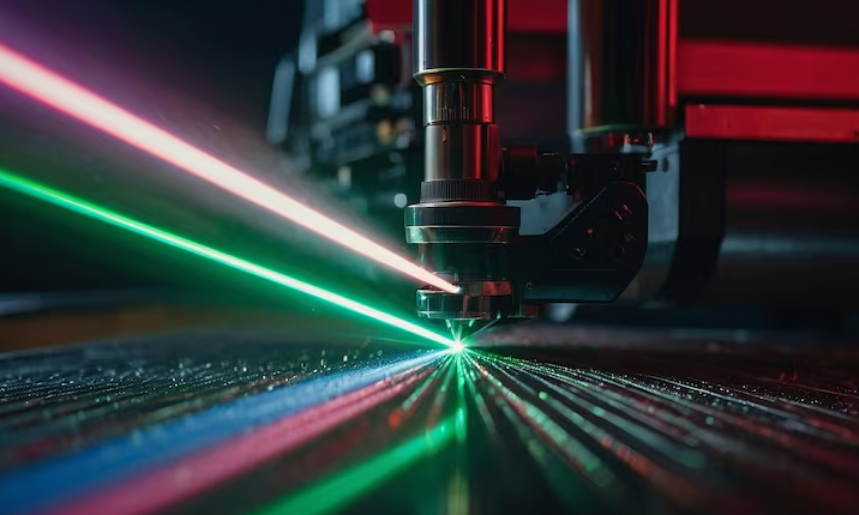
10kW single-mode fiber lasers face serious challenges during development. High light intensity causes nonlinear effects that distort the beam and waste energy. Reliable performance in single-mode fiber lasers depends on strict mode control, but heat can cause fluctuations. Photodarkening changes the fiber’s optical properties, which increases losses and reduces output over time. Effective thermal management is critical because heat buildup can quickly degrade performance. These technical challenges make fiber laser technology at this power level especially demanding.
- Main obstacles for 10kW single-mode fiber lasers:
- Nonlinear effects
- Mode control
- Photodarkening
- Thermal management
Key Takeaways
- 10kW single-mode fiber lasers face major challenges like nonlinear effects, mode instability, photodarkening, and thermal management.
- Nonlinear effects, such as stimulated Brillouin scattering (SBS) and stimulated Raman scattering (SRS), can distort the laser beam and reduce efficiency.
- Effective thermal management is crucial to prevent heat buildup, which can degrade performance and lead to instability in the laser output.
- Maintaining single-mode operation is essential for high beam quality; engineers use advanced fiber designs to suppress unwanted modes.
- Choosing the right materials and cooling strategies can significantly enhance the reliability and longevity of high-power fiber lasers.
Nonlinear Effects in 10kW Single-Mode Fiber Lasers
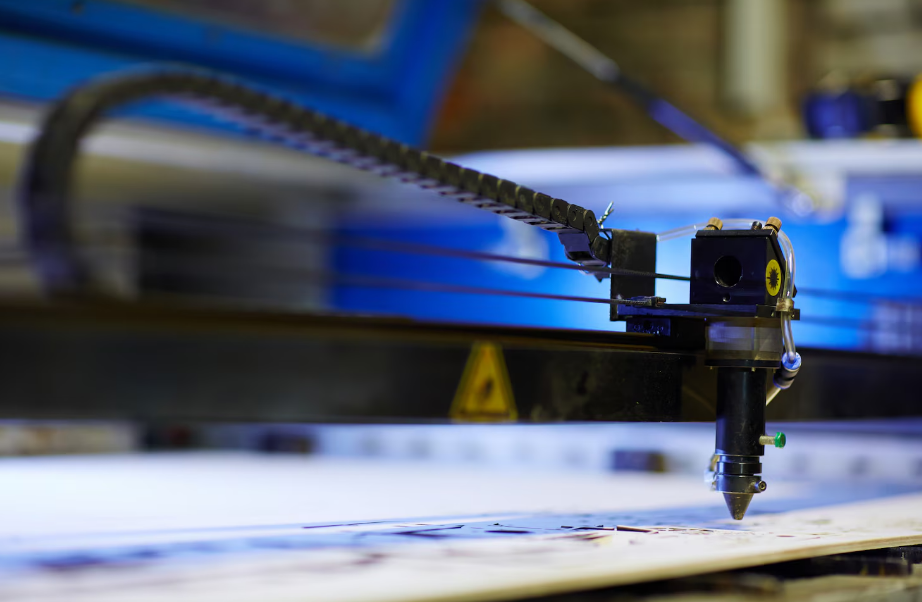
Nonlinear effects are a major challenge in the development of 10kW single-mode fiber lasers. When light travels through the fiber at very high power, it can interact with the material in ways that change the beam’s direction, shape, or even its color. These effects can limit the maximum output power and make it difficult to keep the laser beam stable and clean. Two of the most important nonlinear effects in high-power fiber lasers are stimulated Brillouin scattering (SBS) and stimulated Raman scattering (SRS).
Stimulated Brillouin Scattering (SBS)
Stimulated Brillouin scattering is often the first nonlinear effect to appear as power increases in single-mode fiber lasers. SBS happens when the intense laser light interacts with sound waves inside the fiber. This interaction causes some of the light to scatter backward, which can waste energy and even damage the laser.
- SBS is the main nonlinear effect that limits power scaling in high-power fiber lasers.
- It has a narrow gain bandwidth and a low-frequency shift, which makes backward scattering very efficient.
- The forward signal and the backward Stokes field interact, causing the Stokes power to grow quickly and use up the available gain.
- This process can lead to noise, pulsing, and possible damage to the laser system.
- The SBS threshold depends on the effective mode area, the Brillouin gain coefficient, and the length of the fiber.
To reduce SBS, engineers can change the fiber’s design. For example, they can use special dopants in the fiber core and cladding to guide the light but not the sound waves. This lowers the overlap between the optical and acoustic fields, which raises the SBS threshold and allows for higher power. Some fibers use a dual-core doping scheme to further separate the optical and acoustic fields, making SBS less likely to occur.
Tip: Increasing the mode area of the fiber and using advanced glass compositions are two ways to help suppress SBS in high-power fiber lasers.
Stimulated Raman Scattering (SRS)
Stimulated Raman scattering is another nonlinear effect that becomes important as the power increases. SRS causes some of the laser light to change to a different wavelength, which reduces the amount of useful output and can lower the beam quality.
- SRS limits the output power and efficiency of high-power fiber lasers.
- As the output power rises, SRS converts some of the signal light into Raman light, which reduces performance.
- Using a composite fiber Bragg grating (CTFBG) can help suppress SRS, allowing output power to reach up to 9 kW and improving beam quality.
Suppressing SRS is critical for scaling single-mode fiber lasers to higher powers. If SRS is not controlled, the laser will lose efficiency and the beam will become less useful for applications that need a clean, single-mode output.
Power Scaling Impact
Nonlinear effects like SBS and SRS set clear limits on how much power single-mode fiber lasers can deliver. When the intensity in the fiber core gets too high, these effects start to appear and can quickly degrade the laser’s performance. This makes it very hard to scale up the power without running into problems.
Nonlinear thresholds are the power levels where these effects begin to cause trouble. If the laser operates above these thresholds, the beam quality drops and the laser may become unstable. To push these limits higher, engineers use new fiber designs, such as large mode area fibers, and improve thermal management. These strategies help reduce the intensity of nonlinear interactions, making it possible to achieve higher power while keeping the beam in a single mode.
High-power fiber lasers face these nonlinear challenges at every step of their development. Effective management of SBS and SRS is essential for stable, high-power single-mode operation. Without these solutions, 10kW single-mode fiber lasers would not be possible.
Mode Instability and Beam Quality
Transverse Mode Instability (TMI)
Transverse mode instability, or TMI, is a major obstacle in the development of high-power fiber lasers. TMI appears when the laser’s output power rises above a certain threshold, often around 5kW. At this point, the laser beam can suddenly shift from a clean, single mode to a mix of higher-order modes. This shift happens because the intense light inside the fiber heats the glass, creating small changes in the fiber’s shape and refractive index. These changes form what scientists call thermo-optical long period gratings. The gratings cause energy to move from the main mode to unwanted higher modes.
When TMI starts, the laser beam becomes unstable. The power moves back and forth between modes, which leads to flickering and a drop in beam quality. Experiments have shown that by seeding the amplifier with a traveling wave made from two modes at slightly different frequencies, researchers can control the interference pattern and raise the TMI threshold. This means the laser can reach higher power before instability begins.
Several factors influence TMI in high-power fiber lasers. The following table lists some of the most important ones:
| Factor Influencing TMI | Reference |
|---|---|
| Driver Noise | Chu, Q. H. et al. |
| Polarization State | Palma-Vega, G. et al. |
| Pump Configuration | Kholaif, S. et al. |
| Fiber Design | Leidner, J. P. et al. |
| Fiber Coiling | Tao, R. et al. |
TMI is a key reason why scaling up the power of single-mode fiber lasers is so difficult. The onset of TMI not only limits the maximum output but also causes the beam to lose its sharp focus, which is critical for many applications.
Note: TMI can lead to temporal instability and reduced laser power, which affects the long-term stability of high-power fiber lasers.
Single-Mode Control at High Power
Maintaining single-mode operation in 10kw single-mode fiber lasers is a complex challenge. As the power increases, the risk of energy leaking into higher-order modes grows. This leakage happens because heat changes the fiber’s properties, making it harder to keep the light in the fundamental mode. The transfer of power to higher modes results in a beam that is less focused and less useful for precision tasks.
Engineers use several methods to suppress higher-order modes in high-power fiber lasers. One approach is to add high-index absorbing inclusions into the fiber’s cladding. These inclusions disrupt the shape of unwanted modes, causing them to lose energy as they travel. The fundamental mode, which is the desired single mode, remains mostly unaffected. Two main designs have been tested: one uses a high-index ring around the core, and the other places high-index rods near the core. Both designs help keep the laser operating in a single mode, even at high power.
The following table summarizes the main technical challenges in maintaining single-mode operation at 10kW output power:
| Challenge | Description |
|---|---|
| Nonlinear Effects | High light intensity leads to interactions causing beam distortion and energy loss. |
| Mode Control | Optimizing fiber structure to maintain single-mode operation amidst heat-induced changes. |
| Photodarkening | Changes in fiber properties over time result in increased optical losses and reduced output power. |
| Thermal Management | Essential for minimizing heat buildup to prevent performance degradation or damage. |
Achieving high beam quality above 10kW is another major hurdle. The beam quality of a fiber laser is often measured by the M² value. For 10kw single-mode fiber lasers, the M² value is usually less than 2. This means the beam is very close to an ideal single mode, but reaching and maintaining this level at high power requires careful design and constant monitoring.
- High-power fiber lasers must keep the M² value low to ensure a sharp, focused beam.
- TMI and higher-order modes can quickly degrade beam quality if not controlled.
- Advanced fiber designs and active control methods are needed to keep the beam stable and reliable.
Single-mode fiber lasers at 10kW push the limits of current technology. The fight against TMI and the need for strict mode control make their development one of the most demanding tasks in photonics.
Photodarkening in High-Power Fiber Lasers
Causes and Mechanisms
Photodarkening is a process that causes optical fibers to lose transparency when exposed to intense laser light. This effect is especially important in high-power fiber lasers. Scientists have found that photodarkening happens because of several mechanisms inside the fiber material. The following table shows some of the main causes:
| Mechanism | Description |
|---|---|
| Charge-transfer band | A strong charge-transfer band at ultraviolet wavelengths increases optical losses in the fiber. |
| Valence stability | The stability of ytterbium ions in the glass affects how much photodarkening occurs. |
| Atmosphere influence | The atmosphere during fiber production can change the amount of photodarkening. |
| Material defects | Defects in the silica glass become active when hit by certain wavelengths, causing darkening. |
The type of glass used in the fiber also plays a big role. Aluminum-silicate glass is common because it works well for lasers, but it is more likely to suffer from photodarkening. Phosphosilicate glass is less affected, so some manufacturers use it to make high-power fiber lasers more reliable. The way the fiber is made, including the atmosphere during production, can also change how much photodarkening happens.
Photodarkening usually appears as an increase in absorption, especially in the visible part of the spectrum. This means less light gets through, which reduces the efficiency of the laser.
Reliability Concerns
Photodarkening can cause serious problems for high-power fiber lasers. Over time, the fiber absorbs more light, which lowers the output power and makes the laser less efficient. This effect can limit the lifetime of the laser system. For example, clustering of ytterbium ions in the fiber can lead to a steady loss of power, known as grey loss. Using phosphosilicate glass instead of aluminosilicate glass can reduce this loss by up to 100 times.
Prolonged exposure to high-intensity light can also damage the fiber and its protective coatings. Heat builds up at the ends of fiber bundles, which can harm adhesives and even the fiber itself. To prevent this, engineers sometimes use special designs like fused fiber ends that handle heat better and keep the laser running longer.
Tip: Loading the fiber with deuterium before use can almost eliminate photodarkening losses, especially under certain pumping conditions.
Photodarkening is a limiting factor for high-power fiber lasers. It can cause a slow drop in output power, which affects the reliability of the laser over time. Careful choice of materials and smart engineering can help reduce these effects and make fiber lasers last longer.
Thermal Management in 10kW Single-Mode Fiber Lasers
Heat Generation
Operating at 10kW power levels creates significant heat inside fiber lasers. The laser’s core absorbs some of the pump energy and converts it into heat. This heat changes the refractive index profile of the fiber, which is important for keeping the beam focused and stable. When the temperature rises, the fiber can develop nonlinear pulse distortions. These distortions make the laser beam less clean and can trigger transverse mode instabilities. At high power, these instabilities cause the beam to flicker or lose its sharp focus.
- Heat changes the refractive index, affecting beam quality.
- Nonlinear pulse distortions can appear when the fiber gets too hot.
- Transverse mode instabilities become more likely at higher temperatures.
Advanced thermal management helps prevent these problems. By keeping the fiber cool, engineers can maintain stable operation and high beam quality. Reliable cooling also extends the lifespan of the laser by reducing material stress and damage.
Cooling Strategies
To manage the intense heat in 10kw single-mode fiber lasers, engineers use several advanced cooling methods. Each method has unique benefits and is chosen based on the laser’s design and application.
| Cooling Technology | Principle Description | Key Advantages | Applications |
|---|---|---|---|
| Microchannel Liquid Cooling | Micron-scale channels embedded in the laser gain module for efficient heat dissipation. | 5–10× improvement in heat dissipation efficiency; supports stable operation. | Semiconductor modules, fiber laser combiners. |
| Phase Change Material (PCM) Cooling | Uses materials that absorb heat during phase transitions to buffer thermal loads. | Reduces energy consumption by up to 40%; buffers peak heat loads. | High-energy pulsed lasers, 3D printing systems. |
| Heat Pipe Thermal Spreading | Sealed tubes with working fluid that transfer heat via evaporation-condensation cycles. | Thermal conductivity up to 100× that of copper; maintenance-free. | High-power laser diode arrays, precision optical components. |
| Jet Impingement Cooling | High-speed coolant sprays disrupt thermal layers for extreme heat transfer. | Local cooling capacity up to 2000 W/cm²; targeted cooling of high-temperature zones. | Single-mode high-brightness fiber lasers. |
Despite these advanced techniques, there are still engineering limits. Microchannel coolers need very clean coolant and precise fluid control. High pressure drops require powerful pumps, which can add complexity. Erosion inside coolers can limit their lifetime to about 5,000 hours. Some systems use conductive cooling, but this can make the laser heavier and less efficient.
Note: Advanced cooling systems are essential for reliable operation. They help prevent thermal lensing and material damage, which keeps the laser running smoothly and extends its useful life.
10kW single-mode fiber lasers face several technical barriers. These include nonlinear effects, mode instability, photodarkening, and thermal management.
- At high power, cooling becomes critical to prevent damage and keep the laser stable.
- Thermal effects and mode behavior interact, leading to instability as power increases.
- Higher temperatures in the fiber core can turn a single-mode fiber into a multimode fiber.
Researchers are exploring new fiber designs, thulium-doped lasers, and advanced pumping methods to solve these challenges and improve high-power operation.
FAQ
What makes single-mode fiber lasers different from multimode lasers?
Single-mode fiber lasers produce a very clean, focused beam. Multimode lasers create beams with many patterns. Single-mode lasers are better for tasks that need high precision, like cutting or welding thin materials.
Why is heat such a big problem in high-power fiber lasers?
High power creates a lot of heat inside the fiber. This heat can change the fiber’s shape and make the beam unstable. Good cooling systems are needed to keep the laser working well.
How do engineers reduce nonlinear effects like SBS and SRS?
Engineers use special fiber designs, larger core sizes, and advanced materials. These changes help raise the power threshold for nonlinear effects. This allows the laser to work at higher power without losing beam quality.
Can photodarkening be prevented completely?
Photodarkening cannot be stopped completely, but it can be reduced. Using better glass materials and special treatments helps lower the effect. Some methods, like deuterium loading, make photodarkening much less of a problem.
What is the M² value, and why does it matter?
| M² Value | Beam Quality Description |
|---|---|
| 1.0 | Perfect single-mode beam |
| < 2.0 | High-quality, nearly single-mode |
| > 2.0 | Multimode, less focused |
A lower M² value means a sharper, more focused beam. High-power lasers need a low M² for best performance.