
A single mode fiber laser uses a thin glass fiber. This fiber is often mixed with rare earth elements. It guides light in just one optical path. This design gives you a very good beam. The beam is high quality and very precise. The fiber core is usually less than 10 micrometers wide. This small size helps the laser make a tight, focused beam. The beam does not spread out much. People use this technology in jobs where accuracy is important.
| Laser Type | Beam Quality Characteristics |
|---|---|
| Fiber Lasers | Work in single-mode and give great beam quality, tight focus, and little spreading |
| Solid-State Lasers | Give good beam quality but are not as good as fiber lasers, especially at high power |
- The world market for these lasers is growing fast. North America makes over 40% of the money from these lasers. The market is expected to grow more than 14% each year.
Key Takeaways
- Single mode fiber lasers use a thin glass fiber. This makes a focused and precise beam. It is good for jobs that need high accuracy.
- The core diameter of single mode fibers is small. It is usually between 8 and 10 micrometers. This helps stop modal dispersion. It keeps the beam quality strong.
- Rare earth doping makes single mode fiber lasers work better. It lets people control wavelength and power more easily.
- Single mode fiber lasers are very efficient. Some systems reach over 60% efficiency. This makes them good for high-power uses.
- These lasers give a steady beam profile. This is important for medical work. It also helps with industrial jobs that need precision.
- Single mode fiber lasers lose little signal over long distances. This makes them great for telecommunications. They are also good for sending data.
- Picking the right fiber laser depends on the job. Single mode lasers are best for precision tasks. Multi-mode lasers are better for high-power needs.
- Single mode fiber lasers are dependable. They need little maintenance. This helps them work well in tough places.
Single Mode Fiber Laser Overview
Definition of Single-Mode Fiber Laser
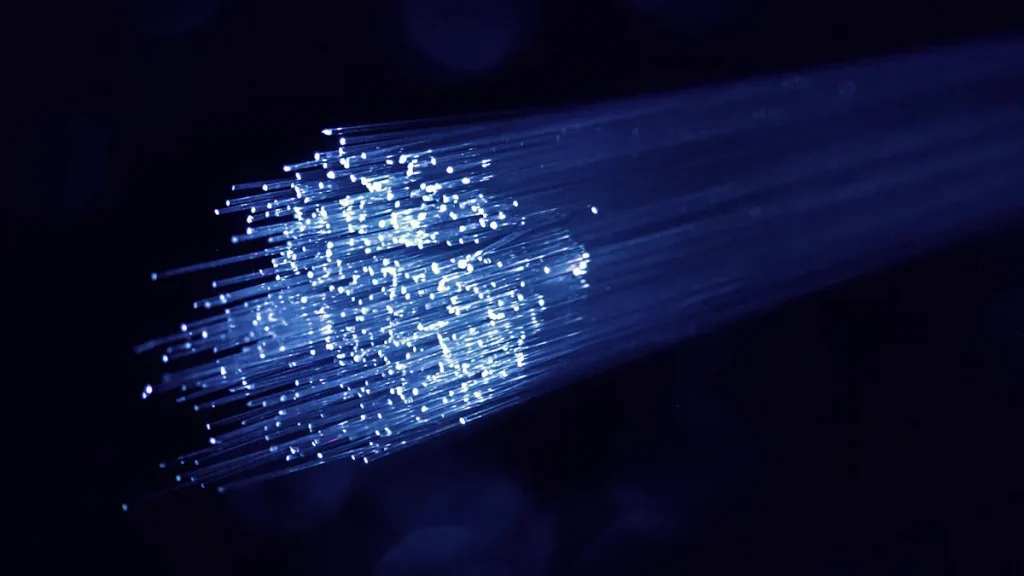
You use a single mode fiber laser when you need a tool that gives a steady and exact beam. Experts say a single mode fiber laser has a very thin core, usually between 8 and 14 micrometers wide. This design lets only one kind of electromagnetic field travel through the fiber. This helps stop problems like intermodal dispersion, which can make the beam blurry or messy in other lasers. The result is a laser beam with great spatial coherence and a smooth Gaussian energy spread. The beam stays sharp and focused, even if it travels far.
Core Features
Fiber Diameter
The core diameter in a single mode fiber laser is very important for how well it works. Most single mode fiber lasers have a core diameter between 8 and 10 micrometers. This size makes sure only the main mode, called LP01, goes through the fiber. You can see how this works in the table below:
| Core Diameter Range (micrometers) | Effect on Mode Propagation |
|---|---|
| 8 to 10 | Supports single mode propagation, eliminating modal dispersion and enabling high bandwidth and long-distance transmission. |
| 5 to 10 | Ensures only the LP01 mode propagates, which eliminates modal dispersion and is ideal for long-distance applications. |
| 8.3 | Commonly used for long-distance, high-bandwidth applications, supporting single mode propagation. |
When you use a fiber with this diameter, you get high bandwidth and steady transmission. The beam stays stable and does not spread out, which is needed for jobs that must be accurate.
Mode Support
Single mode fiber lasers only let one guided mode go in each polarization direction. You get a clean and clear beam shape. This makes single mode fiber laser technology different from multimode designs, which let many modes go through and can have modal dispersion. You can trust single mode fiber lasers for work that needs tight focus and little beam distortion.
Tip: If you want high accuracy and low signal loss, pick a single mode fiber laser for your job.
Role of Rare Earth Doping
Rare earth doping changes how well single mode fiber lasers work. You will often see elements like neodymium (Nd), erbium (Er), thulium (Tm), holmium (Ho), and ytterbium (Yb) used for this. These elements make the gain medium better, so you can control wavelength and power more easily. Adding rare earth dopants gives broad gain bandwidths, which makes single mode fiber lasers more useful. You can change the laser for special jobs by picking the type and amount of dopants.
- Rare earth doping gives a gain medium you can change for different jobs, affecting both efficiency and wavelength range.
- Different rare earth ions give off light at different wavelengths and need special pumping, so you can make good lasers for many uses.
- By changing doping amount and adding co-dopants, you can make absorption better and cut down on unwanted emissions, making the laser work better.
You will see that single mode fiber laser technology keeps getting better. New designs, like bat-type refractive index profiles, help stop unwanted effects and keep the beam quality high. You can now get kilowatt-level output and still keep the beam steady and focused. These upgrades make single mode fiber lasers a top pick for tough industrial, medical, and research jobs.
How Single-Mode Fiber Lasers Work
When you learn how single-mode fiber lasers work, you see why they are so exact and dependable. The process has three main steps. These steps are pumping and excitation, stimulated emission, and beam output. Each step is important for making high-quality laser beams for tough jobs.
Pumping and Excitation
First, you give energy to the single-mode fiber. Laser diodes make this energy by changing electricity into light. The light goes into the fiber and moves through the core. The core and cladding help guide the light using total internal reflection. This keeps the energy inside the fiber and sends it to the rare-earth ions.
Here is what happens during pumping and excitation:
- Laser diodes turn electricity into photons, which are tiny bits of light.
- The pump light goes into the single-mode fiber and travels in the core, helped by the cladding.
- The light meets rare-earth ions like ytterbium or erbium in the fiber.
- These ions take in the energy and jump to a higher energy level.
- This sets up what is needed for the next step, called stimulated emission.
High-power multimode diode lasers are often used as pump sources. These pumps can be very efficient. Some systems can reach more than 60% efficiency. This means you get strong power and less wasted energy. Some single-mode fiber lasers can make up to 1.2 kW of output power with great efficiency.
Note: The pump source you pick and the fiber’s quality both change how well the fiber laser works.
Stimulated Emission
After the rare-earth ions get excited, you get something called population inversion. This means more electrons are excited than normal. When a photon passes an excited ion, the ion drops to a lower energy level. The ion gives off a new photon that matches the first one in phase and direction. This is called stimulated emission.
Here are the main ideas about stimulated emission in single-mode fiber:
- Quantum transitions happen when electrons move and release photons.
- The new photon matches the first one, so the light waves add up.
- Population inversion is needed for strong light amplification.
- Laser diodes help make population inversion by optical pumping.
- Rare-earth ions like ytterbium and erbium take in pump energy and let out photons when excited.
This process happens again and again inside the fiber. The single-mode fiber only lets light go in one path, so you get a clean and steady beam. The fiber laser design keeps the beam focused and stops it from spreading, which is good for jobs that need accuracy.
Beam Output
Fiber as Gain Medium
The fiber in a single-mode fiber laser does two jobs. It is the gain medium and also guides the light. The rare-earth-doped core makes the light stronger, and the cladding keeps the light inside the core. This makes the system small and efficient. You can put pump light into the fiber easily and get strong amplification along the fiber.
Fiber laser technology uses this setup to give high power and great beam quality. Some systems can reach up to 10 kW of output power. The fiber design also lets you send the beam far without losing quality.
Output Profile
The beam from a single-mode fiber has a special shape. It has a Gaussian energy distribution. This means the beam is sharp in the center and smooth at the edges. The spot size is usually between 30 and 100 micrometers wide. This shape gives you high accuracy and lets you focus the beam tightly for cutting, marking, or medical jobs.
| Characteristic | Description |
|---|---|
| Output Power Range | Up to 10 kW |
| Beam Profile | Gaussian energy distribution with a sharp peak |
| Spot Size | Typically between 30 and 100 µm in diameter |
This output profile helps you get steady results in jobs that need accuracy. The single-mode fiber keeps the beam stable, even over long distances. This makes single-mode fiber lasers great for work where you need both power and precision.
Tip: If you need high-quality laser beams and long-distance transmission, single-mode fiber lasers give you the best mix of efficiency, stability, and accuracy.
Single-Mode vs Multi-Mode Fiber Lasers
Mode Structure Comparison
Single-mode and multi-mode fiber lasers are different. Single-mode fiber lasers let light travel in only one path. This path is called a mode. The energy stays in this mode. The beam is focused and steady. Multi-mode fiber lasers let light travel in many paths. These extra paths are called modes. The energy spreads out in these modes. The beam is not as sharp.
Here is a table that shows the main differences:
| Feature | Single-Mode Fiber Laser | Multi-Mode Fiber Laser |
|---|---|---|
| Number of Modes | Supports only one mode | Supports multiple modes |
| Energy Distribution | Concentrated energy with Gaussian profile | Flatter energy distribution |
| Beam Quality | Higher beam quality (M2 < 1.3) | Lower beam quality (M2 > 2.0) |
| Applications | Precision tasks (cutting, cleaning) | Uniform energy distribution tasks |
| Damage Threshold | Lower, difficult to handle high energy | Higher, can handle more energy |
| Nonlinear Effects | More pronounced due to thin core | Reduced due to larger core diameter |
| Transmission Distance | Limited due to higher dispersion | Longer distance with high stability |
Single-mode fiber lasers make a clean and narrow beam. Multi-mode fiber lasers are better when you need more power. They can have a wider beam.
Beam Quality Differences
Beam quality is important for accuracy. The M2 value tells you how close the beam is to perfect. Single-mode fiber lasers have an M2 value near 1. This means the beam is almost perfect. It does not spread much. Multi-mode fiber lasers have M2 values above 2.0. Their beams spread out more and lose focus.
- The M2 factor shows how much the beam is different from a perfect shape.
- Single-mode lasers have M2 values less than 1.3. The beam is sharp and exact.
- Multi-mode lasers have M2 values above 2.0. Their beams are wider and less exact.
| Laser Type | M2 Value Range | Beam Quality Description |
|---|---|---|
| Single-mode | Close to 1 | Extremely high beam quality, minimal divergence. |
| Multi-mode | Greater than 2 | Poorer beam quality, higher divergence. |
If you want to cut or mark with fine detail, pick single-mode. You will get better results and cleaner lines.
Application Suitability
You should choose the right fiber laser for your job. Single-mode fiber lasers are best for jobs that need high accuracy. You use them for small connections, medical work, and electronics. Their small core and strong energy help you control heat. You can make tiny cuts.
Multi-mode fiber lasers are good for jobs that need more power. They work well with bigger heat zones. You use them for welding big areas and thick materials. They give a wider beam and can work with many materials.
| Type | Characteristics | Best Suited Applications |
|---|---|---|
| Single-mode | Small core diameter, high energy density, precise heat input control | Micro-connection processing (3C, medical, etc.) |
| Multi-mode | Higher power, versatile in processing different materials, larger heat-affected zone | Large-area welding, compatibility with various material thicknesses |
- Single-mode fiber lasers give you control and accuracy.
- Multi-mode fiber lasers give you more power and options.
Tip: Always pick the fiber laser that fits your job. You will get better results and save time.
Advantages of Single-Mode Fiber Lasers
High Precision
Single-mode fiber lasers help you get very high precision. They make a very thin linewidth, often less than 1 nm. Sometimes, the linewidth is as small as 0.1 or even 0.01 nm. You can control the frequency very well, from MHz down to Hz. This control is great for jobs that need exact measurements or tiny details. People use single-mode fiber lasers in telecommunications, LIDAR, and science tools. These jobs need a steady and narrow frequency to work well.
- Linewidths are less than 1 nm, sometimes 0.1–0.01 nm
- Frequency control goes from MHz to Hz
- Used in telecommunications, LIDAR, and science tools
If you need to be very exact, single-mode fiber lasers give you the accuracy you want for hard jobs.
Consistent Beam Profile
Single-mode fiber lasers give you a steady beam shape. The beam stays tight and keeps its energy. This is important for medical work, like eye surgery and skin treatments. You can work on tissue at the right depth and avoid too much heat. If the beam is not good, it can cause problems or bad results. You want a laser that gives a steady beam.
In factories, a steady beam means cleaner cuts and faster work. You get better results and save time. The steady beam also helps with tiny parts and small details in micro-machining.
- Medical work needs tight beams for safety and accuracy
- Factory cutting gets cleaner cuts and works faster
- Micro-machining needs steady beams for small details
You can count on single-mode fiber lasers to give you a steady and repeatable beam every time.
Low Loss Over Distance
Single-mode fiber lasers lose very little power over long distances. The core is small, about 9 micrometers wide, so only one mode of light travels. This design cuts down on loss and spreading, making it good for sending data far. You get the best results when sending signals over more than 10 kilometers.
| Wavelength (nm) | Loss (dB/km) |
|---|---|
| 850 | 2.5 |
| 1310 | 0.35 |
| 1550 | 0.20 |
You lose less power at higher wavelengths. This means you keep good signal and laser strength over long fiber runs. That is why single-mode fiber lasers are picked for telecom networks and science jobs that need steady signals.
Tip: If you need strong laser power and little signal loss over long distances, single-mode fiber lasers are the best choice.
Reliability
You want a laser that works every time you turn it on. Single-mode fiber lasers are very reliable. They use a strong glass fiber as the main part. This fiber does not get damaged by dust or shaking. It also works well when the temperature changes. You can use your machine for many hours without it breaking. The design keeps the beam steady, even with high-power fiber lasers.
If you do laser welding, you need a system that does not stop working. Single-mode fiber lasers help you finish your work with fewer stops. The fiber protects the laser from things outside. You get a steady beam for laser welding. Your welds look neat and strong. You do not have to stop to fix the laser or change the settings. This saves you both time and money.
Single-mode fiber lasers also give you steady bandwidth. The fiber keeps the signal clear and strong. You can use the same laser for cutting, marking, or laser welding. The bandwidth stays high, so your results are always the same. You can trust the laser to give the same power and beam shape every time.
Here are some reasons why single-mode fiber lasers are so reliable:
- The fiber core does not bend or stretch easily.
- The laser gives steady output, even during long jobs.
- You can use it for laser welding, cutting, and marking without fixing it often.
- The bandwidth stays the same, so your results repeat.
You do not want your workshop to stop. Single-mode fiber lasers help you keep working.
The table below shows how single-mode fiber lasers compare to other lasers for reliability:
| Feature | Single-Mode Fiber Laser | Other Laser Types |
|---|---|---|
| Beam Stability | Very high | Moderate |
| Maintenance Needs | Low | High |
| Bandwidth Consistency | Excellent | Variable |
| Laser Welding Quality | Consistent | Inconsistent |
When you pick single-mode fiber lasers, you get a tool that works well for high-power fiber lasers and laser welding. The bandwidth stays strong. The system does not need much fixing. You can focus on your work and know your laser will work every time.
Applications of Single-Mode Fiber Lasers
Single-mode fiber lasers are used in many places. You find them in factories, hospitals, and labs. They are chosen because they make a strong and accurate beam. This helps when you need to do careful work.
Industrial Uses
Single-mode fiber lasers help factories work faster and better. They are used for laser cutting and laser marking. These lasers cut and mark metals, plastics, and ceramics. The cuts are smooth and the marks are clear. This saves time and reduces waste.
Cutting and Marking
Laser cutting lets you cut thin or thick materials easily. The edges are smooth and the size is exact. Laser marking puts codes, logos, or numbers on products. You can mark small or big parts. Laser marking is used for electronics, car parts, and medical tools.
People use single-mode fiber lasers for laser marking because the lines are thin and deep. You can mark barcodes, QR codes, and safety labels. This helps track products and stop fake ones. Laser marking is fast and does not need much fixing.
Many industries use laser marking. It is used in packaging, planes, and jewelry. You can change designs quickly with laser marking. You do not need new tools for different shapes or sizes. Laser marking also helps find mistakes and keep track of things.
Laser cutting and marking help you follow strict rules. Using single-mode fiber lasers saves both time and money.
| Application Area | Key Benefits | Performance Metrics |
|---|---|---|
| Telecommunications | High bandwidth, long-distance transmission | Data rates up to 100 Gbps |
| Data Centers | Fast data handling, less waiting time | Latency under 5 ms |
| Industrial Automation | Very reliable, real-time data transfer | Uptime of 99.99% |
| Healthcare | Better patient data, telemedicine support | Data reliability of 99.9% |
| Broadcast and Media | Good video quality, lower costs | Smooth 4K video streaming |
Medical Applications
Single-mode fiber lasers are used in many medical tools. They are small and easy to put in machines. The beam is strong and helps doctors do careful work. Laser marking is used to label tools and implants. The marks last a long time.
Single-mode fiber lasers give these benefits in medicine:
- Light and simple to install
- Low cost to keep working
- Good beam for careful work
- Saves energy and money
- Stays strong for a long time
- Can reach high power for treatments
Laser marking on medical tools helps follow safety rules. You can mark batch numbers and dates. This helps track tools and keeps patients safe.
Research and Telecom
Single-mode fiber lasers are important for sending data and doing science. They are used in fast networks to send light signals far. The data moves safely with little loss.
In science, single-mode fiber lasers help measure small things and test ideas. They are used in metrology and quantum tests. Laser marking also helps by labeling samples and tools.
| Application Area | Description |
|---|---|
| Telecommunications | Needed for fast, long-distance data, helps build optical networks. |
| Scientific Research | Used for measuring tiny things and testing new ideas. |
| Medical Sector | Important for eye surgery and skin treatments where care is needed. |
| Industrial Applications | Used for tiny machine work and making chips with high accuracy. |
You can use tricks like wavelength division multiplexing. This lets you send more data through one fiber. Laser marking also helps organize cables and tools in telecom work.
Tip: You can use single-mode fiber lasers for cutting, marking, and sending data. These uses help you work faster and more accurately.
Choosing the Right Fiber Laser
Key Factors
Picking the right fiber laser helps you work better. You should think about a few important things before you choose. Every project is different, so match the laser to your needs.
- Application-specific requirements: First, decide what you want to do. Some jobs need very exact work, like micro-cutting or marking small parts. Other jobs, like medical treatments, need a certain wavelength or power. Always pick a laser that fits your main goal.
- Performance parameters: Look at the output power, beam quality, and linewidth. If you want a sharp beam, choose a laser with a low M² value and a thin linewidth. More power helps you cut thick materials or work faster. Make sure the laser’s features match your job.
- Practical considerations: Think about how steady and dependable the laser is. You want a machine that works every time you use it. Price is important too. Pick a laser that fits your budget and does what you need. Good support and easy fixes can save you time and money later.
Tip: Ask to see the laser in action or try a sample. This helps you know if the laser is right for you before you buy it.
Matching Laser to Application
Single-mode fiber lasers work in many fields. Each field needs something special, so match the laser’s output to your job.
- Industrial Manufacturing: You need good marking, welding, and cutting for metals and plastics. A single-mode fiber laser gives a clean, focused beam. This helps you make neat cuts and clear marks. You can also weld small parts with less heat.
- Scientific Research: In labs, you may need a laser for special experiments. Single-mode fiber lasers give steady output and thin linewidths. This makes them great for tests that need exact control.
- Medical Technology: Doctors and engineers use these lasers for gentle treatments. The exact beam lets you treat tissue without hurting other areas. You can also use the laser to make or mark medical tools with high accuracy.
| Application Area | Key Laser Requirement | Benefit |
|---|---|---|
| Industrial Manufacturing | High beam quality, stable output | Fine cuts, sharp marks |
| Scientific Research | Narrow linewidth, stable wavelength | Accurate experiments |
| Medical Technology | Precise control, specific wavelength | Safe, targeted treatments |
When you match the laser to your job, you get better results and fewer problems. Take time to think about your needs and ask experts if you are not sure.
You use single mode fiber lasers when you need a focused laser beam. These lasers have a narrow core that guides the beam. This makes the beam sharp and steady. The beam does not lose much power, even over long distances. You get high accuracy for jobs that need careful work. Doctors use these lasers for medical tests and surgery. Scientists use them in research because the beam is stable. In telecommunications, the beam carries data with little loss. This helps send data fast and clearly. Factories use the beam to cut or mark things cleanly. The lasers are small and save energy, so they fit in portable devices. The beam can handle lots of data, so your information moves quickly and safely. When you look at single mode and multi-mode lasers, you see single mode gives a better beam. Multi-mode lasers can make more power, but the beam is not as sharp.
| Feature | Single-Mode Fiber Lasers | Multi-Mode Fiber Lasers |
|---|---|---|
| Beam Quality | Focused laser beam | Less focused laser beam |
| Power Output | Lower | Higher |
| Fiber Core Diameter | Narrow | Wide |
| Applications | Precision laser beam tasks | High-power laser beam tasks |
| Cost | Higher | Lower |
You pick single mode fiber lasers for jobs that need high precision and steady data. These lasers help you get better results in data centers, long-distance data work, and medical tools. Always choose the right laser for your job to get the best results and strong data quality.
FAQ
What makes fiber lasers different from other laser types?
Fiber lasers give you better beam quality and work more efficiently. They use a fiber as the gain medium. This design helps the laser stay stable and reliable. Fiber lasers are also good for sending light far.
Can you use fiber lasers with fiber optic cables for data transmission?
Yes, you can use fiber lasers with fiber optic cables. This setup lets you send signals far with little loss. You get fast and clear data in networks and data centers.
Why do fiber lasers use rare earth doping?
Rare earth doping helps fiber lasers work better. It lets you change the wavelength and power. This makes the laser useful for many jobs, like in medicine and factories.
How do fiber lasers help in medical treatments?
Doctors use fiber lasers for careful medical work. The focused beam lets them treat tissue without much harm. Fiber lasers are used for eye surgery, skin care, and marking tools.
Are fiber lasers suitable for cutting and marking metals?
Fiber lasers make clean cuts and sharp marks on metal. Their strong beam and steady output are great for metal work. Factories use them to mark codes and cut different materials.
What is the advantage of using fiber optic cables with fiber lasers in telecom?
You get less signal loss and more bandwidth with this setup. Fiber optic cables and fiber lasers help send data quickly. This is important for modern telecom and long-distance calls.
How do you choose the right fiber laser for your application?
First, think about what you need. Look at the power, beam quality, and wavelength. Fiber lasers have many choices. You can pick the one that fits your job best.
Can fiber lasers work in harsh environments?
Yes, fiber lasers can work in tough places. The fiber design stands up to dust, shaking, and heat changes. Fiber lasers keep working well in factories, labs, and outside.
Tip: Always check the fiber laser’s details before buying. You want the one that fits your project best.
| Feature | Benefit |
|---|---|
| Fiber lasers | Very reliable |
| Fiber optic cables | Little signal loss |
| Rare earth doping | Flexible performance |