
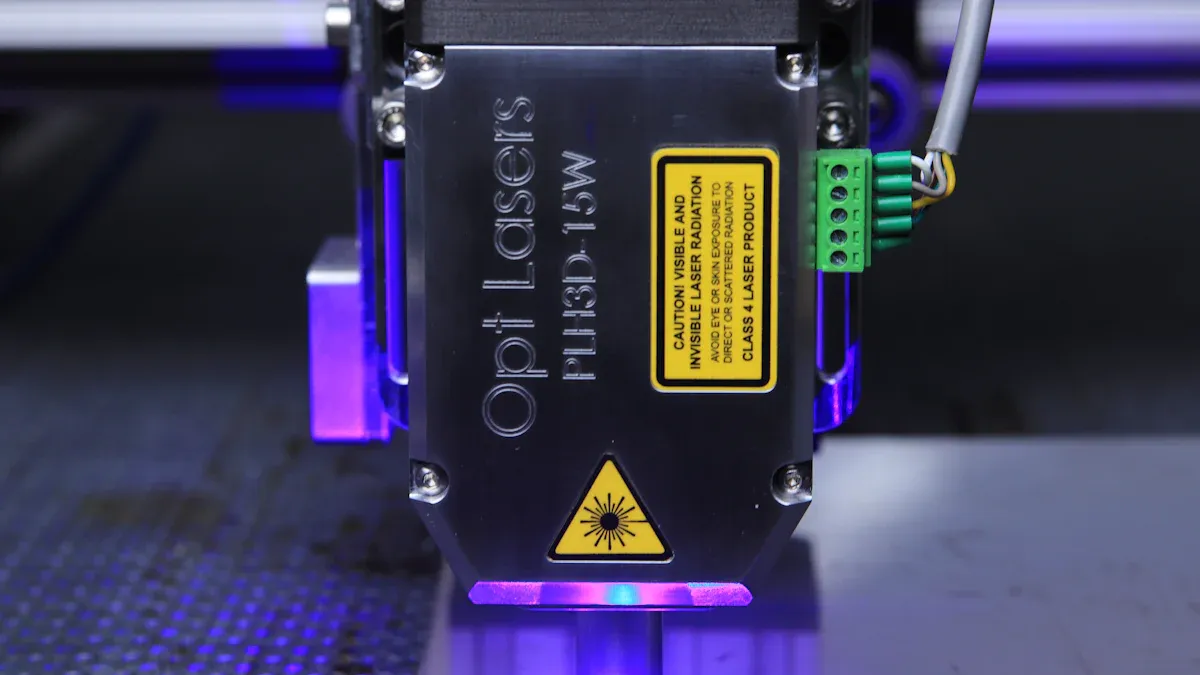
A direct diode laser makes light using semiconductor diodes. The device has stacked p-doped and n-doped layers. These layers form a p-n junction. When electricity goes through this junction, electrons and holes mix together. This process lets out photons. The laser makes light by stimulated emission and internal amplification. It does not need extra amplification devices.
Key Takeaways
- Direct diode lasers use semiconductor diodes to make laser light easily. They change electricity into light and do not need other devices.
- These lasers are small and save money, so they are good for factories. They use less energy and can work for more than 50,000 hours. They do not need much fixing or care.
- Direct diode lasers work well, but their beam is wider. This wide beam may not be good for jobs that need very exact work. Other lasers might be better for those kinds of jobs.
How Direct Diode Lasers Work
Operating Principle
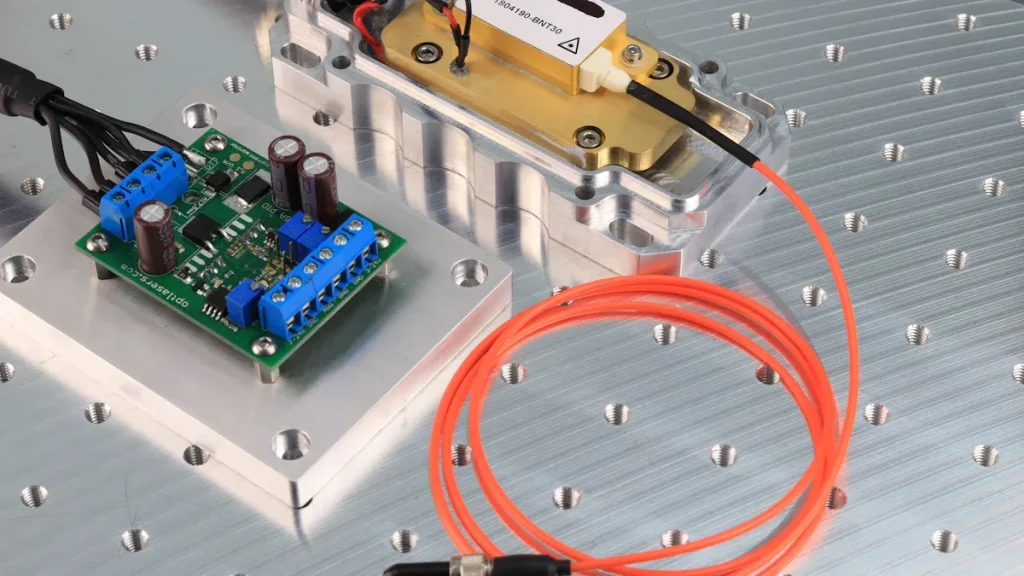
A direct diode laser makes laser light with a semiconductor diode. The process begins when electricity flows through the diode. This electricity makes electrons excited inside the semiconductor. Excited electrons jump to a higher energy level. When they drop back down, they give off energy as photons. Photons bounce between two mirrors inside the diode. These mirrors create a space where light builds up. The mirrors help the light get stronger and turn into a laser beam.
The semiconductor laser works by exciting electrons in the semiconductor. This creates a population inversion needed for laser action. The laser has a cavity with two mirrors that let light bounce and grow stronger. This leads to laser output.
This method lets the direct diode laser make laser light easily and directly. It does not need extra devices to boost the light.
Key Components and Process
A direct diode laser has several main parts that work together to make and send out laser light. The main parts are the semiconductor diode, a transform lens, a dispersive element, and the output system.
- The semiconductor diode is the main part of the laser. It uses gallium arsenide to make light between 0.8 μm and 1 μm. This range is good for jobs like welding and material processing.
- Direct diode lasers are simple and change electricity to light well. These features make them dependable and affordable for factories.
- The laser light from the diode is not always sharp. A transform lens gathers and focuses the light. This makes the laser beam better.
- The transform lens also helps combine beams from many diodes. In strong direct diode lasers, this lens adds outputs from several diodes. This raises the power and makes the beam better.
- A diffraction grating acts as a dispersive element and works with the lens. It splits or mixes different colors of light. This lets people control the laser output exactly.
The table below shows how the dispersive element changes the output of a direct diode laser:
| Technique Used | Total Output Power | Beam Quality (M2) Slow Axis | Beam Quality (M2) Fast Axis |
|---|---|---|---|
| Spectral and Polarization Beam Combination | 310.2 W | 13.55 | 10.27 |
After the light goes through these parts, the direct diode laser sends the focused beam right to the target. This direct use makes the technology great for laser beam jobs, welding, and other material work. The simple design and good performance make it reliable for many factory tasks.
Direct Diode Laser Technology: Benefits and Limitations
Efficiency and Advantages
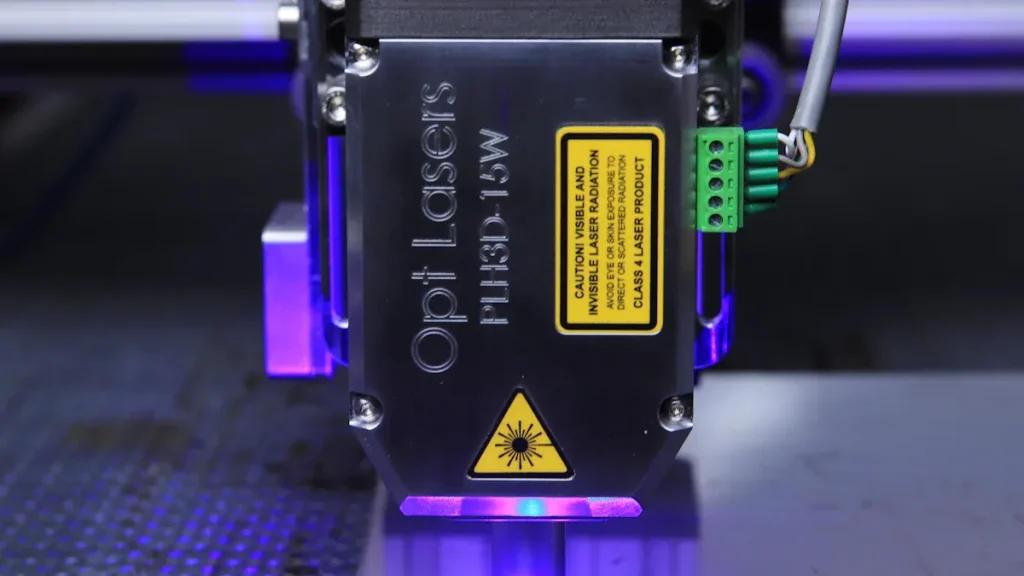
Direct diode laser technology is known for being efficient and small. These lasers change electricity into light very well, usually between 40% and 50%. This is better than Nd:YAG and fiber lasers. Their small size helps them fit into factories more easily than fiber or CO₂ lasers. The semiconductor diode lets them turn electric signals into strong light. This saves energy and space.
Direct diode laser systems can reach over 50% efficiency. They use less energy and space. This makes them good for factories and portable devices.
Manufacturers save money, work faster, and have more options. The table below shows the main benefits in factories:
| Advantage | Description |
|---|---|
| Cost effectiveness | Diode lasers are over 60% efficient, saving money over time. |
| Processing speed | Direct diode systems work faster without changing machines. |
| Flexibility | One system can give different powers, beam sizes, and colors. |
| Brightness | They are very bright, over 10 kW/cm², for quick jobs. |
| Reliability | They last over 50,000 hours and do not need much care. |
| Compact | Lasers and parts fit into one safe unit. |
- Efficiency is better than other lasers.
- Cut speeds are about 15% faster, especially for aluminum.
Direct diode lasers help save energy in factories. They use less energy for heating thin-film panels. Lasers also help save energy and money in making things. The price of strong semiconductor lasers has dropped in the last 20 years. This makes laser jobs cheaper.
Limitations and Challenges
Direct diode lasers have some problems. They make a wider beam that spreads out more. This is not good for jobs needing sharp beams. Diode-pumped solid-state lasers make a focused beam with less spread. These are better for jobs needing high beam quality.
| Laser Type | Beam Quality Characteristics |
|---|---|
| Direct Diode Lasers | Wider beam with more spread, not good for sharp jobs. |
| Diode-Pumped Solid-State Lasers | Focused beam with less spread, good for sharp jobs. |
- Direct diode lasers make a wide beam with more spread.
- Diode-pumped solid-state lasers are better for sharp jobs.
There are other problems too. Rules and laws are hard to follow. Making and designing lasers costs a lot. Other technologies like LEDs compete with them. Rules can slow down use in healthcare and cars. Things like temperature and gas can change how lasers work. Changing temperature and current helps keep lasers working well.
Direct diode lasers last about 10,000 to 20,000 hours. Fiber lasers last over 100,000 hours. CO₂ lasers last 8,000 to 12,000 hours.
| Laser Type | Average Lifespan (hours) |
|---|---|
| Direct Diode | 10,000 – 20,000 |
| CO₂ | 8,000 – 12,000 |
| Fiber | Over 100,000 |
Direct diode lasers need less care than fiber lasers. They do not have fiber cables to replace. But if they get too hot, the whole unit must be changed.
| Laser Type | Maintenance Requirement | Notes |
|---|---|---|
| Direct Diode Laser | Needs less care, no fiber cables to change. | Can get too hot; if it burns out, the whole unit must be replaced. |
| Fiber Laser | Must change the whole module if the fiber breaks. | More care needed because of the fiber part. |
Direct diode lasers cost less than fiber lasers for the same power.
| Laser Type | Output Power | Typical Unit Price |
|---|---|---|
| Direct Diode Laser | 1 kW | $20,000 |
| Fiber Laser | 1 kW | $25,000 |
- Hard rules make it cost more and take longer to sell.
- High costs make it hard for small companies to grow.
- LEDs compete with direct diode lasers.
- Rules slow down use in healthcare and cars.
Direct diode lasers help cut leather in cars and planes. They use less power than old cutting ways. This lowers pollution. Real-time changes make cutting better and help factories be greener.
Common Applications
Direct diode lasers are used in many jobs. The table below shows common uses:
| Application Type | Description |
|---|---|
| Food and Medical Packaging | Makes packing faster, safer, and better by heating for wrapping and sealing. |
| Semiconductor Substrate Heating | Heats materials for electronics with control and flexibility. |
| Carbon Composite Joining | Makes strong joints in carbon parts by heating evenly, lowering risks from glue and bolts. |
| Heat Treating and Cladding | Small, light systems work well for moving jobs, need little care, and last long. |
Direct diode lasers are used for laser beam jobs, welding, cutting metal, and making things. Strong diode lasers give good power and work well in factories. Their small size helps them fit into machines and portable tools.
- VCSELs shine light from the top, making them easy to use.
- They work in the near-infrared range, so they can be used in many ways.
- Their round beam means fewer parts are needed, saving weight and money.
New trends include better efficiency and smaller lasers. This helps them work in phones, medical tools, and electronics. Using AI makes lasers more accurate and automatic. Companies want greener technology.
Direct diode lasers are used more in factories and medicine. People want better laser diodes for communication and sensing. Direct diode lasers help with cutting, welding, and making things with good efficiency and reliability.
Direct diode lasers make laser light with semiconductor diodes. They work well and use energy efficiently. These lasers are small and easy to use. The table below shows their good and bad points:
| Benefits | Limitations |
|---|---|
| High efficiency, compact size, fast modulation | Lower beam quality, sensitive to temperature |
Many industries like these lasers for medical treatments. They do not need much care and help save money.
FAQ
What makes a direct diode laser different from other lasers?
A direct diode laser makes laser light with semiconductor diodes. Other lasers often need extra parts to make the light stronger. Some also use more complicated optical systems.
Can direct diode lasers cut metal?
Yes, direct diode lasers can cut thin metal. They work best on materials like aluminum and stainless steel. Factories use them for these jobs.
How long does a direct diode laser usually last?
Most direct diode lasers last about 10,000 to 20,000 hours. Good cooling and regular care help them last longer.