
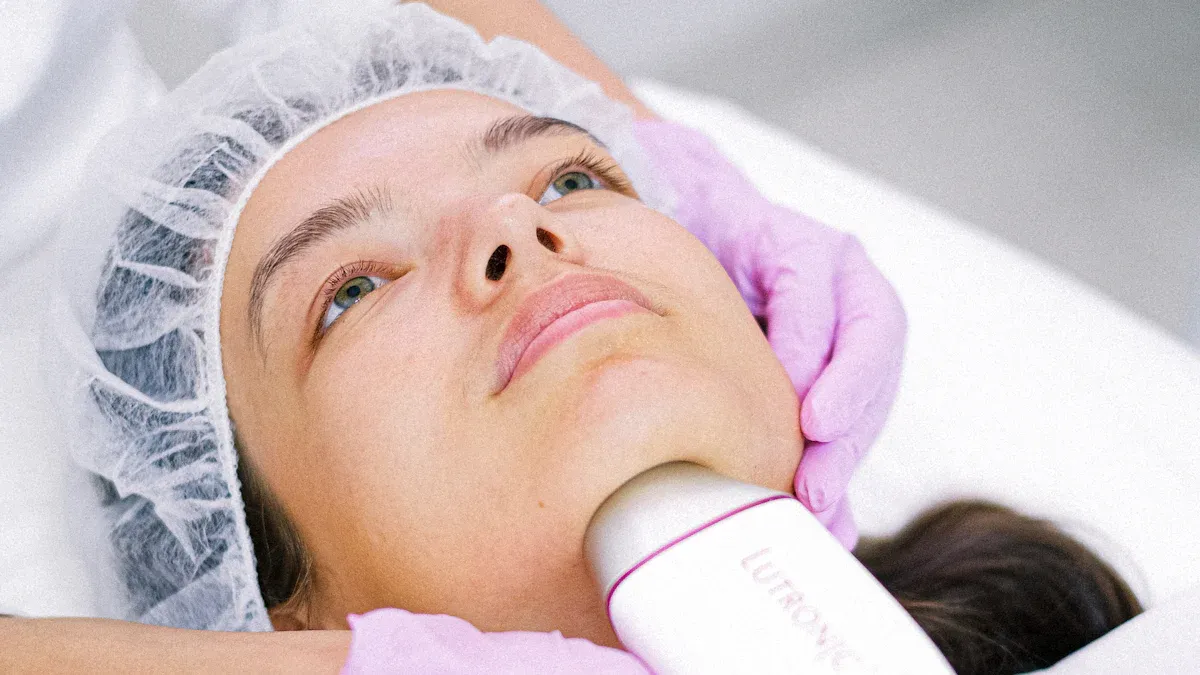
Laser in medical treatments uses strong beams of light. These beams help treat or remove tissues very carefully. Doctors use laser when they need to be very exact. Laser helps lower bleeding and makes scars smaller. In the last ten years, hospitals and clinics started using lasers more. Lasers are now used in many different medical fields. The table below shows how laser use in healthcare has changed:
| Aspect | Details |
|---|---|
| Market Growth | The market has grown a lot in the last ten years. Experts think it will keep growing 6-8% each year for five more years. |
| Market Valuation | The market is worth several billion US dollars. |
| Key Drivers | Better technology, more money spent on healthcare, and more ways to use lasers in medicine. |
| Regional Insights | North America and Europe use lasers the most. Asia-Pacific is growing fast because of more healthcare spending. |
| Adoption in Specialties | More lasers are used in eye care, skin care, and general surgery. |
| Integration with Technologies | Lasers work better now with robotic surgery and imaging systems. |
| Benefits of Laser Surgery | Laser surgery means less bleeding, smaller scars, and faster healing. |
Key Takeaways
- Lasers help doctors treat patients with great accuracy. They can lower bleeding and scarring. Laser surgery helps people heal faster than regular surgery. Patients can go back to their normal lives sooner. There are many kinds of lasers for different medical jobs. Some lasers are used for eye surgery. Others are for skin care or dental work. Laser treatments are mostly safe. But sometimes burns or infections can happen. Patients should talk to their doctors about these risks. More hospitals use lasers now. This is because technology is getting better and healthcare costs are rising.
Laser in Medical Practice
How Medical Lasers Work
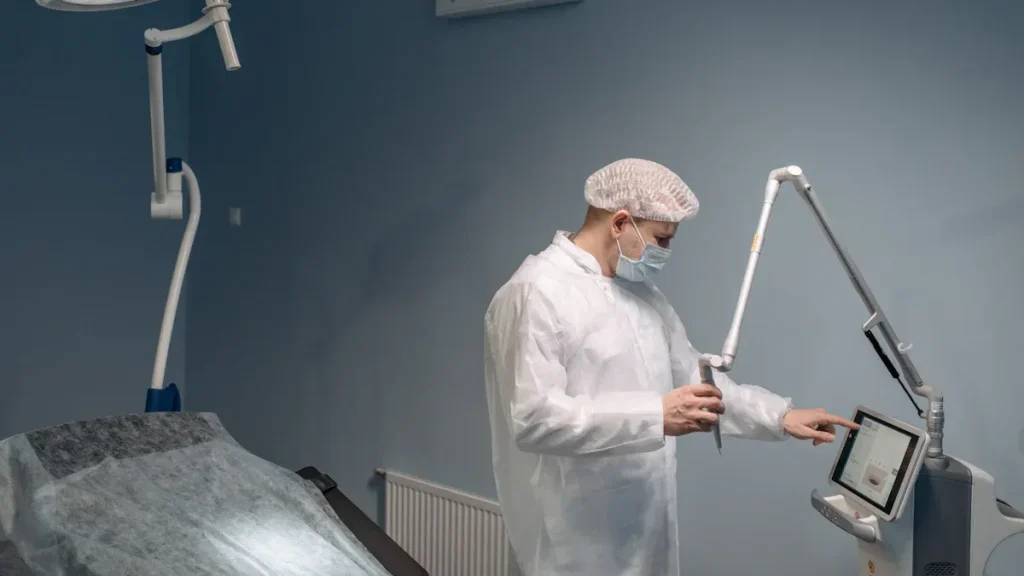
Laser in medical treatments uses strong light beams to focus on certain tissues. Medical lasers work by making a powerful, single-color light. This light can be aimed very exactly. When the laser light hits the body, it can do different things. The light might bounce off, spread out, get soaked up, or go through the skin. Some parts of the tissue, called chromophores, take in the laser energy. When this happens, the tissue can heat up, get cut, or have bad cells destroyed.
Medical lasers can do different jobs based on the tissue and the laser’s settings. Some lasers can close blood vessels. Others can take away or change tissue. Low-level laser therapy, or LLLT, helps wounds heal and lowers pain without burning the skin. Studies show that lasers can treat many problems, like long-lasting pain, wounds, and some infections. Scientists are still learning how lasers can help patients and make treatments safer.
Common Types of Medical Lasers
Doctors use different kinds of medical lasers. Each type has special features and uses. The table below lists some common types and what they are used for:
| Laser Type | Wavelength (nm) | Main Medical Uses |
|---|---|---|
| CO2 Laser | 10,600 | Soft tissue surgery, periodontitis, biopsy sampling |
| Nd:YAG Laser | 1,064 | Deep tissue treatments, LANAP, lesion excision |
| Argon Laser | 488-514 | Eye surgery, caries detection, superficial coagulation |
| Dye Laser | 400-950 | Tattoo removal, vascular lesions, dermatology |
| Excimer Laser | UV range | Eye surgery, dermatology |
| Semiconductor Laser | 405-1500 | General surgery, dental procedures, physiotherapy |
CO2 lasers are good for cutting and closing soft tissue. Nd:YAG lasers go deeper and treat things like periodontitis. Argon lasers are used in eye surgery and finding dental problems. Dye lasers take off tattoos and fix skin problems. Excimer lasers are important for eye surgery, like fixing vision. Semiconductor lasers are small and work for many medical jobs.
Laser in medical practice is growing as technology gets better. Doctors pick the best medical laser for each patient and treatment.
Main Uses of Medical Lasers
Laser Surgery
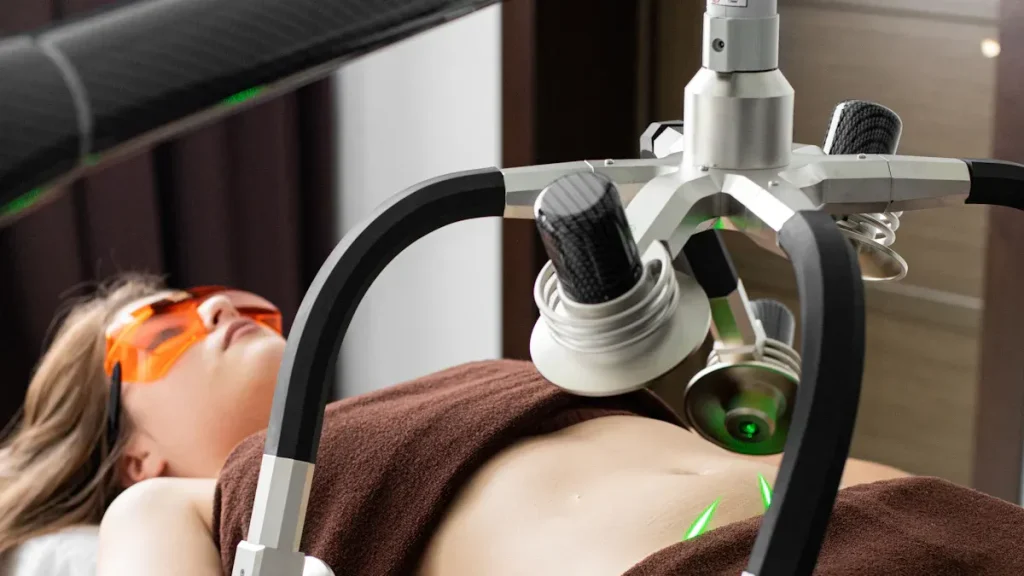
Laser surgery has changed how doctors help people. Surgeons use strong light beams to cut or remove tissue very carefully. This way, there is less bleeding and a lower chance of infection. Many hospitals now pick laser surgery for easy and hard surgeries. Doctors use lasers to treat tumors, take off warts, and do careful work on eyes and other organs.
Lasers are good for taking out tumors in the throat, lungs, and cervix. Surgeons also use lasers for kidney stones and to open blocked blood vessels. In cancer care, lasers can shrink or destroy tumors with less harm to healthy tissue. The table below shows some common surgeries and what happens after:
| Surgical Procedure | Common Laser Types | Reported Outcomes |
|---|---|---|
| Cataract Surgery | Femtosecond laser (FSL) | Better predictability, reduced swelling, low complication rates |
| Laser Lithotripsy | Holmium:YAG laser | High rates of stone fragmentation, safe for nearby tissues |
| Ophthalmic Procedures | Argon, Nd:YAG lasers | Effective for eye problems, different effects based on laser type |
| Gastrointestinal Surgery | Various lasers | Safe and effective for cancer and reconstructive procedures |
Laser surgery helps people heal faster and have fewer problems than regular surgery. Most patients can go back to normal life in about two days. Regular surgery can take two weeks or more. There is also less bleeding with laser surgery.
Dermatology and Cosmetic Treatments
Lasers are important in skin and beauty medicine. Doctors use lasers to treat skin problems, remove tattoos, and help people look better. Lasers can take off warts, birthmarks, and hair people do not want. They also help make wrinkles and scars look smaller.
The table below shows main uses in skin and beauty care:
| Specialty | Main Applications |
|---|---|
| Dermatology | Tattoo removal, skin rejuvenation, wrinkle reduction |
| Aesthetic | Hair removal, hyperpigmentation treatment |
Lasers work well for removing tattoos. Some lasers can clear 75% of blue and green colors in just one or two visits. With more treatments, most tattoos can almost go away. For skin care, lasers help with acne, psoriasis, eczema, and atopic dermatitis. Doctors also use lasers for photorejuvenation, which makes skin look younger and healthier.
Note: Lasers are a gentle way to treat many skin problems. Patients often feel less pain, less swelling, and heal faster.
Eye Surgery Applications
Doctors use lasers for many eye problems. Laser eye surgery helps fix vision, treat cataracts, and repair the retina. LASIK and PRK are two common eye surgeries that change the shape of the cornea to help people see better.
Laser eye surgery works very well. About 99% of people get 20/40 vision or better, and 90% get perfect 20/20 vision. Problems happen less than 1% of the time. Most people are happy with their results. The table below compares LASIK and PRK:
| Feature | LASIK | PRK |
|---|---|---|
| Recovery Time | 1–2 days for functional vision | 4–7 days for functional vision |
| Initial Discomfort | Less | More |
| Long-term Vision Outcome | Over 90% achieve 20/20 vision | Over 90% achieve 20/20 vision |
| Patient Satisfaction | 93.3% | 95.6% |
Doctors also use lasers to treat glaucoma, diabetic eye disease, and retinal tears. These treatments help save vision and make life better.
Dental and Other Specialties
Dentists use lasers for many jobs. Lasers help shape gums, clean out cavities, and disinfect root canals. Lasers can also lower pain and help people heal faster. The table below shows how lasers help in different dental areas:
| Dental Specialty | Laser Application | Benefits |
|---|---|---|
| Prosthodontics | Debonding crowns, veneers, and brackets | Preserves tooth structure |
| Periodontology | Debridement, support regeneration, wound healing | Reduces inflammation, promotes healing |
| Endodontics | Root canal disinfection | Kills bacteria, avoids harsh chemicals |
| Soft Tissue Procedures | Gum reshaping, treating tongue frenulum | Improves comfort, shortens recovery |
| General Benefits | Pain reduction, inflammation control, tissue repair | Better outcomes, higher patient satisfaction |
Lasers are also used in urology, oncology, and other fields. Urologists use lasers to break up kidney stones and treat prostate problems. Oncologists use lasers to remove tumors and take biopsies. Surgeons use lasers for cutting, ablation, and stopping bleeding. Other uses include angioplasty, plastic surgery, and medical imaging.
| Medical Specialty | Key Insights |
|---|---|
| Dermatology | More lasers used for minimally invasive procedures, including caries removal and soft-tissue surgery. |
| Dentistry | Lasers help with periodontal therapy and cosmetic treatments. |
| Ophthalmology | Most laser procedures happen in eye care, especially for cataracts. |
| Urology | Lasers are popular for kidney stones and prostate treatments. |
| Oncology | Lasers help remove tumors and perform biopsies in cancer care. |
Laser surgery and treatments are growing in medicine. Doctors pick lasers because they are exact, safe, and help patients get better results.
Benefits and Risks
Advantages of Laser Treatments
Lasers have changed how doctors help people with health problems. These tools let doctors be more careful and exact than old ways. Laser therapy often does not need cuts or stitches. Many people pick laser treatments because they want less pain and to get better faster. For example, laser skin resurfacing and hair removal do not need anesthesia or long rest. Most people can go back to work or school almost right away.
Doctors see many good things when they use lasers. There is less bleeding, smaller scars, and healing is faster. One study showed that laser surgery makes smaller and cleaner wounds. People heal faster and feel less pain after the treatment. The table below shows how laser surgery and regular surgery are different:
| Evidence Type | Findings |
|---|---|
| Laser Surgery | Reduced bleeding and smaller scars. Faster healing and less pain. |
| Traditional Surgery | More blood loss, bigger scars, and longer recovery. |
Laser therapy helps with many health problems. It works for skin, teeth, and eyes. People who had CO₂ laser treatment were happy 96% of the time. Only 76% of people who had regular surgery felt happy. This means lasers can make people feel better about their results.
Note: Laser therapy does not cut the skin, has few side effects, and helps people heal fast.
Potential Risks and Side Effects
Lasers are safe for most people, but there are some risks. Doctors have seen burns, infections, and scars after laser treatments. In one study, about 25% of laser sessions had some side effects. Most problems were small, like redness or swelling. Only a few people got infections.
The table below shows how risks are different for laser therapy and regular surgery:
| Treatment Type | Risks and Limitations |
|---|---|
| Laser Therapy | Short-term benefits, rare side effects, not for all conditions, mild redness. |
| Traditional Surgery | More tissue damage, higher risk of infection, longer pain and recovery. |
New research found no serious long-term problems with lasers. Most people only felt a little pain or redness. The chart below shows how safe and helpful two types of laser hair removal are:
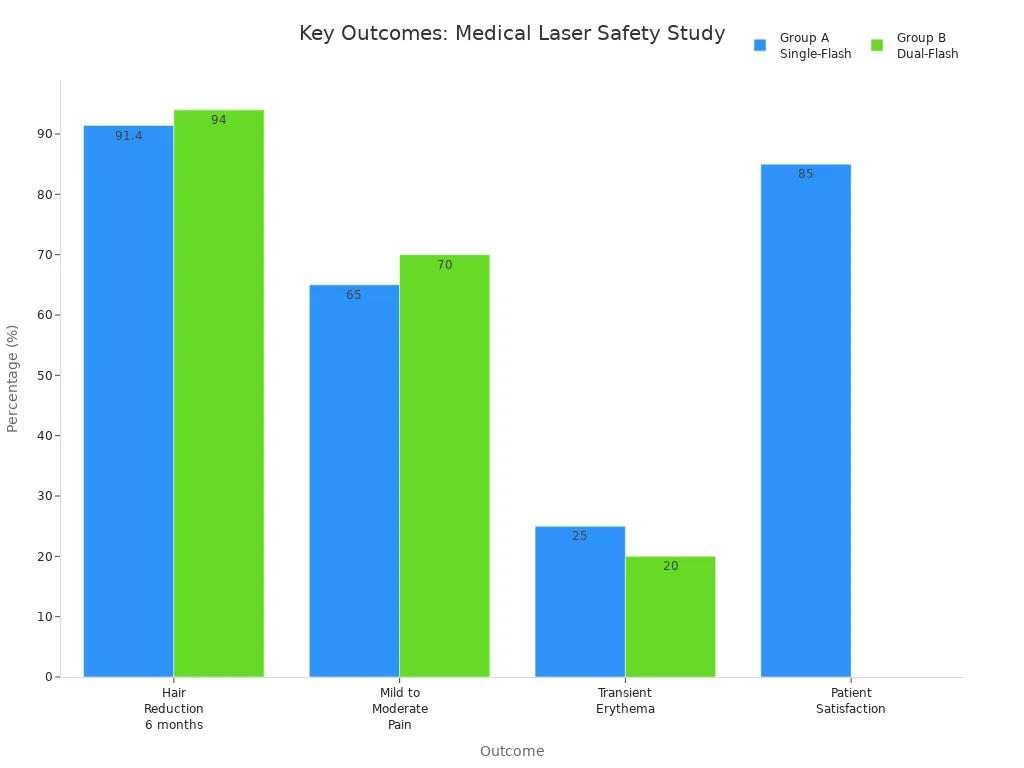
Doctors always check if laser therapy is good for each person. They talk about the risks and help people make safe choices.
Lasers are important in medicine today. They help treat skin, eyes, and teeth with great accuracy. Doctors notice people heal faster and have fewer scars. But patients need to know the good and bad sides. New technology uses artificial intelligence and machines to make treatments safer and better.
“Doctors now have more tools to help them do a better job. There are more machines and easy menus for different treatments,” says Dr. E. Victor Ross.
Patients should talk to their doctors about choices. They need to think about what is best for them. It is important to follow safety rules to get the best results.
FAQ
What conditions can doctors treat with medical lasers?
Doctors use medical lasers for many health problems. They help with skin issues, eye problems, dental needs, and some cancers. Lasers can take away tissue that is not wanted. They also fix vision and help manage pain. Each laser type is best for certain jobs.
How do lasers help in cancer treatment?
Lasers are important in treating cancer. They can make tumors smaller or destroy them using focused light. Doctors aim lasers at cancer cells and try to keep healthy tissue safe. This way, people often have less pain and heal faster.
Are laser procedures safe for children?
Doctors use lasers for children in a safe way. They treat birthmarks, skin growths, and some eye problems. Safety depends on the child’s health and the kind of treatment. Parents should talk to a doctor before their child gets laser treatment.
Do laser treatments hurt?
Most people feel little pain during laser treatments. Some may feel a little discomfort, warmth, or tingling. Doctors might use numbing cream or local anesthesia to help. People usually have less pain after laser treatment than after regular surgery.
Can lasers cure all types of cancer?
Lasers cannot cure every kind of cancer. They work best for cancers close to the skin, in the mouth, or in the eyes. Doctors sometimes use lasers with other treatments like chemotherapy or radiation for better results.