
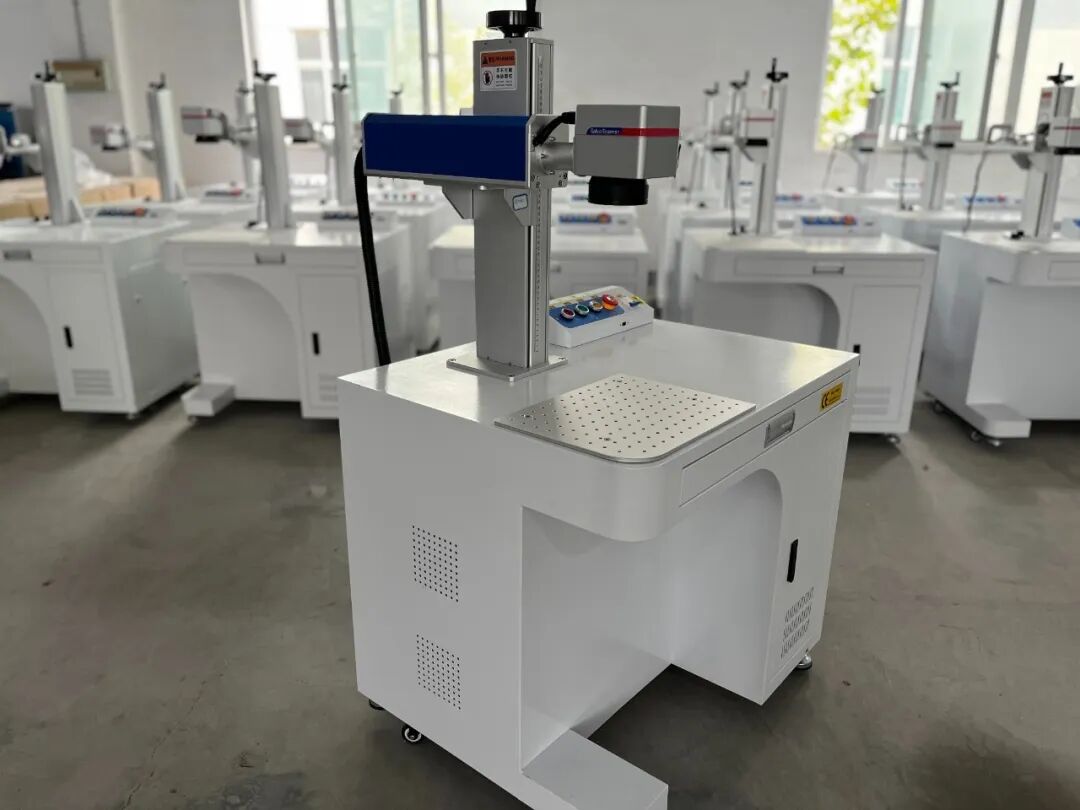
Core takeaway: The most important difference between a UV laser and a fiber laser is not whether one system is rated at 3 W and the other at 30 W. It is the wavelength: UV marking commonly uses 355 nm light, while industrial fiber laser marking typically uses around 1064 nm near-infrared light.
That wavelength difference changes how energy couples into the material, how much heat is generated, how small the achievable marking features can be, and which materials respond well to the process.
A practical selection rule is therefore:
Choose the wavelength from the material and marking objective first. Choose the required laser power second.
This matters when selecting an industrial fiber laser source for a marking system. Higher power does not automatically make a fiber laser a better choice for every material, just as a UV laser is not automatically superior whenever fine marking is required.
What Is the Main Difference Between a UV Laser and a Fiber Laser?
UV and fiber lasers interact with materials differently because their wavelengths are very different. A typical UV marking laser operates at 355 nm, while a common ytterbium fiber marking laser operates near 1064 nm.
| Characteristic | UV Laser | Fiber Laser |
|---|---|---|
| Typical wavelength | 355 nm | Around 1064 nm |
| Typical marking power | Often several watts | Commonly tens of watts or higher |
| Processing style | Lower thermal impact, fine material interaction | Strong thermal interaction with many metals |
| Best-known strengths | Fine marking, sensitive materials, plastics, glass | Metals, engraving, high-speed industrial marking |
| Typical spot size | Smaller | Larger for a comparable optical setup |
| Deep engraving | Not its main advantage | Generally much more suitable |
The shorter UV wavelength can generally be focused into a smaller spot and interacts more strongly with many polymers and sensitive materials. The 1064 nm output of a fiber laser, by contrast, is particularly well suited to metallic materials and industrial marking where speed, durability, and engraving depth matter.
Why Is UV Laser Marking Often Called “Cold Processing”?
UV laser marking is often described as cold processing because it can produce material changes with less surrounding thermal damage than many infrared laser processes. The term does not mean that no heat is generated.
The distinction is important.
With many near-infrared marking processes, material removal or color change depends heavily on heating, melting, oxidation, or vaporization. This can create a larger heat-affected area around the mark.
UV photons carry higher photon energy because of their shorter wavelength. In suitable materials, this can promote photochemical bond breaking and highly localized ablation, allowing the system to remove or modify a very thin material layer without heating as much surrounding material.
This makes UV marking particularly useful when the product is sensitive to:
- Melting
- Burning
- Carbonization
- Edge deformation
- Large heat-affected zones
- Discoloration outside the intended mark
However, calling UV processing completely “heat-free” would be misleading. The better description is lower thermal impact.
Is a UV Laser Always Better for Plastic Marking?
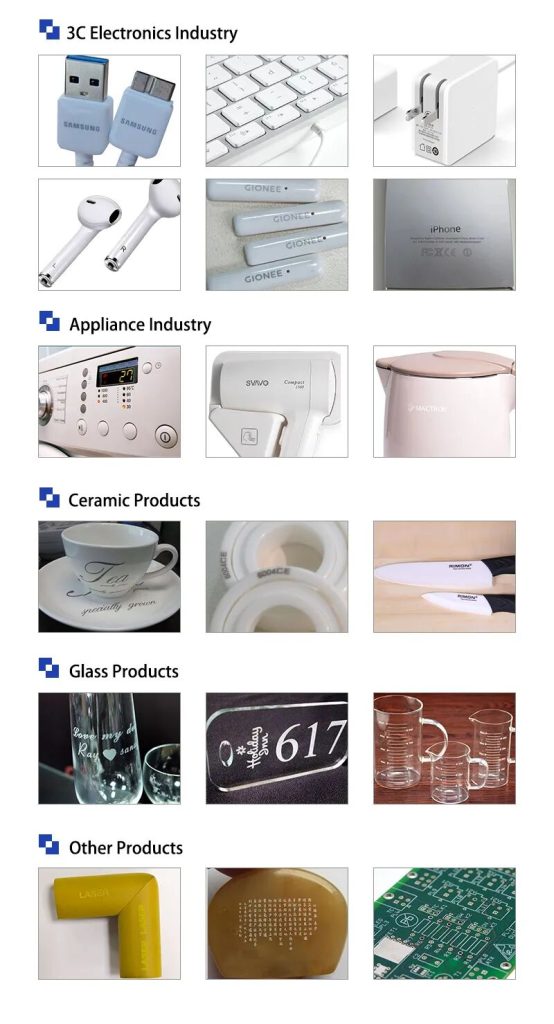
No. Plastic is too broad a material category for wavelength selection to be based on the word “plastic” alone. Resin type, additives, pigments, fillers, surface finish, required contrast, and the desired marking mechanism all affect the result.
UV lasers are often a strong option for materials such as:
- ABS
- PC
- PE
- PP
- PVC
- Silicone
- Plastic films
- Electronic housings
- Medical and consumer-product plastics
They are especially attractive when the requirement is a fine, high-contrast mark with limited melting or burning.
But many plastics can also be marked effectively with a fiber laser, particularly when the polymer contains laser-sensitive additives or when the desired effect is darkening, foaming, carbonization, or another thermally driven color change.
The correct question is therefore not:
“Is this plastic?”
It is:
“What polymer is it, what additives does it contain, and what final appearance must the mark have?”
When Is a UV Laser Better for Glass Marking?
UV lasers are often considered first for fine marking on glass because the short wavelength can create highly localized material modification with relatively limited surrounding heat input. This can be useful when surface quality and crack control are important.
Typical applications include:
- Glass bottles
- Cosmetic packaging
- Display glass
- Optical products
- Laboratory glassware
- QR codes and serial numbers
- Fine decorative markings
Glass is brittle and sensitive to thermal stress. A process that creates a large temperature gradient can increase the risk of microcracking, chipping, or uncontrolled fractures.
This does not mean every glass product requires UV. Glass composition, thickness, coating, required depth, production speed, and whether the mark is on the surface or inside the glass all affect the optimum laser technology.
Why Are Fiber Lasers Usually Preferred for Metal Marking?
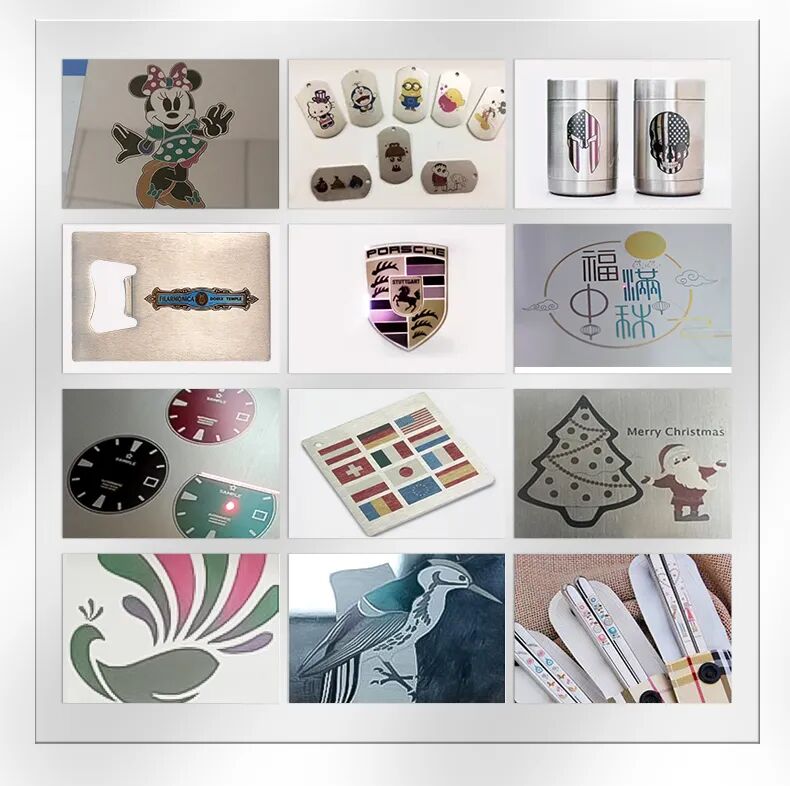
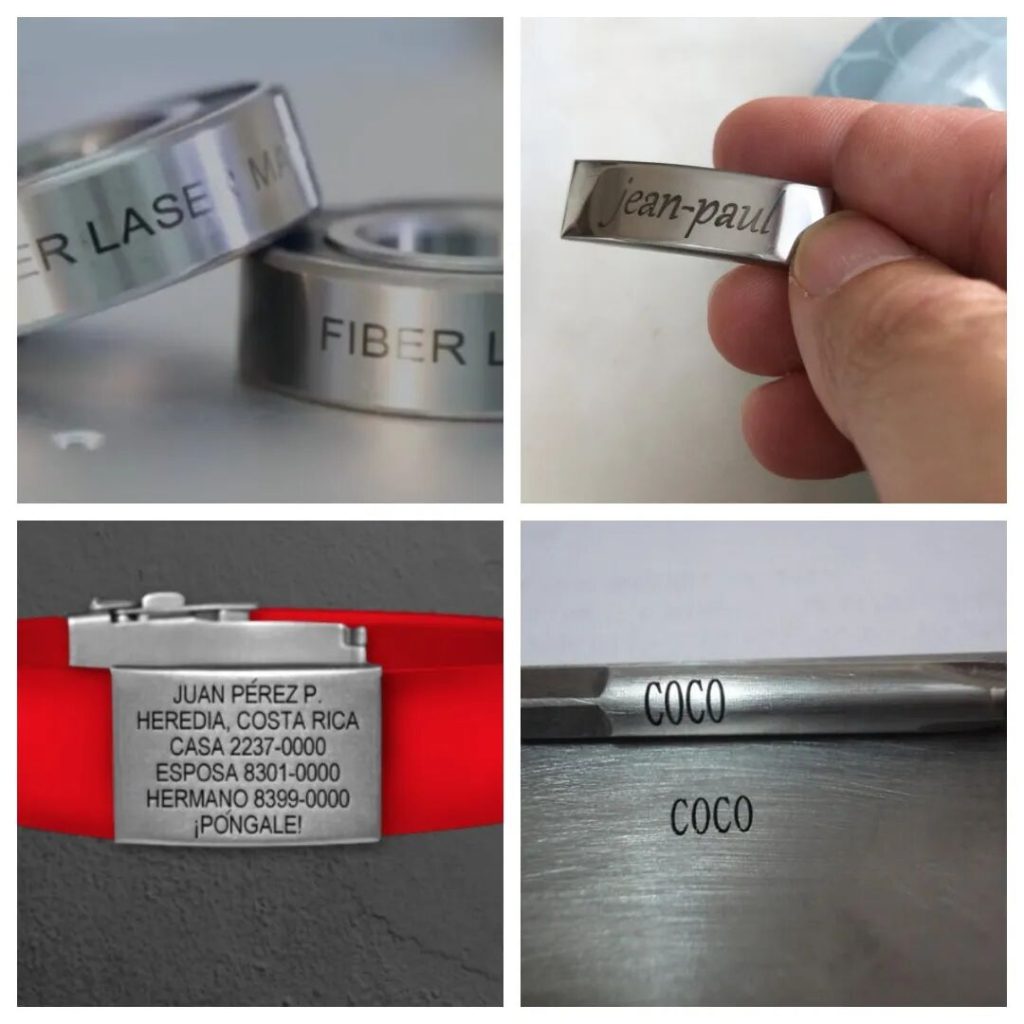
For most industrial metal marking applications, fiber lasers remain the more practical choice. Metals typically respond well to near-infrared fiber laser output, and fiber systems can provide high power density, fast marking speeds, good electrical efficiency, and long operating life.
Typical materials include:
- Stainless steel
- Carbon steel
- Aluminum
- Anodized aluminum
- Copper
- Brass
- Titanium
- Nickel alloys
- Coated and plated metals
A fiber laser can be used for several different marking mechanisms depending on power, pulse characteristics, focus, and scan parameters:
- Surface engraving
- Deep engraving
- Annealing
- Oxide-color marking
- Coating removal
- Fine serial numbers
- Barcodes and QR codes
- Logos and traceability marks
If the requirement is deeper material removal, durable identification, or high-throughput metal marking, a fiber laser is generally more suitable than a low-power UV source.
Can a UV Laser Mark Metal?
Yes. UV lasers can mark many metallic surfaces, so “UV cannot mark metal” is incorrect. The more useful question is whether UV provides a production advantage for that particular metal application.
UV can be useful for very fine markings, thin coatings, sensitive electronic components, or applications where minimizing heat input is more important than engraving depth.
However, when an application requires:
- Deep engraving
- High material-removal rate
- Fast production throughput
- Large marking areas
- Robust permanent identification
a fiber laser usually provides the better productivity-to-cost balance.
Why Are UV Laser Marking Systems Usually More Expensive?
UV laser marking systems are generally more expensive than conventional fiber laser marking systems of similar industrial class because producing stable 355 nm output requires a more complex optical architecture.
A common UV source starts with an infrared laser and converts the wavelength through nonlinear optical processes before generating the final UV output. This adds optical components and increases the requirements for alignment, thermal control, cleanliness, and component quality.
UV optical components also operate under demanding conditions. Contamination, coating quality, and optical alignment can have a greater effect on long-term stability.
Additional cost can therefore come from:
- More complex laser architecture
- Nonlinear optical crystals
- UV-grade optical coatings
- Higher cleanliness requirements
- Thermal-control requirements
- More specialized maintenance
Fiber laser marking sources use a more mature industrial architecture and are produced at much larger scale, which generally makes them more economical for mainstream metal-marking applications.
Which Materials Are Better Suited to UV and Fiber Laser Marking?
The following table is a starting point rather than an absolute rule. Material formulation and the desired marking effect can change the preferred technology.
| Material / application | UV laser | Fiber laser |
|---|---|---|
| Stainless steel marking | Possible | Usually preferred |
| Aluminum marking | Possible | Usually preferred |
| Deep metal engraving | Limited | Strong choice |
| ABS / PC plastic | Often excellent | Material-dependent |
| PE / PP plastic | Often suitable | Highly formulation-dependent |
| Silicone | Often suitable | Application-dependent |
| Glass | Strong choice for fine marking | Usually less common |
| PCB / electronics | Strong for fine, low-heat marking | Useful for metallic components |
| Thin films | Often preferred | May create excessive thermal effect |
| Coating removal from metal | Fine selective removal | Excellent for higher-throughput removal |
Does Higher Laser Power Mean Better Marking?
No. Laser power should be evaluated only after the correct wavelength and process mechanism have been selected.
A 30 W fiber laser is not automatically “better” than a 5 W UV laser because the two systems are solving different material-interaction problems.
Higher power can help when the process requires:
- Greater material removal
- Higher marking speed
- Deeper engraving
- Larger processing margins
But excessive power can also create:
- Melting
- Burning
- Discoloration
- Large heat-affected areas
- Poor fine-detail control
Power should therefore follow the process requirement rather than lead the selection process.
How Should You Choose Between UV and Fiber Laser Marking?
The fastest useful selection method is to start with the product rather than the machine specification.
| Question | Why it matters |
|---|---|
| What material is being marked? | Determines wavelength absorption and marking mechanism |
| What final mark is required? | Engraving, color change, coating removal, or surface modification require different processes |
| How fine are the characters or graphics? | Very fine features may benefit from shorter wavelengths |
| How much thermal effect is acceptable? | Sensitive materials may favor UV |
| Is engraving depth required? | Fiber lasers generally provide more practical metal removal |
| What production speed is required? | Throughput can change the optimum source power and architecture |
| What is the acceptable equipment cost? | UV systems generally carry a higher initial cost |
A simple rule of thumb is:
- Fine plastic, glass, film, and heat-sensitive marking: evaluate UV first.
- General metal marking and engraving: evaluate fiber laser first.
- Mixed or unusual materials: do not choose from a specification sheet alone.
What Is the Most Reliable Way to Choose a Marking Laser?
The most reliable method is to test the actual production material using the candidate laser technologies. A datasheet can narrow the options, but it cannot fully predict the interaction between a laser and a specific commercial material.
For a useful sample-marking test, send the supplier:
- The actual production material
- The exact surface finish or coating
- The required text, logo, QR code, or graphic
- The minimum feature size
- The acceptable marking depth
- The required contrast or color
- The maximum acceptable thermal effect
- The production cycle-time target
Then compare the results under the same acceptance criteria.
Do not compare only whether both machines can “make a mark.” Compare:
- Contrast
- Edge quality
- Feature resolution
- Surface deformation
- Heat-affected area
- Engraving depth
- Cycle time
- Repeatability
For metal-marking equipment, the selected fiber laser source should then be matched to the required marking speed, pulse behavior, beam quality, and integration architecture rather than selected from wattage alone.
UV Laser vs Fiber Laser: Which One Is Better?
Neither technology is universally better. UV lasers and fiber lasers solve different marking problems because they deliver different wavelengths and therefore interact differently with materials.
UV lasers are particularly useful when the priority is fine features, low thermal impact, glass, polymers, films, or sensitive electronic products.
Fiber lasers are generally stronger when the priority is metal marking, engraving depth, throughput, industrial durability, and cost efficiency.
The most useful purchasing question is therefore not:
“Which laser is better?”
It is:
“Which wavelength produces the required mark on my actual material with the required quality, speed, and cost?”
Frequently Asked Questions About UV and Fiber Laser Marking
Is a UV Laser Better Than a Fiber Laser for Plastic?
Not always. UV performs very well on many plastics because of its shorter wavelength and lower thermal impact, but polymer formulation, additives, pigments, and the required marking effect determine the final choice.
Can a Fiber Laser Mark Glass?
Some glass-processing results are possible with suitable laser systems, but conventional 1064 nm fiber marking is generally not the first choice for fine glass marking. UV and other wavelength technologies are usually evaluated when controlled glass modification is required.
Can a UV Laser Mark Metal?
Yes. UV lasers can produce fine marks on many metallic surfaces, but fiber lasers are generally more practical for high-speed metal marking, deeper engraving, and mainstream industrial traceability.
Should I Choose a Laser Based on Wattage?
No. Select the wavelength and marking mechanism from the material and quality requirement first, then determine how much power is required to achieve the target production speed.