
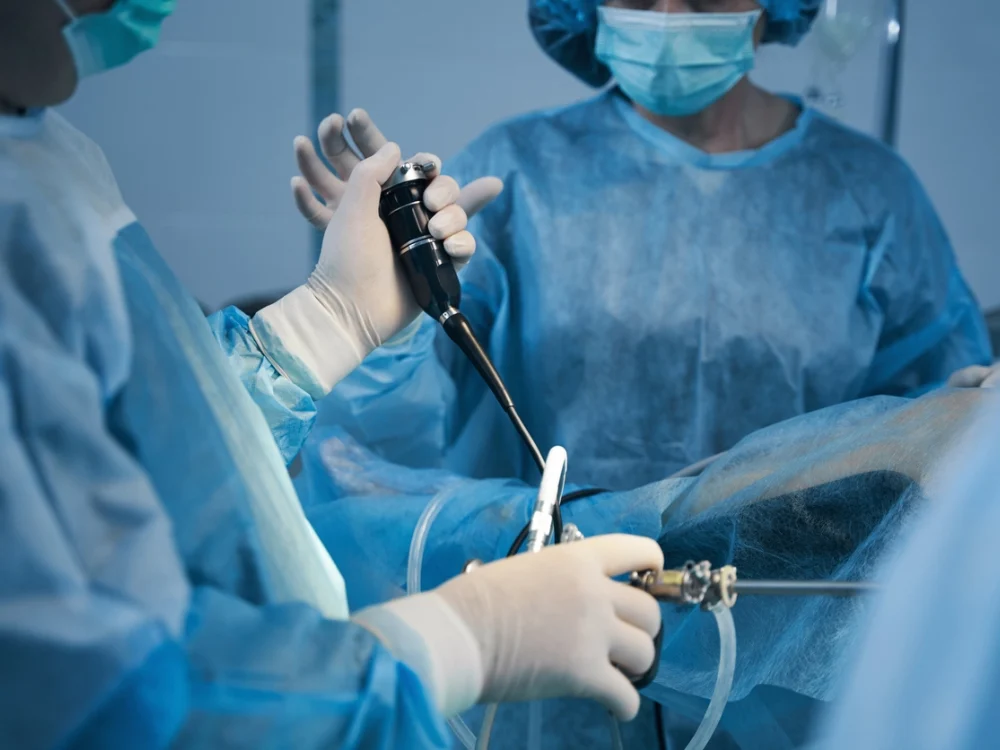
The Thulium fiber laser (TFL) brings major improvements to urology procedures. Doctors use it for treating kidney stones and enlarged prostate issues with better precision, less stone movement, and faster dust-like breaking of stones compared to older lasers like Ho:YAG. This leads to shorter procedures, clearer views during surgery, and quicker recovery for patients.
How Thulium Fiber Laser Works in Urology
The Thulium fiber laser uses a wavelength close to 1940 nm, which water in body tissues absorbs very well. This gives it a shallow penetration depth of about 0.2–0.3 mm. The laser can run in different modes, like super-pulsed for breaking stones or quasi-continuous for cutting soft tissue. It allows very small fibers, high pulse rates up to 2200 Hz, and low energy per pulse. These features make it flexible for different urology tasks.
Key Physical Advantages Over Traditional Lasers
TFL has four times higher water absorption than Ho:YAG lasers. This means better energy focus on targets with less spread to nearby tissue. It produces finer dust from stones and reduces unwanted stone kickback during treatment.
Benefits for Kidney Stone Treatment (Lithotripsy)
Kidney stones cause pain and block urine flow. TFL breaks them into tiny dust particles during ureteroscopy or other minimally invasive methods. Studies show it ablates stones 1.5 to 4 times faster than Ho:YAG in lab tests.
2.1 Reduced Stone Retropulsion
Stone retropulsion happens when fragments move away from the laser spot. TFL uses lower energy pulses and higher frequencies to cut this movement a lot—sometimes to almost zero. This saves time chasing pieces and improves efficiency.
Finer Dust and Higher Stone-Free Rates
TFL creates smaller particles, often 100 microns or less, like fine dust. This helps clear stones more completely without large leftover bits. Some reviews report higher stone-free rates and shorter operation times with less stone migration.
Better Visibility and Safety
Less retropulsion and finer dust keep the view clear inside the scope. Smaller fibers improve irrigation flow and scope bending in tight areas. Thermal safety stays high with shallow penetration, lowering risks to surrounding tissues.
Benefits for Prostate Procedures (BPH Treatment)
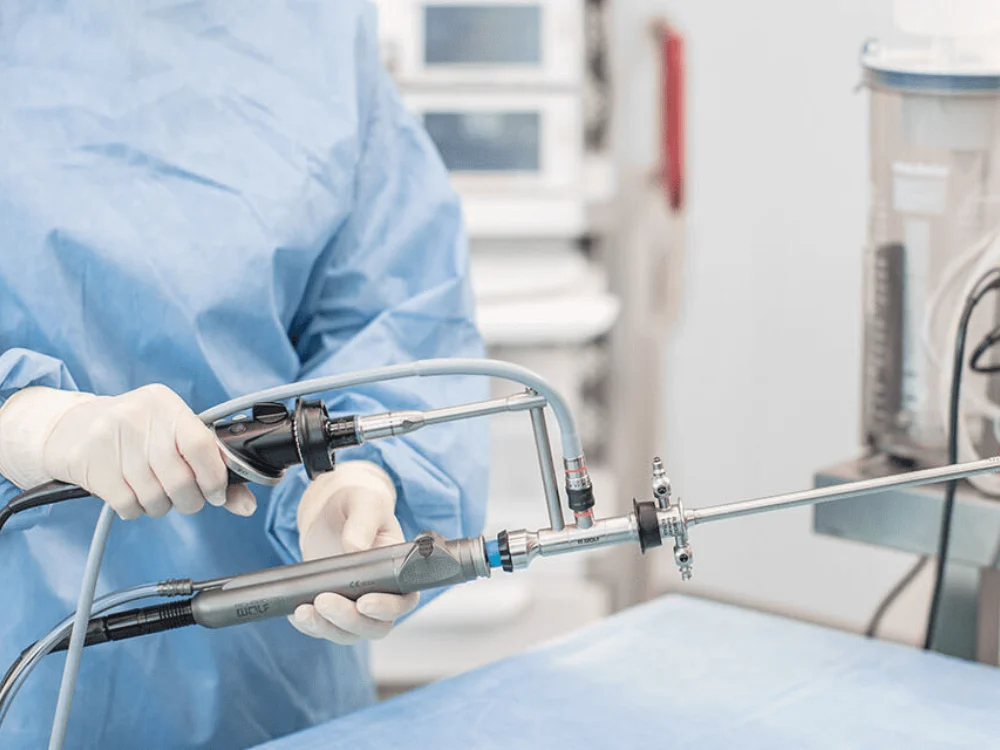
Benign prostatic hyperplasia (BPH) enlarges the prostate and blocks urine. TFL helps in endoscopic enucleation (ThuFLEP), where surgeons remove blocking tissue precisely.
Smoother Cutting and Better Hemostasis
TFL offers smooth cuts with good coagulation to control bleeding. It causes less charring than some older thulium lasers. This gives clearer tissue views and may shorten learning time for surgeons.
Comparable or Better Outcomes Than Other Methods
ThuFLEP matches HoLEP in symptom relief, flow improvement, and safety. Some studies show faster enucleation, less blood loss, shorter catheter time, and quicker hospital stays compared to traditional resection or open surgery.
Reduced Thermal Damage
The shallow depth limits heat spread, cutting thermal damage zones by up to four times. This lowers scarring risks and supports faster healing after prostate treatment.
Overall Advantages in Urology Practice
TFL systems are smaller, lighter, and use less power than many Ho:YAG units. They need low maintenance and support a wide range of settings for both stone and soft tissue work. Surgeons gain from better control, and patients benefit from shorter procedures and recovery.
Summary of Key Points
Thulium fiber laser stands out in urology for its precision and efficiency. It reduces stone kickback, creates finer dust for kidney stone clearance, and provides smooth, low-bleed cutting for prostate enucleation. Compared to Ho:YAG, it often shortens surgery time, improves views, and matches or beats outcomes in symptom relief and safety. These features make TFL a strong choice for modern minimally invasive urology.
Frequently Asked Questions (FAQ)
Thulium fiber laser safe for all patients?
Yes, studies show TFL is safe with low complication rates. Its shallow penetration protects nearby tissues, but doctors assess each patient for best use.
How does TFL compare to Ho:YAG for kidney stones?
TFL often gives faster ablation, less retropulsion, and finer dust. Some trials show similar stone-free rates, but TFL can make procedures quicker and easier in many cases.
Can TFL treat large prostates?
Yes, ThuFLEP works well for medium to large prostates. It offers good symptom control with less blood loss and shorter recovery than some older methods.
What are the main limits of Thulium fiber laser?
It is newer, so long-term data grows. In some settings, outcomes match but do not always beat established lasers. Cost and availability vary by location.
For more information or questions about Thulium fiber laser options, reach out to a urology specialist.