
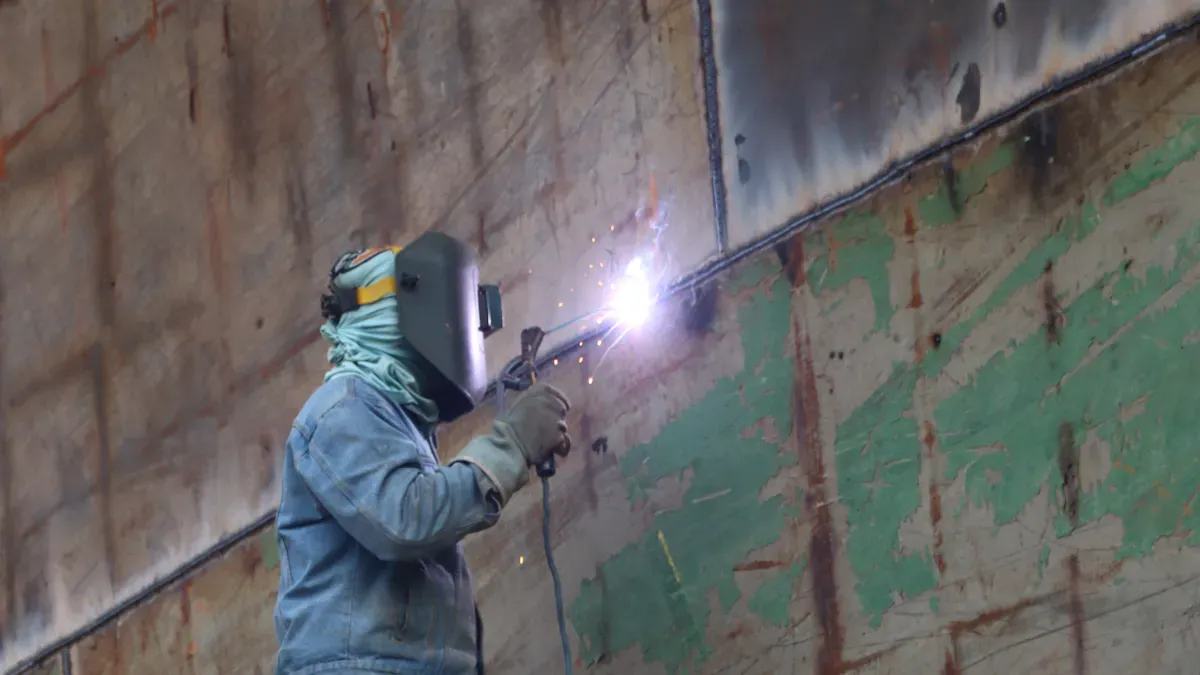
High-power fiber lasers are changing the shipbuilding industry. These lasers support shipbuilding applications like welding, cutting, and repairs. Their energy density allows precise work with minimal deformation, which improves quality.
Many companies now prefer high-power fiber lasers because they offer faster processing speeds and automation.
- The high power laser segment is projected to account for nearly 50% of the global market share by 2026.
- Shipbuilding relies on these applications to boost efficiency and drive innovation.
Key Takeaways
- High-power fiber lasers enhance shipbuilding by improving speed and precision, allowing for faster production and reduced costs.
- These lasers achieve cutting accuracy of ±0.1mm, enabling complex shapes and minimizing material waste.
- Automation and smart software integration streamline operations, increasing efficiency and safety in shipyards.
- Laser technology reduces energy consumption by 20-30%, making shipbuilding more sustainable and cost-effective.
- The market for high-power fiber lasers is rapidly growing, projected to reach $7.82 billion by 2027, indicating a strong future for this technology.
Shipbuilding Industry Needs and Challenges

Production Demands
The shipbuilding industry faces many production demands. Shipyards must deliver vessels quickly and meet strict quality standards. Rising material costs and environmental regulations add pressure. High-power fiber lasers help the shipbuilding industry overcome these challenges. The technology allows faster processing and reduces steel consumption. Intelligent nesting software can lower material use by up to 20%. Laser systems also operate with low noise and dust, which supports environmental goals.
| Production Demand | How High-Power Fiber Lasers Address It |
|---|---|
| Shorter delivery cycles | Adoption of laser cutting technology for faster processing. |
| Rising material costs | Intelligent nesting software reduces steel consumption by 15%-20%. |
| Stringent environmental regulations | Dust-free and low noise operation adheres to environmental standards. |
Shipbuilders need accuracy and versatility. High-power fiber lasers achieve ±0.1mm cutting accuracy for complex shapes. They can process thick carbon steel and stainless steel, which is important for large vessels. The shipbuilding industry benefits from these improvements in speed and precision.
- Achieves ±0.1mm cutting accuracy for complex shapes.
- Can process thick carbon steel (up to 30mm) and stainless steel (up to 25mm).
- Environmentally friendly with low noise and dust emissions.
Traditional Method Limitations
Traditional methods in the shipbuilding industry often struggle to meet modern demands. Many processes rely on manual labor and older welding techniques. These methods can slow production and increase costs. The industry faces problems with full penetration welds, especially for materials thicker than 20mm. Fit-up tolerances are hard to maintain, which affects the quality of the final product. Environmental factors like humidity and airborne contaminants can reduce weld quality.
| Limitation | Description |
|---|---|
| Full Penetration Welds | Difficulty in achieving full penetration welds for materials thicker than 20mm. |
| Fit-up Tolerances | Challenges in maintaining fit-up tolerances during the shipbuilding process. |
| Environmental Factors | High humidity, airborne contaminants, and temperature variations negatively impact weld quality. |
The shipbuilding industry needs reliable solutions to address these issues. High-power fiber lasers offer consistent results and help shipyards meet production targets.
High-Power Fiber Lasers in Shipbuilding Applications
Welding Metal Assemblies
Welding is a critical process in shipbuilding applications. High-power fiber lasers have transformed welding by delivering concentrated energy that enables deep penetration and rapid welding speeds. These lasers are ideal for joining thin metal sheets and constructing complex ship structures. Laser welding technology produces clean, defect-free joints with minimal heat input. This is crucial for critical ship components that require high-strength joints and durability.
Robotic laser welding systems enhance precision and flexibility. They automate complex welding tasks, which improves repeatability and reduces errors. Laser welding machines can perform various welding operations on different materials, including steel and aluminum. High-powered laser welding machines support multi-kilowatt welding, making them suitable for large vessels and assemblies.
| Benefit | Description |
|---|---|
| Concentrated Laser Energy | Enables deep penetration and rapid welding speeds, ideal for thin metal sheets in shipbuilding. |
| Robotic Automation | Enhances precision and flexibility, allowing for complex welding tasks to be automated. |
| Clean, Defect-Free Joints | Produces high-quality welds with minimal heat input, crucial for critical ship components. |
Laser welding technology meets the demands for larger, more complex vessels while ensuring quality and safety. Deep penetration welding enables strong joints without filler material, which is essential for thin sheets. Minimal heat input preserves the integrity of thin materials, reducing warping and distortion. High-speed processing allows for efficient joining of complex assemblies. Precision and control in welding dissimilar metals and complex geometries are key advantages of laser welding processes.
Precision Cutting and Material Versatility
Shipbuilding applications require advanced cutting technology that delivers high precision and versatility. High-power laser cutting machines can cut a wide range of materials, including steel, aluminum, copper, and brass. This versatility allows shipbuilders to adapt to changing demands and explore new design possibilities. High-power fiber lasers efficiently process thick steel plates, which is essential for constructing hulls and structural components.
- High-power laser cutting machines can cut materials up to 50mm thick.
- The technology minimizes errors in assembly and improves manufacturing quality.
- Superior edge quality and accuracy are achieved, with tolerances as tight as 0.05 mm and minimal kerf width.
- Clean, burr-free edges reduce the need for secondary finishing.
Specific applications such as V bevel cutting and pipe-hole cutting benefit from the precision and durability of high-power laser cutting machines. The laser beam does not wear during the cutting process, which maintains cutting quality and accuracy. Techniques of cutting are quicker and reduce contamination of the cut material.
| Advantage | Description |
|---|---|
| Precision | Achieves accuracy levels and edge efficiency that are incomparable to other cutting methods. |
| Durability | The laser beam does not wear during the cutting process. |
| Complexity | Capable of cutting complicated shapes. |
| Speed | Techniques of cutting are quicker. |
| Cleanliness | Reduces contamination of the cut material. |
High-power laser cutting machines deliver cutting performance with tight tolerances and minimal kerf width. Shipbuilding applications benefit from reduced material waste and labor costs. The machines provide clean, burr-free edges, which improves cutting quality and reduces the need for secondary finishing.
Surface Treatment and Repairs
Surface treatment and repairs are important shipbuilding applications. High-power fiber lasers are used for laser peening, which mitigates stress corrosion cracking in aluminum structures of combat ships. The Procudo® Laser Peening System enhances the durability and survivability of Navy vessels by improving the condition of aluminum beyond traditional repair levels.
Laser peening is also applicable to other metallic materials, such as stainless steel, which face high-frequency stress and corrosive environments. The technology aims to extend the lifespan of ship components and reduce maintenance needs. Shipbuilding applications benefit from improved durability and reduced downtime.
- Laser peening mitigates stress corrosion cracking in aluminum structures.
- Enhances durability and survivability of Navy vessels.
- Applicable to stainless steel and other metals exposed to stress and corrosion.
Automation and Software Integration
Automation and software integration are essential shipbuilding applications. High-power laser cutting machines enable continuous operation, allowing 24/7 manufacturing without manual intervention. This increases equipment utilization and optimizes workforce allocation. Automated loading and unloading systems minimize manual handling, which improves safety and reduces labor costs.
Smart nesting software optimizes material use and reduces waste. MES system integration connects cutting plans with ERP and production scheduling, streamlining the handling of raw and finished materials. Enhanced safety is achieved by minimizing operator interaction with cutting equipment, which reduces accidents.
- High-power laser cutting machines (>20kW) are used for marine steel.
- Automated loading/unloading systems improve efficiency.
- Smart nesting software reduces material waste.
- MES system integration connects production scheduling with cutting processes.
Shipbuilding applications benefit from improved material management and consistent production quality. Automation supports the demands of modern shipyards and drives innovation in shipbuilding.
Advantages Over Traditional Shipbuilding Methods
Speed and Productivity
High-power fiber lasers have changed the pace of shipbuilding. These systems deliver processing speeds that are three to five times faster than older methods. Shipyards can now complete welding and cutting tasks in less time. This boost in speed means more ships can be built each year. Laser welding also uses 20-30% less energy during production cycles, which helps reduce costs. The improved conversion efficiency of fiber lasers, which is over 30%, leads to lower energy consumption. Faster processing and lower energy use make shipbuilding more efficient and sustainable.
| Advantage | Description |
|---|---|
| Higher Processing Speeds | Processing speeds are 3-5 times faster, leading to lower energy expenditure per weld. |
| Energy Efficiency | Laser welding consumes 20-30% less energy than traditional methods across production cycles. |
| Improved Conversion Efficiency | Fiber lasers have over 30% electrical-to-optical conversion efficiency, reducing energy consumption. |
Precision and Material Efficiency
Shipbuilding requires high precision for both cutting and welding. High-power fiber lasers achieve accuracy that traditional tools cannot match. These machines can cut intricate shapes with tolerances as tight as 0.05 mm. This high precision reduces material waste and ensures parts fit together perfectly. The ability to cut steel, aluminum, copper, and brass adds versatility to shipbuilding projects. Less material is lost during cutting, which lowers costs and supports environmental goals.
- High precision and speed in cutting materials allow for intricate designs with minimal material loss.
- Versatility in cutting various materials enhances adaptability in shipbuilding.
- Complex cuts are performed accurately, reducing processing costs and material waste.
| Advantage | Description |
|---|---|
| Environmental Impact | Material savings of up to 15% and reduced waste due to narrower weld seams and less post-weld work. |
| Reduced Emissions | Up to 80% reduction in airborne particulates and VOCs compared to arc welding processes. |
Safety and Maintenance Benefits
High-power fiber lasers improve safety in shipyards. Remote and automated controls keep operators away from dangerous tasks. This reduces the risk of accidents and exposure to hazards. Flexible systems allow for quick on-site repairs, which keeps ships in service longer. The cutting process is dust-free and low in noise, helping shipyards meet strict environmental regulations. Metal dust recycling systems also promote sustainability by allowing reuse of cutting byproducts.
| Benefit | Description |
|---|---|
| Improved Safety | Remote and automated controls reduce operator exposure to hazards. |
| Flexible On-Site Repair | Adaptable systems enable fast turnaround in maintenance tasks. |
Note: High-power fiber lasers help shipyards comply with European Union Ship Recycling Regulations and IMO environmental standards. Nitrogen-assisted cutting reduces carbon emissions, supporting cleaner shipbuilding practices.
Impact on Shipbuilding Efficiency and Innovation
Cost Reduction
High-power fiber lasers have helped shipyards lower costs across many areas. These systems reduce material waste, speed up production, and cut energy use. Shipbuilders report that production costs drop by up to 27% after switching to laser technology. Labor costs also decrease because automated machines work faster and need fewer operators. The return on investment is clear when comparing traditional welding stations to automated laser machines. Laser systems require a higher initial investment, but annual labor and consumable costs are much lower. Post-processing labor is almost eliminated, which saves money and time.
| Metric | Reduction Percentage |
|---|---|
| Material Waste | 15-22% |
| Production Cost | 18-27% |
| Production Speed | 65% faster |
| Energy Consumption | 42% reduction |
| Labor Costs | 60% faster |
| Rework Rates | Reduced to <3% |
| Cost/Benefit Category | 2x Manual TIG Stations | 1x Automated Laser Welding Machine |
|---|---|---|
| Initial Investment | -$20,000 | -$200,000 |
| Annual Labor Cost | -$100,000 | -$60,000 |
| Annual Consumables | -$8,000 | -$2,000 |
| Annual Power Cost | -$5,000 | -$7,000 |
| Post-Processing Labor | -$25,000 | N/A |
Shipyards see faster production and lower costs, which improves their competitiveness in the industry.
Quality Improvements
Laser technology has raised the quality of shipbuilding outputs. High precision and fast cutting speed for thick plates improve the quality of cuts and reduce the need for rework. Bevel cutting allows for one-step cutting and welding preparation, which increases manufacturing efficiency. Anti-deformation structures keep parts stable and accurate, solving problems caused by heat in traditional methods. Energy savings and cost reductions also boost productivity.
- High precision and fast cutting speed for thick plates enhance the quality of cuts, reducing the need for rework.
- Bevel cutting capability allows for one-step cutting and welding preparation, improving efficiency.
- Anti-deformation structure ensures lasting precision and mechanical stability, addressing issues of thermal deformation common in traditional methods.
- Energy savings and cost reductions contribute to overall improved productivity in shipbuilding.
Driving Technological Change
High-power fiber lasers are leading technological change in the shipbuilding industry. The world’s most powerful industrial-grade fiber laser is now used in high-end manufacturing fields. A 150kW laser cutter can handle materials up to 400mm thick, which solves difficult cutting tasks for large ships. This technology gives shipyards a competitive edge by allowing faster and more efficient cutting processes. Laser systems can cut steel plates up to 60mm thick for commercial ships and over 100mm thick for ultra-large container ships or warships. These machines outperform traditional cutting methods like flame and plasma cutting, offering better accuracy and less waste.
- The development of powerful fiber lasers influences high-end manufacturing fields, including shipbuilding.
- 150kW laser cutters handle materials up to 400mm thick, solving challenging cutting applications.
- Laser systems cut steel plates up to 60mm thick for commercial ships and over 100mm thick for ultra-large vessels.
- These technologies outperform traditional methods, providing superior accuracy and reduced waste.
The industry continues to innovate, using advanced laser systems to improve manufacturing efficiency and quality.
Future of Fiber Laser Applications in Shipbuilding
Emerging Trends
Many new trends are shaping the future of fiber laser technology in shipbuilding. Automation systems are becoming more common. These systems use lasers to improve efficiency and precision. Shipyards now demand high-precision components. High-power fiber lasers help create complex shapes and use materials more wisely. Energy-efficient solutions are also gaining attention. Fiber lasers use less energy, which supports cleaner manufacturing. The market for high-power fiber lasers is growing quickly. Experts predict the market will reach $7.82 billion by 2027.
| Trend | Description |
|---|---|
| Adoption of Automation Systems | Increasing use of laser-based automation in shipbuilding for efficiency and precision. |
| Demand for High-Precision Components | High-power fiber lasers are essential for creating complex geometries and improving material utilization. |
| Energy-Efficient Solutions | The push for energy-efficient technologies in shipbuilding is driving the adoption of fiber lasers. |
| Market Growth | Projected market size for high-power fiber lasers expected to reach $7.82 billion by 2027. |
Challenges and Opportunities
Fiber laser technology offers many opportunities for shipyards. Faster cutting speeds and better precision help build ships with complex designs. Lightweight and durable equipment is now possible. These advances support new manufacturing goals. However, some challenges remain. Geopolitical factors and trade policies can affect the market. Economic stability is important for growth. Shipyards must also focus on sustainable practices. Fiber lasers help meet energy-efficient and environmentally friendly production targets.
- High initial capital cost of laser derusting machines compared to traditional methods like sandblasting.
- Favorable total cost of ownership when considering factors such as consumables, waste disposal, labor, and downtime.
- Increasing competitive pricing from manufacturers is helping to mitigate the cost barrier.
Shipyards are finding ways to address these barriers. Lower prices and better technology make fiber lasers more accessible. The future looks bright for fiber laser applications in shipbuilding.
High-power fiber lasers have changed shipbuilding. These lasers improve efficiency, quality, and innovation. Shipyards use them to cut thick metals and speed up production. Automation and precision drive their adoption in heavy industries. Fiber lasers started with marking and engraving. Now, they handle tough cutting jobs and support advanced manufacturing.
- Shipbuilders benefit from faster cutting speeds and better material use.
- The technology continues to expand, making shipbuilding safer and more productive.
- Future shipyards will rely on fiber lasers as the industry evolves.
FAQ
What are high-power fiber lasers used for in shipbuilding?
High-power fiber lasers cut, weld, and repair metal parts. Shipyards use them to build hulls, join steel plates, and fix damaged surfaces. These lasers help make ships stronger and safer.
How do fiber lasers improve shipbuilding quality?
Fiber lasers create precise cuts and strong welds. They reduce errors and material waste. Shipbuilders get cleaner edges and fewer defects. This improves the quality of finished ships.
Are fiber lasers safer than traditional methods?
Yes. Fiber lasers use automation and remote controls. Workers stay away from dangerous tasks. Less dust and noise means a safer work environment.
Can fiber lasers work with different metals?
Fiber lasers cut and weld steel, aluminum, copper, and brass. Shipyards use them for many materials. This versatility helps build complex ships.