
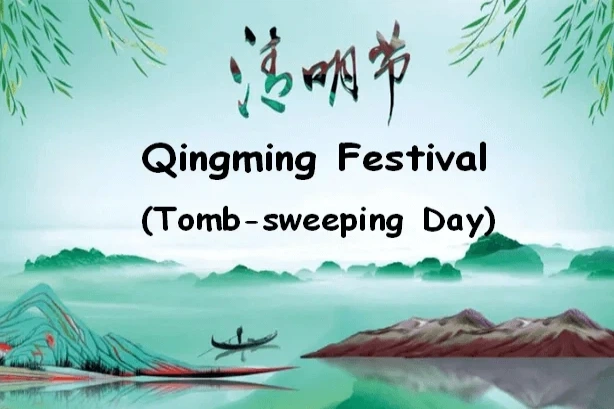
The Qingming Festival, also known as Tomb-Sweeping Day, is one of the most important traditional festivals in China, ranking alongside the Spring Festival, Dragon Boat Festival, and Mid-Autumn Festival. It falls annually between April 4 and 6, when the spring breeze brings warmth and clarity, and “all growing things are clean and pure” — hence the name “Qingming,” which means “clear and bright”.
Qingming is unique in that it carries both natural and cultural significance. Originally a solar term marking the ideal time for spring plowing, it gradually merged with two ancient festivals — the Cold Food Festival (Hanshi) and the Shangsi Festival — evolving into a day of both ancestral remembrance and joyful spring outings.
The most widely told legend behind Qingming dates back to the Spring and Autumn Period (770–476 BC). Jie Zitui, a loyal official of the State of Jin, once cut a slice of flesh from his own thigh to save his starving master, Prince Chong‘er, during exile. After Chong’er ascended the throne as Duke Wen of Jin, he rewarded many followers but forgot Jie. Uninterested in fame or fortune, Jie retreated into the remote Mian Mountain with his mother. In desperation, the Duke ordered the mountain set on fire to force Jie out — but Jie refused and perished in the flames with his mother. Overcome with regret, the Duke banned the use of fire on the anniversary of Jie‘s death, decreeing that only cold food be eaten — a tradition that became the Cold Food Festival. Over time, Hanshi merged with Qingming, and the practice of eating cold food continues to this day.
Today, Qingming remains a time for Chinese families to honor their ancestors and reconnect with nature. The core custom is tomb sweeping — cleaning gravesites, offering flowers and food, and paying respects to the departed. At the same time, Qingming is also a season for spring outings, kite flying, and willow planting, as people celebrate the vitality of the season.