


Titanium fabrication in aerospace and medical sectors faces several challenges:
- High costs in small batch production, especially for medical devices
- Achieving dimensional accuracy is difficult compared to traditional machining
- Titanium’s reactivity at high temperatures complicates manufacturing
- Complex alloys and extensive post-processing are often required
Laser processing provides solutions to these problems. It offers high precision and efficiency, allowing for intricate cuts and faster production. The minimal heat-affected zone from laser processing reduces material deformation and improves quality. Titanium’s lightweight, high strength, corrosion resistance, and biocompatibility make it especially suitable for laser processing. The process adapts to varying thicknesses and hardness, meeting strict demands in both aerospace and medical fields.
Key Takeaways
- Laser processing enhances precision and accuracy in titanium parts, crucial for aerospace and medical applications.
- This method increases efficiency by reducing material waste and labor costs, making titanium fabrication more economical.
- Laser technology allows for complex designs, enabling customized surgical instruments and implants tailored to patient needs.
- Minimizing the heat-affected zone during processing preserves titanium’s mechanical properties, ensuring high-quality components.
- Choosing the right laser type and settings is essential for achieving optimal results in titanium manufacturing.
Laser Processing Advantages
Precision & Accuracy
Laser processing stands out for its ability to deliver highly-accurate parts in both aerospace and medical fields. The focused beam of a laser creates high-contrast marks on titanium without physical contact or excess heat. This method preserves the material’s surface and ensures clear identification, which is important for traceability in manufacturing. The annealing technique uses controlled oxidation to produce color changes, maintaining the corrosion resistance and structural integrity of titanium components.
Aerospace components often require micron-level precision, especially for cooling channels in engine blades and irregular holes in fuselage frames. Laser cutting technology meets these demands, making it possible to machine titanium alloys that are difficult to cut with traditional tools. The process also eliminates tool wear, which means the dimensional accuracy remains consistent throughout production. This results in high-quality machined parts with tight tolerances.
- Laser marking uses a focused beam for high-contrast, non-contact marking.
- Annealing creates color changes while preserving corrosion resistance.
- Micron-level precision is essential for aerospace parts.
- Laser cutting forms complex geometries with high accuracy.
Efficiency & Productivity
Laser processing increases productivity in titanium manufacturing. The process is automated, which reduces labor costs and speeds up production. Unlike traditional methods that generate a lot of scrap, laser techniques minimize material waste. This is especially important for titanium, which is valuable due to its strength-to-weight ratio and resistance to corrosion.
The table below highlights how laser processing improves efficiency:
| Benefit | Description |
|---|---|
| Material Waste Reduction | DMLS minimizes material waste compared to traditional methods, which often involve high scrap rates. |
| Labor Cost Reduction | The automated nature of DMLS leads to lower labor costs due to minimal supervision and programming. |
| Complex Geometries | Laser processing allows for the creation of complex shapes, including thin walls, which are hard to machine. |
Laser processing also produces a smaller heat-affected zone, which reduces material deformation and stress. This contributes to better quality and allows for tighter tolerances in the final parts.
Flexibility for Complex Designs
Laser technology offers unmatched flexibility for creating complex geometries in titanium parts. This is valuable in both aerospace and medical manufacturing, where custom shapes and intricate features are often required.
- Surgical instruments can be customized for specific procedures, improving precision and adaptability.
- Orthopedic implants, such as hip replacements, benefit from laser techniques that produce complex shapes tailored to each patient.
- Advanced methods like laser metal deposition create porous structures in titanium devices, which help with bone integration in medical implants.
Nanosecond pulsed lasers can also create microgrooves and multi-scaled roughened surfaces. These features enhance the surface topography and subsurface integrity of titanium, making it possible to fabricate complex geometries that are difficult to achieve with other methods.
Heat-Affected Zones
Minimizing the heat-affected zone is crucial for maintaining the mechanical properties of titanium components. In aerospace manufacturing, lightweight and high-strength parts are essential. Laser processing provides precise energy control, resulting in a small heat-affected zone. This helps preserve the original microstructure of titanium, preventing grain growth or unwanted phase changes.
- Aerospace manufacturers need precise microstructural control for high-performance parts.
- In medical device manufacturing, a small heat-affected zone ensures a smooth surface finish and optimal mechanical properties for implants and surgical tools.
- The process maintains tensile strength, hardness, and fatigue resistance, which are critical for both aerospace and medical applications.
- Laser welding reduces the risk of embrittlement, preserving the quality of titanium components.
By controlling the heat input, laser processing ensures that titanium parts retain their strength-to-weight ratio and deliver reliable performance in demanding environments.
Key Factors Affecting Quality
Laser Power & Wavelength
Laser power and wavelength play a major role in the outcome of titanium processing. The right combination helps achieve high-quality results. Titanium Sapphire lasers offer a wide wavelength range from 660 nm to 1050 nm. This range gives flexibility for different applications. High optical quality in these lasers leads to better results. Ultra-short pulse durations also improve precision.
| Characteristic | Description |
|---|---|
| Wavelength Range | Titanium Sapphire lasers: 660 nm–1050 nm, versatile for many applications |
| Optical Quality | High optical quality improves processing outcomes |
| Pulse Duration | Ultra-short pulses increase precision |
Fiber lasers at 1064 nm are efficient for titanium. They create high-contrast oxide marks with little surface change. These lasers can also engrave deep marks that last through post-processing. The broad emission band of titanium-sapphire lasers allows flexible tuning. This flexibility is important for meeting specific needs in titanium processing.
Research shows that changes in laser power and frequency affect the microstructure of titanium. Higher laser power frequency can increase surface roughness. Faster scanning speeds tend to make the surface smoother. The relationship between these factors is complex and needs careful control to ensure the best quality.
Processing Speed & Focal Position
Processing speed and focal position have a direct impact on the surface finish of titanium parts. The speed at which the laser moves affects how smooth or rough the surface becomes. Proper chip load management is important for successful machining. Monitoring thermal effects helps balance speed and tool life.
| Processing Speed (m/min) | Effect on Surface Finish | Notes |
|---|---|---|
| 40–80 (Roughing) | Varies | Depends on alloy, cutter diameter, coolant |
| 100–150 (Finishing) | Improved finish | Adjust for tool-edge condition |
| Higher Speeds | Better finish | May increase tool wear and affect surface quality |
- Higher speeds can improve surface finish but may cause more tool wear.
- Lower feed rates usually give a better finish.
- Lighter cuts reduce vibration and help surface quality.
Defect formation in laser-processed titanium depends on several factors. High laser power can cause overheating and defects like keyholes. Low scan speeds can also lead to overheating. Low laser power or high scan speeds may result in incomplete melting and lack-of-fusion defects. The combination of laser power, exposure velocity, and hatching distance is more important than energy density alone.
| Parameter | Effect on Defects |
|---|---|
| High Laser Power | Overheating, evaporation, keyhole defects |
| Low Scan Speed | Excessive energy, overheating |
| Low Laser Power | Incomplete melting, lack-of-fusion defects |
| High Scan Speed | Inadequate penetration, lack-of-fusion defects |
| Inappropriate Hatch Distance | Lack-of-fusion defects |
| High Power & Speed | Balling due to increased melt pool temperature |
Assist Gas & Flow Rate
The type and flow rate of assist gas are important for the surface quality of titanium. Increasing the gas flow rate during laser metal deposition can lower the average surface roughness. This means the surface becomes smoother. Choosing the right gas and adjusting its flow rate are key steps in optimizing the process.
Tip: Using the correct assist gas and flow rate can greatly improve the surface finish of titanium parts.
Material Thickness & Surface Prep
Material thickness and surface preparation also affect the quality of laser-processed titanium. Thicker materials may need higher laser power or slower speeds. Surface preparation techniques, such as Laser-Assisted Machining (LAM), help improve the integrity of titanium alloys. Important factors include microhardness, grain size, and surface roughness. Controlled laser parameters can boost machining performance.
| Parameter | Effect on Surface Quality |
|---|---|
| Laser Power | Influences cut quality and surface roughness |
| Cutting Speed | Affects cutting width and cone angle |
| Gas Pressure | Has a greater influence on surface roughness |
| Surface Roughness | Key quality index for evaluating laser cutting |
| Parameter | Effect on Surface Integrity |
|---|---|
| Microhardness | Shows strength and durability of the surface |
| Grain Size | Affects mechanical properties |
| Thermal Loads | Impact integrity during the removal process |
Laser-Assisted Machining can improve the surface of titanium alloys. It helps control microhardness and grain size. Good surface preparation leads to better results and higher quality in the final product.
Applications in Aerospace & Medical Fields

Aerospace Welding & Assembly
Laser welding is a key technology in aerospace. It allows for joining titanium parts with high precision and minimal heat. This process is used for jet engine components, stringers, skin plates, and fuel tanks. The table below shows some important aerospace applications:
| Application | Description |
|---|---|
| Welding of Jet Engine Components | Laser beam welding is effective for heat-resistant alloys like Hastelloy X. |
| Joining Stringers to Skin Plates | Laser welding is replacing riveting in Airbus 318 and 3XX series, saving costs. |
| Fabrication of Fuel Tanks | Used in aerospace, though adoption is slow due to qualification requirements. |
- Laser welding can be performed underwater or in air, offering flexibility.
- It produces low heat-affected zones and residual stress, ensuring high weld quality.
Laser welding improves the performance of titanium aerospace assemblies. It enables precise welding of thin-walled and complex structures. This reduces deformation and maintains strength, which is vital for stability in flight. Hermetic sealing with lasers protects sensitive electronics by limiting heat exposure.
Medical Implants & Surface Modification
Titanium laser cutting and dmls are transforming medical implant manufacturing. Advanced laser sintered titanium surfaces mimic bone structure, helping cells attach and grow.
Arcus CNC uses femtosecond lasers to create micro-grooves and nano-pillars on titanium implants. Osteoblast cells anchor to these laser-generated surfaces faster than to acid-etched ones.
- Minimal heat-affected zones ensure strong welds for implants.
- Corrosion-resistant properties and sterilization resistance improve device safety.
- Non-contact cutting process reduces contamination risks.
- Complex geometries are possible for custom medical assemblies.
Laser surface modification, such as pulsed laser deposition, enhances osseointegration and cell adhesion. Anodization and silver nanostructures add antibacterial protection, reducing infection risk.
Cohen et al. (2016) found that dmls titanium implants with micro/nanoscale textures promote bone growth and cell activity.
Laser Ablation & Cutting
Titanium laser cutting is essential for both aerospace and medical devices. The cutting process achieves high precision, efficiency, and minimal heat-affected zones.
| Advantage | Description |
|---|---|
| High Precision | Precise cuts in small spaces, ideal for complex shapes. |
| High Efficiency | Faster cutting speeds, improving production efficiency. |
| Minimal Heat-Affected Zone | Reduces deformation and stress, resulting in better quality. |
- Titanium laser cutting enables low-weight components without losing strength.
- It allows for complex geometries and tight tolerances in medical parts.
- Cutting ensures durability and flexibility, important for stents and implants.
Laser ablation creates smoother edges and less material loss than mechanical cutting. The average surface roughness remains low, improving edge quality.
Additive Manufacturing (SLM, LAM)
Additive manufacturing, including dmls and laser sintered titanium, is advancing aerospace and medical applications. Selective laser melting (SLM) and laser additive manufacturing (LAM) produce parts with excellent mechanical properties.
| Study Title | Summary | Application Area |
|---|---|---|
| Recent advances and application of Selective Laser Melting (SLM) technology in the aerospace industry | SLM improves mechanical properties and addresses challenges in aerospace applications. | Aerospace |
| Selective Laser Melting of Titanium Alloys and Titanium Matrix Composites for Biomedical Applications: A Review | Reviews mechanical properties and suitability of titanium alloys for biomedical uses. | Biomedical |
| Effects of processing parameters on microstructure and mechanical property of selective laser melted Ti6Al4V | Shows how parameters affect microstructure and properties in aerospace and biomedical fields. | Aerospace and Biomedical |
- Dmls and laser sintered titanium allow for high resolution and complex shapes.
- These methods enhance tensile strength and fatigue resistance.
- Dmls reduces manufacturing costs and waste, and enables customization for patients.
- Titanium components made with dmls meet or exceed traditional mechanical properties.
- Dmls improves biocompatibility, making it ideal for implants and aerospace parts.
Laser Processing Technologies
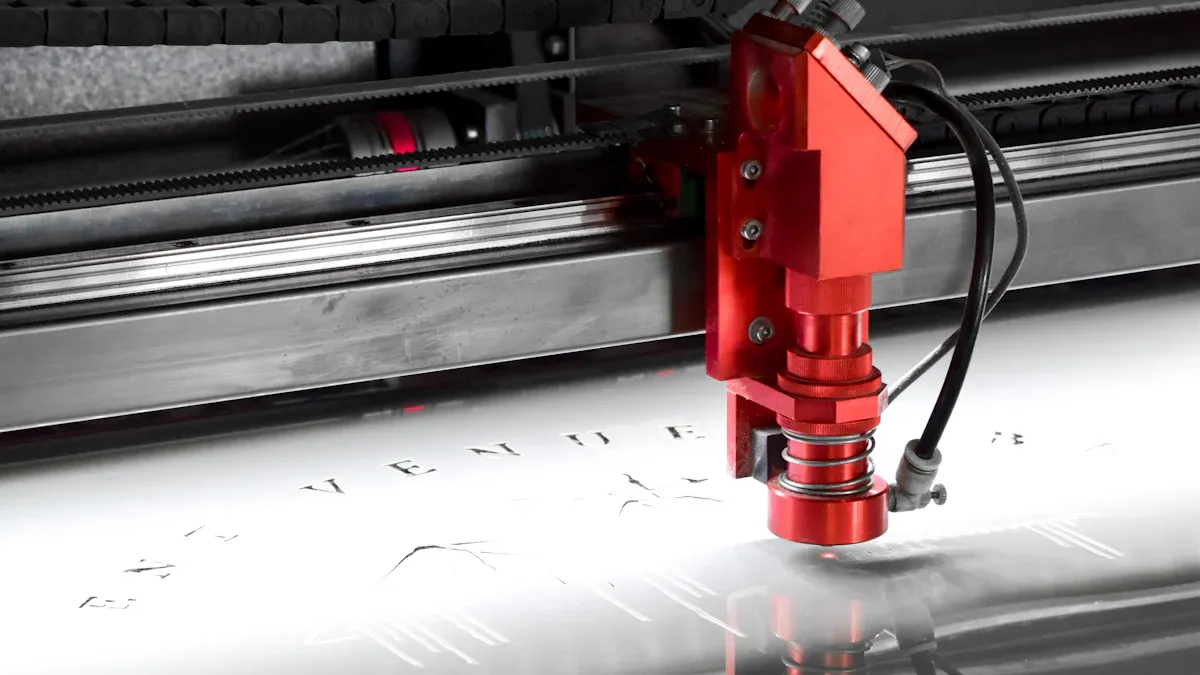
Laser processing of titanium relies on advanced laser machines. Each type of laser offers unique benefits for aerospace and medical manufacturing. The right choice depends on the application, desired precision, and production needs.
Fiber Lasers
Fiber lasers are popular for titanium processing. They deliver high power and excellent beam quality. These lasers work well for cutting, welding, and marking titanium parts. Fiber lasers have high photoelectric conversion efficiency, which means they use less energy and produce more output. They also require less maintenance and have a longer lifespan than other types.
- Fiber lasers cut titanium alloys with high precision.
- They handle various thicknesses and hardness levels.
- Production speeds increase, and waste decreases.
Many manufacturers use fiber lasers for direct metal laser-sintering. This method creates complex titanium parts layer by layer, making it ideal for custom implants and lightweight aerospace components.
Nd:YAG Lasers
Nd:YAG lasers are effective for precision tasks. They excel at spot welding and small-part welding in titanium. These lasers offer good control for delicate operations, such as joining thin wires or tiny components.
- Nd:YAG lasers are best for spot welding and small assemblies.
- They have lower power output and efficiency than fiber lasers.
- Fiber lasers are preferred for larger or more demanding titanium processing jobs.
- CO₂ lasers are less suitable for titanium due to low absorption and higher maintenance.
Nd:YAG lasers remain valuable for applications that require pinpoint accuracy.
Ultrafast & Pulsed Lasers
Ultrafast lasers use femtosecond or picosecond pulses. These short bursts allow for high-precision micromachining, cutting, and ablation of titanium. The process creates minimal heat-affected zones, which protects the material’s structure.
- Ultrafast lasers enable cold ablation, producing clean edges and fine features.
- They can drill holes in hard materials without causing cracks.
- This technology is important for making precise apertures in medical and aerospace devices.
- Surface modification with ultrafast lasers can improve how implants bond with bone.
Note: Ultrafast and pulsed lasers help create advanced medical implants and aerospace parts with superior quality and performance.
Laser processing meets the strict demands of titanium parts in aerospace and medical fields. It delivers high precision, speed, and quality. Laser technologies support complex designs and reduce waste. Professionals should consider:
- The type of laser best suited for their application
- Material thickness and surface preparation
- Required precision and production volume
Choosing the right laser solution ensures reliable, high-performance titanium components.
FAQ
What makes titanium ideal for aerospace and medical laser processing?
Titanium has a high strength-to-weight ratio and resists corrosion. It is also biocompatible. These properties make it perfect for lightweight aircraft parts and safe medical implants.
How does laser processing improve titanium part quality?
Laser processing creates precise cuts and welds. It reduces heat-affected zones. This method keeps the material strong and limits defects.
Which laser type is best for titanium?
Fiber lasers work well for most titanium tasks. They offer high power and efficiency. Nd:YAG lasers suit small, detailed jobs. Ultrafast lasers help with micromachining.
Can laser processing create custom medical implants?
Yes! Laser additive manufacturing builds implants layer by layer. This process allows for custom shapes and sizes. It also improves fit and patient outcomes.
Is laser processing safe for medical devices?
Laser processing uses non-contact methods. This reduces contamination risk. It also produces smooth surfaces, which help with sterilization and biocompatibility.