
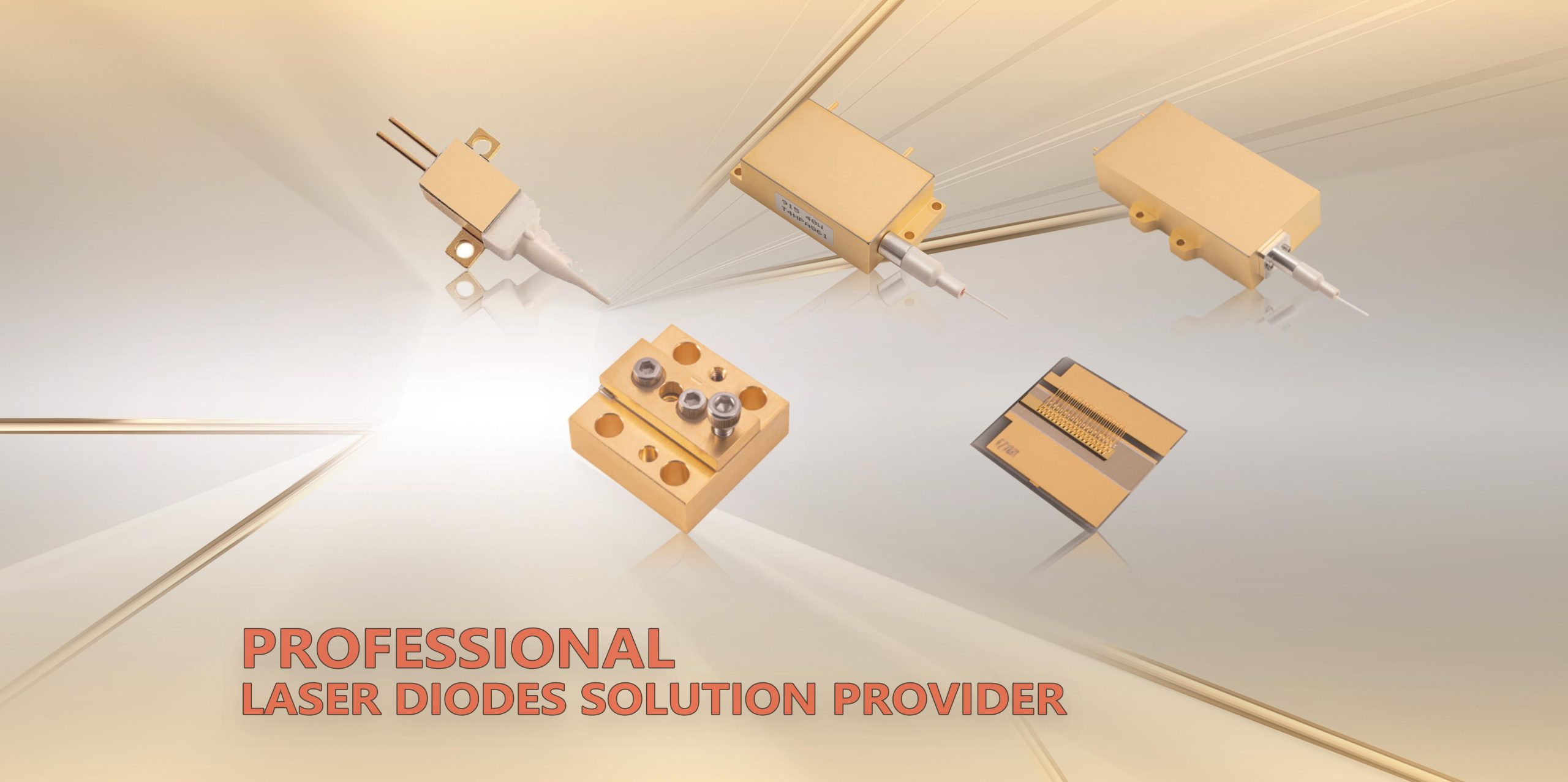
The Laser Diode (LD), as the core of modern optoelectronic technology, has permeated various fields including industry, medicine, communications, and consumer electronics. Selecting the appropriate wavelength and power is crucial for fully leveraging its performance and achieving precise applications. This article provides a systematic explanation of how Laser Diodes of different wavebands and power levels drive innovation, helping you make informed decisions for your project selection.
1. Understanding Key Parameters: Wavelength and Power
Wavelength determines the fundamental nature of the laser’s interaction with matter, such as the depth of absorption or penetration. Power directly affects the intensity and efficiency of this interaction. Together, they form the cornerstone of application selection.
2. Key Wavelength Bands and Their Typical Applications
Laser Diodes of different wavelengths play irreplaceable roles in various fields due to their unique physical properties.
1. Near-Infrared Band (780nm – 1100nm)
This band features mature technology and high power, serving as the “main force” for industrial processing and pumping sources.
- 808nm: The ideal pump source for solid-state lasers (e.g., Nd:YAG). Its wavelength highly matches the absorption peak of Nd:YAG crystals, making it widely used in high-power solid-state laser systems for industrial cutting, welding, medical, and scientific research.
- 915nm / 976nm: The core pump source for fiber lasers. Especially the 976nm wavelength, which sits at the main absorption peak of ytterbium-doped fiber, offers extremely high pumping efficiency and is the “heart” of today’s multi-kilowatt high-power fiber lasers.
- 1064nm: As a direct output wavelength, it is widely used in LiDAR, medical aesthetics (e.g., pigmentation treatment), and some material processing.
2. Visible Light Band (400nm – 700nm)
Visible light is easy to observe and focus, offering clear advantages in display, illumination, and precision processing.
- 450nm (Blue): Rapidly developed in recent years. As metals like copper and gold absorb blue light much more efficiently than infrared light, it excels in welding and 3D printing (SLM) of highly reflective metals. Also used in high-definition projection, underwater communications, and biochemical detection.
- 520nm / 532nm (Green): Green light is more easily detected by the human eye and is well-absorbed by hemoglobin and certain plastics. Primarily used in laser displays, fundus treatment, micro-projectors, and fine processing like jade carving.
- 635nm – 670nm (Red): The most common wavelength for pointing and aiming. Used in laser pointers, barcode scanners, alignment, holography, and low-power medical devices.
3. Other Specialized Bands
- 760nm / 940nm: Located near water absorption windows, they have specific applications in medical (e.g., tissue coagulation), gas sensing (oxygen detection), and night vision illumination.
- 1310nm / 1550nm: The “golden windows” for fiber optic communications with the lowest loss, forming the foundation of long-distance telecommunications and data communications.
3. Matching Power Levels to Application Scenarios
Power selection must strictly match the energy density and action mechanism required by the application.
Low Power (< 1W)
- Application Scenarios: Sensing, detection, communication, pointing.
- Details: Used for photoelectric switches, LiDAR ranging, fiber optic communications, optical disc reading/writing, biosensing, and laser pointing. Prioritizes beam quality and stability.
Medium Power (1W – 50W)
- Application Scenarios: Light industrial processing, medical aesthetics, scientific research.
- Details: Suitable for plastic welding, laser marking (some materials), desktop cutting, skin treatment (hair removal, rejuvenation), and laboratory pump sources. One of the most widely used power ranges.
High Power (50W – 1000W+)
- Application Scenarios: Heavy industrial processing, macro-processing.
- Details: Used directly for metal cutting, deep penetration welding, cladding, hardening, 3D printing, or as the core pump module for fiber/solid-state lasers. Requires excellent reliability and thermal management design.
4.Trends and Outlook: Customization and System Integration
In the future, Laser Diode applications will become more customized. For example, combining lasers of different wavelengths to process multi-layer materials simultaneously or achieve more complex biological effects. Meanwhile, intelligent, modular system integration will become mainstream, lowering the barrier to entry for users.
Choosing the right Laser Diode means injecting precise energy into your project. Understanding the application logic behind wavelength and power is the first step towards effective communication with technology suppliers and obtaining optimal solutions.