
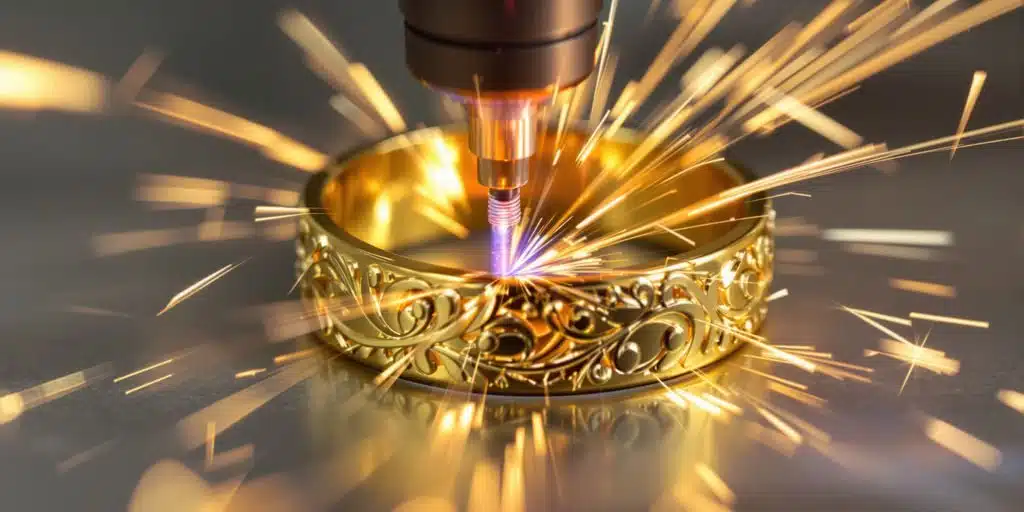
Fiber laser welders have transformed jewelry making by delivering unmatched precision and control. Jewelers can target tiny spots for intricate designs and repairs without damaging heat-sensitive stones or surrounding materials.
- Smooth, strong joints preserve the integrity of antique jewelry.
- Laser welding boosts efficiency, allowing repairs and customizations to finish faster.
| User | Testimonial |
|---|---|
| Richard Thurber | “It saves money when I don’t have to pull stones… With the laser you can just weld it all, and it goes a lot quicker.” |
| Kretchmer | “With the laser welder, that ring will go out the same day instead of two days later.” |
Key Takeaways
- Fiber laser welders provide unmatched precision, allowing jewelers to create intricate designs and repairs without damaging heat-sensitive materials.
- The technology significantly boosts efficiency, enabling faster repairs and customizations, which can improve production rates by up to 40%.
- Minimal heat-affected zones protect delicate components, ensuring that gemstones and surrounding materials remain unharmed during the welding process.
- Laser welding produces strong, clean joints that enhance the durability and aesthetic quality of jewelry, making it a preferred method for professionals.
- Regular maintenance and proper training are essential for maximizing the performance of fiber laser welding machines, ensuring consistent and high-quality results.
Jewelry Laser Welding Technology
How Laser Welding Works
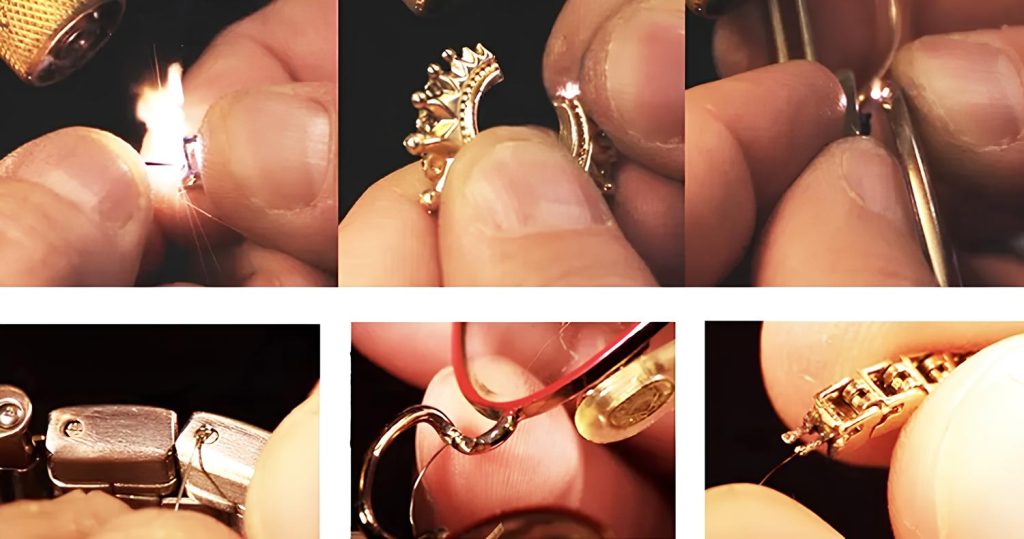
Jewelry laser welding uses a focused beam of light to join metals with extreme accuracy. A jewelry laser welding machine delivers energy in short, controlled pulses. The operator can adjust the voltage, pulse duration, and spot size to match the needs of each piece. This control allows the jewelry laser welding machine to create strong, clean joints without overheating delicate areas.
| Parameter | Function | Impact on Weld |
|---|---|---|
| Voltage / Energy | Controls total power | Higher energy increases penetration depth |
| Pulse Duration | Sets how long energy is applied | Short pulses make quick tacks; longer pulses smooth flows |
| Spot Size | Focuses the beam | Smaller spots concentrate heat for precise welding |
Most jewelers use conduction mode with a jewelry laser welding machine. This mode creates a wide, shallow molten area, which protects the jewelry from damage. Keyhole mode, used in heavy industry, is not common in jewelry laser welding because it can harm thin materials.
A jewelry laser welding machine stands out for its speed and cleanliness. The process is much faster than traditional soldering. The laser welding machine also produces nearly invisible joints, which is important for fine jewelry.
Why Jewelers Use Laser Welding
Jewelers choose a jewelry laser welding machine for several reasons:
- High precision for intricate designs and repairs
- Ability to work with gold, silver, platinum, and titanium
- Efficient process that saves time and reduces material waste
- Cleaner micro-welds that improve the look of finished pieces
A jewelry laser welding machine gives jewelers tighter control over the welding process. The laser welding machine allows for better-looking repairs and more detailed custom work. While pulse arc welders are sometimes used, they do not offer the same level of control as a jewelry laser welding machine.
| Feature | Fiber Laser Welders | Other Welding Equipment |
|---|---|---|
| Precision | High precision for intricate designs | Varies, often less precise |
| Material Suitability | Suitable for gold, silver, platinum, titanium | Limited to specific materials |
| Efficiency | Highly efficient | Generally less efficient |
Jewelry laser welding has become essential for modern jewelry making and repair. The jewelry laser welding machine helps jewelers meet the demands of customers who want fast, high-quality results.
Benefits of Laser Welding in Jewelry Making
Precision and Intricate Designs
Laser welding brings superior precision to jewelry making. Jewelers can target microscopic areas, allowing them to join tiny parts without affecting the surrounding material. This level of precision in jewelry making is essential for creating intricate designs and repairing delicate pieces. The laser beam can be adjusted for spot size and energy, giving jewelers control over every weld. Microscopic precision ensures that even the smallest joints remain strong and nearly invisible.
“We got our LaserStar Laser Welding Machine in August, and we love it. I don’t know how we got along without it before. It amazes us every day. Some of the basic jobs we use it for are laser welding sets together, chain repair, retipping prongs and crowns, and the repair of costume jewelry. It was a big investment but what a time saver.
If you do a lot of jewelry design and jewelry repair work, I highly recommend the LaserStar Laser Welding Machine.” – John Elliott, Head Jeweler, Elliott Jewelers, Waukon, IA USA
Laser welding allows jewelers to create complex patterns and shapes with consistent weld quality. The process supports both new jewelry making and restoration of antique pieces. Precision in jewelry making leads to higher quality and durability, making laser welding a preferred method for professionals.
Minimal Heat and Material Protection
Fiber laser welders produce a minimal heat-affected zone. This means the heat stays concentrated at the weld point, protecting sensitive stones and materials. Jewelers can work near pearls, epoxy, and other heat-sensitive components without risk of damage. The laser’s focused energy prevents burning or discoloration, preserving the integrity and brilliance of the jewelry.
The heat-affected zone in laser welding is much smaller than in traditional soldering. Scientific measurements show that fiber laser welding creates a heat-affected zone between 0.1 mm and 0.3 mm, while traditional soldering spreads heat across a wider area. This difference helps maintain the original grain structure of the metal and reduces the chance of distortion.
| Welding Method | Heat-Affected Zone (HAZ) Size | Heat Input |
|---|---|---|
| Fiber Laser Welding | 0.1 mm to 0.3 mm | Low heat input |
| Traditional Soldering | Wide spread across metal | High heat input |
Minimal heat-affected zone is crucial for jewelry making, especially when working with delicate components. Jewelers can repair and create pieces with confidence, knowing the materials will remain unharmed.
Speed and Quality
Laser welding increases efficiency in jewelry making. The process is faster than traditional methods, allowing jewelers to complete repairs and customizations quickly. The laser’s precision reduces the need for rework, which saves time and conserves precious materials. Manufacturers report a 30-40% improvement in production efficiency when using laser welding.
- Fiber laser welders enhance precision and efficiency in the welding process.
- They minimize heat-affected zones, which helps prevent material distortion.
- This leads to fewer defects and reduces the need for rework, conserving precious materials.
- Manufacturers report a 30-40% improvement in production efficiency when using laser welding.
- These efficiency gains contribute to significant reductions in material waste.
Laser welding produces consistent weld quality. The joints are strong and clean, improving the overall quality and durability of finished jewelry pieces. Laser welders fuse the base metal directly, avoiding weak points created by solder. Comparative studies show that laser welds are up to 2.6 times stronger than traditional solder joints. This strength ensures that jewelry can withstand daily wear and tear.
- Fiber lasers are known for their precision and efficiency, which enhances the overall quality of jewelry pieces.
- They can effectively handle various metals, ensuring durability in finished products.
- The ability to create intricate patterns with minimal practice leads to higher aesthetic appeal and quality in jewelry.
- Laser welding minimizes heat distortion and discoloration, preserving the integrity and brilliance of the jewelry.
Versatility for Metals and Engraving
Laser welding is highly versatile in jewelry making. Jewelers can use fiber laser welders to join a wide range of metals, including gold, silver, platinum, and titanium. The technology works well with both precious and non-precious metals, making it suitable for many types of jewelry. Laser welders can handle difficult-to-weld materials and join dissimilar metals or varying thicknesses.
| Application Type | Metal Compatibility | Notes |
|---|---|---|
| Casting | Sterling Silver | Difficult to work with traditionally |
| Assembly | Platinum | Requires laser welding for ease |
| Repair | Yellow Gold | Works well with various precious metals |
| Repair | White Gold | Effective for delicate tasks |
Laser welding also supports engraving and customization. Jewelers can engrave patterns or text with precision in jewelry making, adding unique touches to each piece. The process is ideal for delicate applications, such as repairing chains, retipping prongs, and restoring costume jewelry.
- Fiber laser welders can handle a wide range of materials, including difficult-to-weld metals.
- They can join dissimilar materials and varying thicknesses.
- Ideal for delicate applications in jewelry making.
Laser welding technology offers environmental benefits as well. It does not require filler material, which minimizes waste and optimizes raw material use. The process is energy efficient and produces minimal smoke and spatter, reducing environmental pollution.
| Evidence | Description |
|---|---|
| Waste Reduction | Laser welding does not require filler material, minimizing waste and optimizing raw material use. |
| Energy Efficiency | Laser welding technology is recognized for its high efficiency, contributing to sustainable practices. |
| Pollution Reduction | The minimal smoke and spatter produced during welding reduces environmental pollution. |
Laser welding gives jewelers the flexibility to create, repair, and customize jewelry with superior precision, strength, and quality. The consistent weld quality and minimal heat-affected zone make it the best choice for modern jewelry making.
Jewelry Making Process with Laser Welding Machines
Preparation Steps
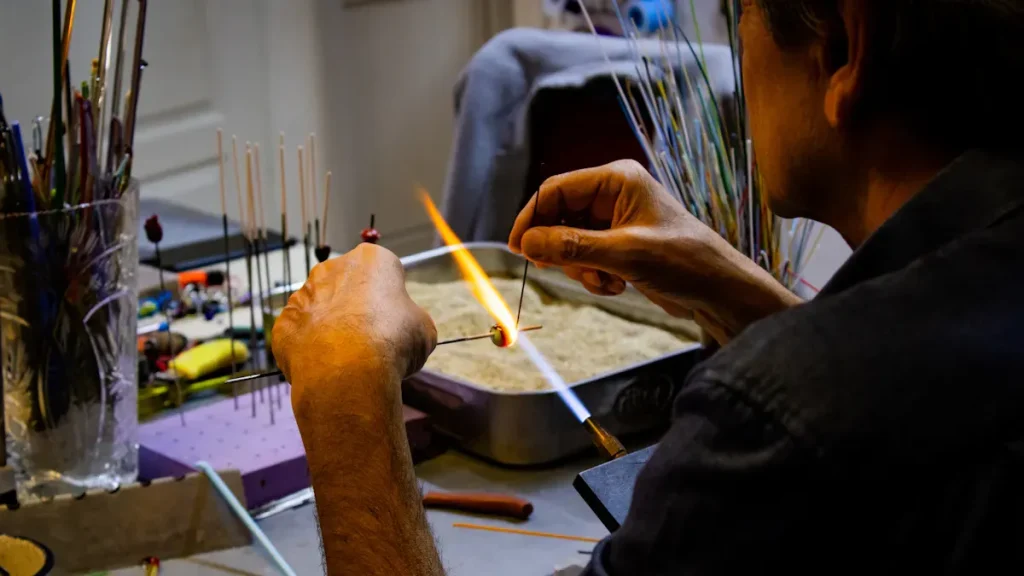
Jewelry making with fiber laser welders begins with careful preparation. Jewelers place the piece in the welding chamber and align it using a microscope. Cleaning the surface removes dirt, grease, or oxides, which ensures a strong weld. Next, they mark the welding spot for precision and adjust laser settings such as power, pulse frequency, focus, and duration. These steps help achieve accurate results for various applications in jewelry making.
- Position and clean the jewelry.
- Define the weld area and adjust laser settings.
- Begin the welding process while monitoring through a microscope or CCD system.
- Allow the joint to cool, inspect for weak spots, and re-weld if needed.
- Save settings for repeat jobs and shut down the machine safely.
Tip: Proper cleaning and alignment improve the quality of laser welding and reduce the risk of defects.
Welding Techniques
Laser welding uses a concentrated beam to join metals like gold and silver. This technique allows jewelers to perform precise spot welding, which creates clean and seamless finishes. Fiber laser welding is versatile and reliable, suitable for many applications in jewelry making. It works well with challenging materials such as sterling silver and platinum. Professionals recommend selecting the right fiber laser welding machine to enhance craftsmanship.
| Technique | Advantages | Applications |
|---|---|---|
| Fiber Laser Welding | High precision, efficiency, and ability to work with intricate designs | Jewelry manufacturing and repair |
| Traditional Welding | Generally less precise, may not handle delicate details well | Basic metal joining |
| Laser Welding | Versatile for various metals, including difficult ones like platinum | Casting, assembly, spring, and chain repair |
Laser welding is recommended for its precision and ability to handle intricate designs. It is especially effective for metals used in jewelry. Challenges include material reflectivity, thermal management, alloy compatibility, and gemstone sensitivity. Jewelers address these by adjusting laser parameters and carefully managing heat.
Finishing and Customization
Recent advancements in fiber laser welding technology have improved finishing and customization options in jewelry making. Precision control systems allow artisans to work on three-dimensional pieces with accuracy. Jewelers can set precious stones and maintain the integrity of valuable metals. The spot adjustment range and vertical focusing help create intricate designs that were once too complex. These features support a wide range of applications in jewelry making, from engraving to setting stones.
Note: Fiber laser welders enable jewelers to customize pieces with unique patterns and finishes, expanding creative possibilities.
Types of Jewelry and Repairs
Rings and Chains
Fiber laser welders have changed how jewelers approach rings and chains. These machines allow for precise repair and restoration of intricate filigree designs. A collaboration achieved 98% successful repairs on 19th-century filigree pieces using welds as small as 0.08 mm. Jewelers report reliable results with gold from 10K to 24K and various silver alloys. Workshops using laser welding reduced ring resizing time from three days to five hours. This efficiency benefits both jewelry making and jewelry repair.
- Commonly produced and repaired items:
- Gold rings (10K–24K)
- Silver chains and bracelets
- Antique filigree rings
- Stone-set jewelry repairs
Laser welding supports restoration of vintage jewelry and ensures strong joints without visible marks. Jewelers can resize rings and repair chains quickly, preserving the original look and strength.
Earrings and Small Parts
Laser welding offers unmatched precision for earrings and small jewelry parts. The focused beam applies heat only where needed, protecting gemstones and delicate materials. This process eliminates the need for post-weld cleaning or coating. Laser welding enhances the robustness of metals compared to traditional soldering. Jewelers can work with gold, silver, titanium, and platinum.
- Applications include:
- Resizing rings
- Retipping prongs
- Reassembling broken jewelry
- Stone-set jewelry repairs
Laser welding improves material integrity and supports restoration of small pieces. Jewelers can repair earrings without damaging adjacent stones or settings.
Tip: Laser welding is ideal for stone-set jewelry repairs, especially when setting gemstones near heat-sensitive areas.
Custom Designs and Engraving
Fiber laser welders enable jewelers to create custom designs and engravings with high precision. The technology protects precious metals and gemstones during the process. Recent projects show that laser welders offer fine spot size, stable power output, and high speed. These features support quick production runs and unique custom pieces.
| Feature | Description |
|---|---|
| Fine Spot Size | Protects precious metals and gemstones from damage |
| Stable Power Output | Ensures high-quality welds with minimal warping |
| High Speed | Suitable for custom jewelry making and restoration |
| Marking and Engraving | Engraves serial numbers, logos, or decorative designs |
| HD Microscope Camera | Provides live video feed for precise alignment and quality |
Laser welding allows jewelers to engrave patterns, serial numbers, and logos. The process supports restoration and customization, expanding creative possibilities in jewelry making.
Jewelry Repair Applications
Fiber laser welders are essential for jewelry repair. They allow seamless resizing of rings without damaging heat-sensitive gemstones. Chain and clasp repair produces strong, clean joints without visible solder marks. Retipping prongs adds new metal safely, protecting gemstones during restoration. Laser welding is effective for restoring antique and vintage pieces, preserving their character.
- Jewelry repair applications:
- Resizing rings
- Chain and clasp repair
- Retipping prongs
- Stone-set jewelry repairs
- Restoration of antique jewelry
Laser welding supports setting gemstones and stone-set jewelry repairs. Jewelers can perform restoration and repair tasks with confidence, knowing the technology protects both the jewelry and the gemstones.
Practical Tips for Jewelers Using Laser Welding Machines
Safety Guidelines
Safety is essential when operating fiber laser welding machines. Jewelers must follow industry standards to protect themselves and their workspace. The table below outlines key safety guidelines:
| Safety Guideline | Description |
|---|---|
| Personal Protective Equipment (PPE) | Wear laser safety glasses, helmets rated for welding, fire-resistant clothing, and respirators. |
| Precautions Against Reflections | Avoid standing in front of the laser; shield sensitive objects and note reflective surfaces. |
| Proper Torch Usage | Angle the torch between 30° and 70°; never point it at anything except the target material. |
| Controlled Areas | Operate lasers only in secured spaces with barriers rated for Class 4 lasers. |
| Laser Safety Officer (LSO) | Assign an LSO to manage safety, training, and equipment. |
Tip: Always check your PPE before starting any welding task. Proper protection prevents injuries from laser exposure.
Maintenance Best Practices
Regular maintenance keeps laser welding machines stable and accurate. Clean lenses often to prevent contamination that can affect beam quality. Replace damaged lenses promptly. Use a daily checklist to clean the welding head, inspect optical parts, and keep the work area tidy. Check the laser source, water chiller, and gas supply for optimal operation. After each session, clear debris and ensure all equipment is clean.
- Consistent weld penetration and seam quality depend on clean optics and stable power.
- Regular maintenance extends the lifespan of internal components and reduces unexpected downtime.
Note: Maintenance is not just about cleaning. Early detection of issues prevents major failures and keeps precision high.
Choosing the Right Machine
Selecting the right fiber laser welding machine improves precision and efficiency. Consider these criteria:
| Criteria | Description |
|---|---|
| Weld Power and Pulse Control | Adjustable pulse duration and energy output suit different materials. |
| Beam Focus and Spot Size | Smaller spot sizes allow precision welding on delicate jewelry. |
| Cooling System | Efficient cooling supports continuous operation; compare air-cooled and water-cooled systems. |
| User Interface and Display | Clear interfaces make setup and operation easier. |
| Safety Features | Emergency stop buttons and enclosed work zones protect users. |
| Compatibility with Metals | Ensure the machine works well with metals like platinum and gold. |
Tip: Test the machine on sample materials before purchasing. This helps verify precision and compatibility.
Common Mistakes to Avoid
Mastering fiber laser welding technology takes practice. Beginners often face inconsistency, which can lead to frustration. Even the best machines require skill to operate effectively. Avoid these mistakes:
- Skipping safety checks or not wearing PPE.
- Neglecting regular maintenance, which causes performance issues.
- Choosing a machine without considering material compatibility.
- Failing to invest time in training and practice.
Training programs teach fundamental skills, theory, and practical applications for jewelry repair and custom designs. Investing time in learning ensures consistent results and high-quality welding.
Remember: Practice improves precision and reduces errors. Take time to master the equipment for the best results.
Fiber laser welders have changed jewelry making by offering unmatched precision and speed. Jewelers now create nearly invisible seams, reduce material costs, and finish more pieces in less time.
- Distortion rates can be as low as 0.1mm per meter.
- The process keeps metals strong and reduces extra polishing steps.
- Throughput increases up to five times compared to older methods.
Modern jewelry shops use digital laser solutions for custom designs and better efficiency. Fiber laser technology will continue to shape the future of jewelry, helping jewelers meet new demands and stay ahead.
FAQ
What types of metals can fiber laser welders join?
Fiber laser welders can join gold, silver, platinum, and titanium. They also work with many non-precious metals. This flexibility helps jewelers create and repair a wide range of pieces.
Is laser welding safe for heat-sensitive gemstones?
Yes. The focused beam keeps heat away from most gemstones. Jewelers can repair or resize rings without removing stones like opals or pearls.
How does laser welding improve repair quality?
Laser welding creates strong, clean joints. The process leaves almost no visible marks. This method helps restore jewelry to its original look and strength.
Can beginners use fiber laser welding machines?
Beginners can learn to use these machines with proper training. Many models have user-friendly controls. Practice improves skill and confidence.
What maintenance do fiber laser welders require?
Regular cleaning of lenses and work areas is important. Checking for worn parts and following the manufacturer’s guidelines keeps the machine working well.