
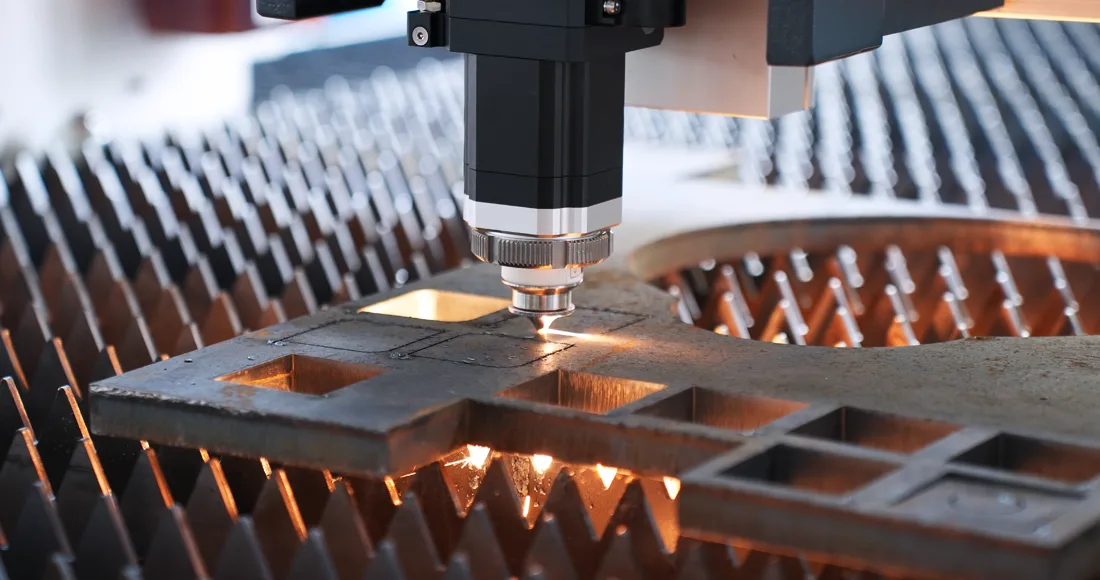
Specifying a fiber laser source begins with the manufacturing process and machine architecture—not with a preferred brand or power rating. A complete OEM specification must define optical output, beam delivery, control interfaces, safety behavior, utilities, mechanical constraints, acceptance testing, and lifecycle support.
This approach gives suppliers measurable requirements against which they can prepare quotations. It also reduces the risk of selecting a source that can produce the required power but cannot connect to the processing head, communicate with the controller, operate with the available chiller, or satisfy the machine’s safety concept.
What Should an OEM Define Before Contacting a Fiber Laser Source Supplier?
The OEM should first document the intended process, workpiece range, production target, machine architecture, operating environment, and destination market. These inputs determine which optical, electrical, thermal, control, and safety requirements must be included in the source specification.
A useful starting document should identify:
- The type of machine being developed
- The primary process, such as cutting, welding, cladding, cleaning, or additive manufacturing
- The materials and thickness range
- The required production speed and quality level
- The expected operating duty cycle
- The processing head and optical layout
- The machine controller and communication architecture
- The installation environment and available utilities
- The countries or regions where the machine will be sold
- Whether the project is a new design or a retrofit
The risk assessment and risk reduction methodology in ISO 12100 begins with intended use, foreseeable misuse, hazards, and operating conditions. For an OEM, this means the source should be selected as one component within the complete machine design rather than treated as an isolated purchase.
When reviewing CW fiber laser source configurations, the OEM should therefore provide enough application and integration information to identify the correct power, beam delivery, connector, cooling, and control combination.
How Do You Turn a Laser Process into Source Requirements?
Process requirements should be translated into measurable optical and temporal requirements rather than a general request for a certain number of kilowatts. The specification should connect the workpiece, speed, quality, and production cycle to output power, operating mode, beam quality, and control response.
Which Process Details Should Be Included in the Specification?
The supplier needs to understand how laser energy must interact with the workpiece. Material grade, thickness, surface condition, geometry, gas selection, processing speed, and quality limits should be stated wherever they influence source selection.
For a cutting machine, the OEM may need to define maximum plate thickness, typical production thickness, assist gas, piercing requirements, edge-quality limits, and target feed rate. For a welding machine, the specification may instead focus on joint design, penetration depth, allowable spatter, heat input, gap tolerance, and weld-cycle duration.
The source supplier should also be told whether the application involves reflective materials such as copper, brass, or aluminum. This allows the supplier to evaluate whether special back-reflection protection, process limitations, or beam-delivery requirements are necessary.
How Should Duty Cycle and Production Load Be Specified?
The OEM should distinguish between short application tests and continuous industrial production. A source that reaches the required power during a brief sample test may not be suitable for repeated full-load operation throughout a production shift.
Define the expected operating profile using measurable values:
- Laser-on time per production cycle
- Cycles per minute or hour
- Maximum continuous emission time
- Hours per shift and shifts per day
- Expected annual operating hours
- Frequency of startup, shutdown, and idle periods
- Maximum ambient temperature during production
This information affects thermal design, chiller sizing, power reserve, maintenance planning, and the acceptance conditions under which the source should be tested.
How Much Fiber Laser Source Power Should an OEM Specify?
Power should be based on validated process requirements and expressed as a guaranteed operating value. The OEM should distinguish the normal production setpoint from the maximum required output and any engineering reserve.
Should You Specify Nominal Power or Minimum Guaranteed Power?
Nominal power identifies a product category, while minimum guaranteed output creates a measurable acceptance requirement. A purchase specification should state the required output, tolerance, operating conditions, and measurement location.
For example, “6 kW fiber laser source” is less precise than:
The source shall deliver at least 6.0 kW of continuous optical power at the output of the specified process fiber after thermal stabilization and under the agreed cooling conditions.
The specification should clarify whether power is measured at an internal optical point, at the fiber connector, or after the complete delivery fiber. It should also state whether the published value is nominal, typical, minimum, or maximum.
How Much Power Reserve Should an OEM Allow?
Power reserve can accommodate process variation, optical transmission losses, or future material requirements. Excessive oversizing, however, can increase source cost, chiller load, electrical demand, optical loading, and processing-head requirements.
The OEM should document why reserve power is needed. Valid reasons may include:
- Variation in material condition or thickness
- Expected transmission losses in the optical system
- Future increases in production speed
- Planned expansion to thicker materials
- A requirement to avoid continuous operation at the upper control limit
Power reserve should not be used as a substitute for incomplete process development. Whenever possible, the selected operating range should be supported by representative application tests.
Should the OEM Specify CW, Modulated CW, QCW, or Pulsed Operation?
The operating mode determines how energy is delivered and how the source responds to machine commands. CW, QCW, and pulsed sources cannot be compared using the largest wattage shown on their datasheets.
- CW: Continuous optical output for sustained cutting, welding, cladding, and heat-treatment processes.
- Modulated CW: A CW source that can be rapidly switched or varied for piercing, corners, weld starts, and process transitions.
- QCW: High peak power delivered at a limited duty cycle, with average power below peak power.
- Pulsed: Output defined by pulse energy, pulse width, repetition rate, and peak power.
The specification should identify the required operating mode and any associated limits. For a pulsed or QCW source, average power, peak power, pulse duration, repetition range, and duty cycle must be defined together.
How Should Beam Quality Be Specified for an OEM Laser Machine?
Beam quality should be selected according to required focusability, energy distribution, and process tolerance. Requesting the lowest available BPP or M² is not automatically the best choice for every application.
Should the Specification Use BPP or M²?
Both parameters describe beam propagation, but BPP is commonly used for high-power industrial sources and process-fiber configurations. The OEM should specify a guaranteed maximum value and identify the conditions under which it must be achieved.
A suitable requirement should state:
- Whether BPP or M² will be used
- The maximum permitted value
- The delivery-fiber configuration
- The output-power level used during measurement
- The measurement location
- Whether the limit is guaranteed or typical
Beam quality should be connected to the processing optics. It does not independently define the final spot size because collimation, focal length, beam diameter, aberrations, and optical alignment also affect the focused beam.
How Should Fiber Core Diameter Be Selected?
The process-fiber core diameter must be selected together with BPP, optical magnification, focal length, and required energy distribution. The smallest available core may provide higher brightness, but it may also produce a narrower process window or increase optical loading.
Cutting applications may benefit from high brightness and tight focusability. Welding, cladding, heat treatment, and some thick-material processes may require a larger spot, different focal tolerance, or broader energy distribution.
The exact combination should be specified rather than naming the power alone. Current industrial source data demonstrates that BPP, core diameter, connector, modulation, cooling, electrical load, and customer interfaces are presented as interdependent configuration choices in a single product family. The Coherent EDGE FL datasheet is one example of this system-level specification format.
Which Output Connector and Delivery Fiber Should the OEM Specify?
The output connector, fiber core, delivery length, and routing limits must match the processing head and machine layout. Physical similarity between two connectors does not prove optical, thermal, mechanical, or interlock compatibility.
How Should the Output Connector Be Specified?
The OEM should name the exact connector family and accepted version. General descriptions such as “standard industrial connector” or “QBH-type output” leave too much room for incompatible interpretations.
The connector specification should address:
- Connector family and mechanical interface
- Maximum permitted optical power
- Process-fiber core diameter
- Numerical aperture or BPP, where relevant
- Connector cooling requirements
- Safety and presence interlocks
- Protective window or contamination-control features
- Compatibility with the selected processing head
Written compatibility confirmation should be obtained from both the laser source supplier and the processing-head supplier. This is particularly important when the components are sourced from different manufacturers.
How Long Should the Delivery Fiber Be?
The delivery fiber should follow the complete machine route without tension, excessive bending, twisting, or unsupported movement. Its length should be based on the actual machine layout rather than a general preference for the longest available option.
The requirement should include:
- Required usable fiber length
- Length tolerance
- Static minimum bending radius
- Dynamic minimum bending radius
- Permitted torsion and pulling load
- Cable-carrier compatibility
- Required service loop
- Connector access for inspection and replacement
A retrofit project should also determine whether the fiber exit direction and connector position are compatible with the existing machine cabinet and optical path.
What Should an OEM Fiber Laser Source Specification Include?
A complete specification separates process performance, integration requirements, and acceptance evidence. Each requirement should be written in a format that can be inspected, measured, or functionally tested.
| Specification category | What the OEM must define | Preferred format | Verification method |
|---|---|---|---|
| Industrial process | Material, thickness, geometry, speed, and quality target | Defined operating range | Process trial or approved application data |
| Operating mode | CW, modulated CW, QCW, or pulsed | Required mode and limits | Functional test |
| Output power | Normal, maximum, and minimum guaranteed output | W or kW with tolerance | Calibrated power measurement |
| Power range | Minimum stable setting through full output | Percentage or power range | Command-response test |
| Beam quality | Maximum BPP or M² | Guaranteed limit with test condition | Beam-measurement report |
| Process fiber | Core diameter, length, and routing limits | μm and m with tolerances | Document and physical inspection |
| Output connector | Exact connector family and version | Named approved interface | Compatibility confirmation |
| Modulation | Frequency, rise time, duty cycle, and ramping | Measurable limits | Functional test |
| Power stability | Permitted variation over a defined period | Percentage and calculation method | Timed stability test |
| Cooling | Capacity, flow, pressure, temperature, and water quality | Defined operating ranges | Chiller and source test |
| Electrical supply | Voltage, phase, frequency, current, and load | Required range and maximum values | Electrical inspection |
| Machine control | I/O, analog commands, fieldbus, and diagnostics | Signal and protocol specification | Interface test |
| Safety behavior | Interlocks, safe state, reset, and restart conditions | Approved functional sequence | Safety-function validation |
| Mechanical installation | Dimensions, mounting, clearance, and weight | Approved drawing | Drawing and physical inspection |
| Acceptance testing | Tests, conditions, tolerances, and records | Approved FAT protocol | Serial-specific report |
| Lifecycle support | Warranty, spares, software, service, and change control | Contractual requirements | Supplier agreement |
How Should Laser Power Control and Modulation Be Specified?
The OEM must define how the machine commands optical power and how rapidly the source must respond. A maximum modulation frequency is insufficient without information about modulation depth, rise time, resolution, and full-power capability.
The specification should define:
- Analog or digital power-command method
- Command range and resolution
- Minimum stable optical output
- Command-to-output delay
- Rise and fall times
- Maximum modulation frequency
- Modulation depth across the frequency range
- Permitted duty cycle
- Power-ramping requirements
These characteristics may affect piercing, corner control, welding starts and stops, heat input, and transitions between process stages. The supplier should confirm whether full output modulation is available throughout the published frequency range or only within a narrower operating window.
Which Control and Communication Interfaces Should Be Specified?
The specification should define every command, status, alarm, and diagnostic interface required by the machine controller. Naming a connector or communication protocol is not sufficient unless signal behavior and fault responses are documented.
Which Hardwired Signals Should the OEM Define?
Hardwired signals commonly control emission and communicate source readiness, warning, and fault states. Each signal should have a defined voltage, polarity, timing, default state, and required source response.
Typical signals include:
- Source ready
- Laser enable
- Emission command
- External interlock
- Analog power command
- Warning output
- Alarm output
- Fault reset
- Chiller status
- Fiber-head interlock
The OEM should request the connector pinout, electrical levels, active-high or active-low logic, startup sequence, shutdown sequence, and timing diagram.
Which Digital Protocol Should the OEM Require?
Digital communication may support configuration, monitoring, diagnostics, data logging, or real-time control. The OEM should define the protocol, data map, update rate, access rights, software interface, and version policy.
Potential interfaces include RS-232, RS-485, CAN, Ethernet, Modbus, EtherCAT, Profinet, or EtherNet/IP. The presence of an Ethernet port alone does not confirm compatibility with the machine controller.
Request the complete protocol manual and identify:
- Command and status registers
- Alarm and warning codes
- Update and timeout intervals
- Diagnostic data available to the OEM
- API or software development support
- Firmware and protocol-version compatibility
What Should Happen If Communication Is Lost?
The response to communication loss must be deliberately defined. The source may need to inhibit emission, enter a known safe state, generate an alarm, and require a controlled reset before operation resumes.
The specification should cover loss of fieldbus, loss of an analog command, a broken enable circuit, frozen command data, and controller watchdog timeout. It should also state whether any source fault remains latched after communication is restored.
ISO 13849-1 provides requirements and guidance for designing and integrating safety-related parts of control systems. The required response of a laser source should therefore be derived from the machine’s defined safety functions rather than left entirely to the source’s default software behavior.
What Safety and Interlock Behavior Must Be Defined?
The source must be integrated into the machine’s safety concept rather than treated as a complete safety system. The OEM should define which conditions inhibit emission, how the source reaches a safe state, and what must occur before restart.
Which Conditions Should Disable Laser Emission?
The required conditions should follow the machine risk assessment. Depending on the application, they may include:
- Emergency-stop activation
- Opening of an access guard or enclosure door
- Failure of the laser-head or fiber-connector interlock
- Loss of coolant flow
- Chiller overtemperature or alarm
- Safety-controller fault
- Loss of required machine motion control
- Failure of another protective system identified by the risk assessment
The OEM should determine whether these conditions are communicated through one combined interlock loop or through separate signals that provide more detailed diagnostics.
Should the Laser Restart Automatically After an Interlock Is Restored?
Restoring an interlock should not automatically cause hazardous laser emission. Where required by the machine safety concept, operation should resume only after the safe condition has been restored, the fault has been acknowledged, and a deliberate new emission command has been issued.
The specification should define whether faults are latched, where the reset control is located, and which machine states must be confirmed before reset is accepted.
Who Is Responsible for the Completed Laser Machine’s Safety Classification?
The source supplier provides component-level safety information, but the completed machine must be evaluated as an integrated laser product. The OEM remains responsible for the final enclosure, protective functions, labels, instructions, operating modes, and applicable conformity work.
IEC 60825-1 applies to laser products ranging from individual lasers to complex optical, electrical, and mechanical systems. A classification or conformity document supplied with the laser source should therefore not be assumed to cover the completed cutting, welding, or processing machine.
How Should Cooling Requirements Be Specified?
The specification should define the complete cooling window rather than naming only a recommended chiller capacity. Flow, pressure, temperature, stability, water quality, and condensation control can all affect source reliability.
Which Cooling Values Must Be Defined?
The chiller must remove the expected thermal load while maintaining coolant conditions throughout the production cycle. It should also be clear whether the stated requirement covers only the source or includes the processing head and other optical components.
Define:
- Required cooling capacity
- Minimum coolant flow
- Maximum inlet pressure
- Permitted pressure drop
- Coolant inlet-temperature range
- Temperature stability
- Hose and fitting requirements
- Separate source and processing-head circuits, where required
- Ambient temperature and condensation limits
Industrial laser datasheets may state a non-condensing coolant-temperature range. The OEM must therefore consider ambient humidity and dew point rather than assuming that colder coolant always improves operation.
How Should Cooling-Water Quality Be Specified?
Approved coolant, conductivity, filtration, mineral content, additives, and replacement intervals should be documented before installation. Descriptions such as “clean water” or “purified water” are not precise enough for a contractual specification.
Request written requirements for:
- Permitted water type
- Conductivity range
- Chloride or mineral limits
- Filtration level
- Biological-growth control
- Approved corrosion inhibitors or additives
- Antifreeze restrictions
- Inspection and replacement intervals
Which Electrical Requirements Should the OEM Define?
The electrical specification should state more than nominal voltage. It must cover phase, tolerance, frequency, current, connected load, protective bonding, protection devices, and facility power conditions.
Define:
- Nominal supply voltage and permitted tolerance
- Single-phase or three-phase connection
- Grid frequency
- Maximum operating current
- Rated input power and connected load
- Inrush-current limits
- Protective-earth and bonding requirements
- Required circuit breaker or disconnecting device
- Permitted voltage imbalance
- Need for a transformer, stabilizer, or power conditioner
IEC 60204-1 applies to the electrical, electronic, and programmable electronic equipment of machines, beginning at the point where the electrical supply connects to the machine equipment. The laser source electrical requirement must therefore be integrated into the design of the complete machine electrical system.
The OEM should calculate the total machine load, including the laser source, chiller, motion system, extraction equipment, compressor, processing head, and auxiliary systems.
What Mechanical and Environmental Constraints Should Be Included?
The source specification should reflect the available machine envelope, service access, fiber routing, lifting method, and operating environment. A source that fits dimensionally may still be unsuitable if airflow, connector access, humidity, dust, vibration, or altitude limits are exceeded.
Include:
- Maximum permitted dimensions
- Weight and lifting requirements
- Mounting orientation
- Fiber exit direction
- Electrical and coolant connection positions
- Ventilation and service clearance
- Operating and storage temperature
- Humidity and non-condensing limits
- Maximum altitude
- Dust and contamination conditions
- Shock and vibration limits
- Transport and packaging requirements
The final dimensional drawing should be approved before the OEM freezes the machine cabinet and internal layout.
What Documentation Should the Laser Source Supplier Provide?
A source is not fully specified unless the OEM defines the documentation needed for integration, commissioning, maintenance, and compliance. Documents should match the exact delivered hardware configuration and software version.
The required package may include:
- Final product datasheet
- Installation and operation manual
- Approved dimensional drawing
- Electrical schematic and connector pinout
- Communication protocol and data map
- Alarm-code and troubleshooting list
- Cooling and water-quality specification
- Process-fiber and output-connector documentation
- Minimum bending-radius and routing requirements
- Maintenance manual and service schedule
- Configuration software, GUI, API, or SDK
- Firmware and software version record
- Applicable conformity documentation
- Serial-specific factory test report
- Recommended spare-parts list
Documentation should be provided early enough to support electrical design, software development, safety validation, and chiller selection—not only after the source has arrived.
How Should Factory Acceptance Testing Be Specified?
Factory acceptance testing should verify the ordered configuration and every value used as an acceptance criterion. The protocol should state the test conditions, equipment, tolerances, evidence, and required action when a result falls outside the approved limit.
Which Optical Tests Should Be Included?
Optical acceptance should verify the performance values that are contractually important to the machine. Results should be traceable to the serial number of the unit being shipped.
Depending on the application, tests may include:
- Minimum output power
- Power-adjustment range
- Short-term or long-term power stability
- Output wavelength
- BPP or M²
- Process-fiber core and length
- Connector inspection
- Burn-in duration
Which Interface and Safety Tests Should Be Included?
FAT should also confirm that commands, signals, alarms, communication-loss behavior, and interlocks operate according to the agreed logic. Powering on the source does not by itself validate machine integration.
| Test event | Required source response | Expected reset condition |
|---|---|---|
| Emergency stop | Disable laser emission | Safety circuit restored and manual reset completed |
| Guard interlock opens | Inhibit emission and report status | Guard closed and restart sequence completed |
| Chiller fault | Stop emission and generate an alarm | Cooling restored and fault acknowledged |
| Fiber-head interlock opens | Disable optical output | Connector condition verified and interlock restored |
| Controller communication is lost | Enter the agreed safe state | Communication restored and controlled reset performed |
| Source overtemperature | Stop or derate according to the specification | Temperature restored and fault reset |
What Should the FAT Report Contain?
The report should identify the source, configuration, test equipment, operating conditions, results, tolerances, deviations, and final acceptance status. A generic model-level certificate should not replace serial-specific evidence.
Include:
- Model and serial number
- Process-fiber and connector configuration
- Firmware and software versions
- Test date and responsible personnel
- Measurement equipment and calibration status
- Cooling and environmental conditions
- Acceptance limits and measured results
- Documented deviations
- Pass or fail decision
- Supplier and customer approval fields
How Should Site Acceptance and Commissioning Responsibilities Be Defined?
The purchase specification should state where source-supplier responsibility ends and OEM responsibility begins. This is especially important when the laser source, processing head, chiller, controller, and machine structure come from different suppliers.
A responsibility matrix can assign ownership for:
- Source startup
- Coolant preparation and chiller commissioning
- Optical-head installation
- Control-interface integration
- Alarm and interlock testing
- Process development
- Operator and maintenance training
- Remote or on-site technical support
- Travel and commissioning costs
- Site acceptance criteria
Without this allocation, different suppliers may each consider a commissioning problem to be outside their scope.
How Should Warranty, Serviceability, and Spare Parts Be Specified?
OEMs should define support expectations before the machine enters production. Warranty duration alone does not establish repair time, regional support, replacement availability, or compatibility with future machines.
The commercial specification should address:
- Warranty start date and duration
- Warranty exclusions
- Regional repair location
- Remote diagnostic support
- Target response and turnaround times
- Advance replacement or loan-unit options
- Availability of replacement process fibers and connectors
- Recommended OEM spare inventory
- Technical training
- Support for machines installed in export markets
The lowest initial source price may not produce the lowest machine lifecycle cost if repair logistics create prolonged customer downtime.
How Should Engineering Changes and Product Obsolescence Be Controlled?
The supplier should not change a critical interface, component, firmware version, or physical configuration without notifying the OEM. Change control protects machine validation, spare compatibility, and repeat production.
The agreement should require notification before changes to:
- Output connector
- Process-fiber core or length
- External dimensions or mounting points
- Electrical connector or pinout
- Communication protocol
- Firmware or alarm behavior
- Cooling requirements
- Optical performance
- Safety-related interfaces
The OEM should also define the required end-of-life notice period, last-time-buy opportunity, backward compatibility, and responsibility for requalification.
What Should Be Included in a Fiber Laser Source RFQ?
The RFQ should combine process requirements, technical specifications, integration interfaces, documentation, testing, and commercial support. Every supplier should receive the same measurable requirements so that quotations can be compared fairly.
A practical RFQ structure is:
- Project and machine description
- Industrial process and workpiece range
- Production speed, quality, and duty cycle
- Required operating mode and output power
- Beam quality and process-fiber core
- Output connector and fiber length
- Modulation and power-control requirements
- Hardwired I/O and communication protocol
- Interlock, safe-state, and reset behavior
- Cooling and water-quality requirements
- Electrical supply
- Mechanical and environmental limits
- Required drawings, manuals, and software
- FAT and SAT requirements
- Warranty, service, and spare parts
- Change-control and obsolescence requirements
- Delivery schedule and exact configuration confirmation
OEMs can review available fiber laser source power and configuration options before preparing the RFQ, but the final request should identify the exact optical, mechanical, electrical, and control combination required by the machine.
What Is the Quickest Way to Review an OEM Laser Source Specification?
A complete specification should answer whether the source can perform the process, connect to the optical system, communicate with the controller, enter a safe state, operate with available utilities, and be verified before shipment. Any unresolved requirement should be closed before the purchase order is released.
- Is the target process fully defined?
- Is the operating mode specified?
- Is minimum guaranteed output stated?
- Is the normal production setpoint documented?
- Are BPP or M² requirements measurable?
- Is the fiber core confirmed?
- Does the connector match the processing head?
- Is fiber length based on the actual machine route?
- Are modulation and response requirements defined?
- Are all machine I/O signals documented?
- Is communication-loss behavior defined?
- Are interlock and reset sequences approved?
- Are chiller and water requirements complete?
- Does the electrical supply match the destination facility?
- Are environmental limits acceptable?
- Are all required manuals and software listed?
- Is FAT based on serial-specific evidence?
- Are commissioning responsibilities assigned?
- Are warranty, spares, and change control covered?
Frequently Asked Questions About OEM Fiber Laser Source Specifications
What Information Does a Fiber Laser Source Supplier Need from an OEM?
The supplier needs the intended process, material range, production target, required optical output, beam-delivery configuration, machine interfaces, utilities, and operating environment. Providing only a power rating is not enough to define a source that can be integrated and validated.
Can an OEM Specify Only the Laser Power and Connector Type?
No. Beam quality, fiber core, delivery length, modulation, controls, interlocks, cooling, electrical supply, mechanical limits, documentation, and acceptance criteria may all affect compatibility.
Who Is Responsible for the Safety of the Completed Laser Machine?
The source supplier provides component-level information, but the OEM is responsible for evaluating and safeguarding the completed machine. Final classification, enclosure design, safety controls, labels, and operating instructions must be addressed at system level.
What Is the Most Important Requirement to Put into the Purchase Order?
The purchase order should identify the exact approved source configuration and measurable acceptance criteria. Without this information, a delivered unit may match the model name but differ in fiber, connector, interface, software, or guaranteed performance.