
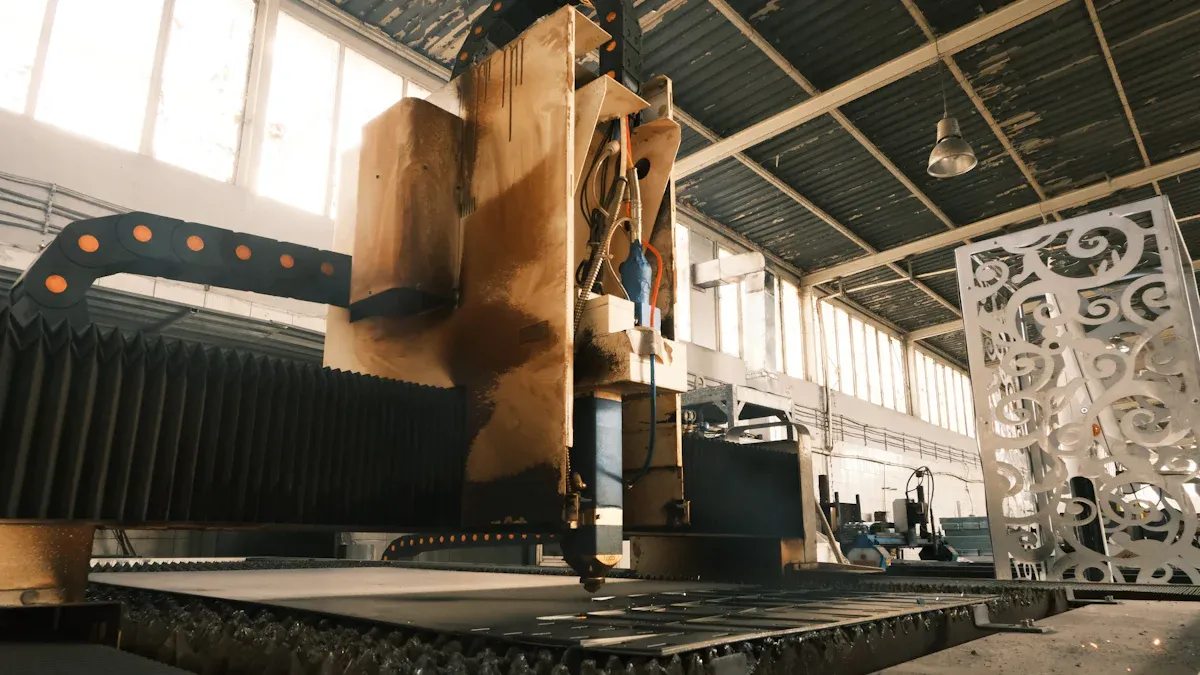
Matching fiber laser source power to what you need helps things work well and saves money. When people pick the right power, they get more work done and better results. If a machine is too strong, it wastes money. If it is too weak, the work is slow and not as good.
Picking the right power level keeps your money safe and helps you reach your goals.
Key Takeaways
- Picking the right fiber laser power helps save money and makes work faster.
- If you use too much power, it can hurt the materials. If you use too little power, the work is slow and not good.
- Think about what kind of material you have and how thick it is when you pick the laser power. This helps you get the best cutting results.
- Choose laser systems that can grow with your needs. This helps if your work changes in the future.
- Try out machines before you buy them. This makes sure they fit your needs and helps you not make expensive mistakes.
Why fiber laser power matters
Performance and efficiency
Fiber laser power is very important in factories. More power helps machines cut, weld, and mark things faster. It also makes them more exact. Some fiber lasers use 20W for marking. Others use up to 20,000W for heavy cutting. These lasers turn over half their energy into work. This saves money compared to old CO2 lasers. The cuts are cleaner and smoother. The lines they cut are very thin. The finish looks nice. Workers can make parts that are very close to the right size, like 0.05 mm. The heat does not spread much, so the material stays strong. It does not bend or change shape. Fiber lasers can work with many materials. They do not need much fixing or care.
- Faster work
- Cleaner cuts
- Less heat damage
- Can cut many materials
- Needs little fixing
Risks of incorrect power choice
Picking the wrong fiber laser power can cause problems. If the laser is too weak, it cannot cut all the way through. This makes extra waste and bigger heat spots. The work goes slower. More mistakes happen, and the quality gets worse. If the laser is too strong, it can burn or bend the parts. This wastes material and makes results uneven. These problems slow things down and cost more money. Workers need to pick the right power for their jobs to stop these issues.
Picking the right power stops slowdowns and helps the machine work with new jobs and materials later.
Cost considerations
The price of fiber lasers changes with power. Buying the right power saves money over time. More power costs 20-30% more to run. But it also makes each cut cheaper and faster. The table below shows what fiber lasers usually cost:
| Power Level | Price Range |
|---|---|
| Low Power (Below 1 kW) | $20,000 – $50,000 |
| Medium Power (1 kW to 3 kW) | $50,000 – $100,000 |
| High Power (Above 3 kW) | $100,000 – $500,000+ |
Choosing the right power helps save money and reach long-term goals.
Choosing fiber laser power
Material and thickness
The kind of material and how thick it is matter a lot. Some metals, like copper or brass, need more power. This is because they reflect light. Non-metals usually need less power. They soak up the laser energy better. Thicker materials need more power to cut well. The table below shows what power works best for each thickness:
| Material Thickness | Fiber Laser Power (kW) |
|---|---|
| Thin (under 3 mm) | 1–2 kW |
| Medium (3–10 mm) | 2–6 kW |
| Thick (over 10 mm) | 12 kW and above |
Picking the right power helps make clean cuts. It also helps stop waste.
Production speed needs
How fast you want to work changes the power you need. Lasers with more power cut faster. This is very true for thick materials. Factories that make lots of things need higher power. This helps them work faster and keep machines busy. If you make custom items or test pieces, lower power can be enough. The table below shows what power fits each speed need:
| Material Thickness | Recommended Power (Fiber) |
|---|---|
| Thin (under 3 mm) | 1–2 kW |
| Medium (3–10 mm) | 2–6 kW |
| Thick (over 10 mm) | 12 kW and above |
Quality requirements
Quality rules help pick the right laser power. More power can make work faster and more exact. This is important when you need high quality. The best power depends on what you are making and the material. For example, making medical tools from stainless steel needs smooth edges. It also needs very good accuracy. Using the right power gives the best results.
Scalability and flexibility
Scalability and flexibility help protect your money. Modular systems let you add more parts later. You do not need to buy a new machine. Companies can start with simple loading. They can add robots or other tools later. Plug-and-play features make it easy to do more work or new jobs. Planning ahead helps companies change when the market does.
Tip: Companies should think about their future plans. They should pick a system that can grow with their business.
Fiber laser power in real-world scenarios
Power levels and applications
Many industries use fiber laser machines for different jobs. Each power level works best for a certain task. The table below shows how companies use these machines:
| Industry | Company | Application Description |
|---|---|---|
| Aerospace | Company X | Uses fiber laser cutting for aircraft parts, improving efficiency and accuracy in manufacturing. |
| Automotive | Company Y | Employs fiber laser technology for precise cutting of sheet metal components in automotive bodies. |
| Medical Device Manufacturing | Company Z | Relies on fiber lasers for producing complex components for surgical instruments and implants. |
| Textile Industries | Company A | Utilizes fiber laser cutting for precise fabric designs, enhancing customization options for sportswear. |
The power level decides what materials and thickness the machine can cut. The table below shows how each power level works:
| Power Level | Maximum Thickness | Cutting Speed |
|---|---|---|
| 500W-1000W | Thin materials | Entry-level speed |
| 1500W | 4mm | 0.8m/min |
| 2000W | 6mm | 0.6m/min |
| 3000W | 8mm | 0.9m/min |
| 4000W | 10mm | 0.8m/min |
| 6000W | 16mm | 0.4m/min |
| 12000W-20000W | Extreme thickness | Very slow speed |
A company that cuts thin metal for cars might use a 2000W machine. A business making thick steel parts for buildings may need 12000W or more.
When to upgrade power
Manufacturers should look for signs that show they need more power. These signs are slow cutting, bad cut quality, or new hard materials. The table below lists common signs:
| Indicator | Description |
|---|---|
| Higher Power | Increases the time and intensity of the oxygen exothermic reaction, enhancing energy coupling and kerf width. |
| Cutting Speed | Lower cutting speeds at high power lead to increased oxidation and dross due to turbulent gas-melt interactions. |
| Material Type | The geometry of the stock material (e.g., tubes) affects cut quality, promoting higher kerf width and oxidation. |
Tip: If a company sees more waste or slower work, they should think about getting a higher power fiber laser.
Common selection mistakes
Some companies make mistakes when picking laser power. These mistakes can cause bad results and cost more money. The most common mistakes are:
- Wrong laser power settings can make cutting uneven, cause heat damage, and problems with shiny materials.
- Uneven cutting can look like gaps, weird shapes, or cuts that do not go all the way through.
- Too much heat can melt or bend the material.
To stop these problems, companies should:
- Change laser power and cutting speed carefully.
- Use the right assist gases for each material.
- Check cutting speed charts and test on scrap pieces.
- Use just enough power to cut the material and go faster to control heat.
Note: Careful setup and testing help companies get good results and keep their machines safe.
Step-by-step power selection guide
Picking the right power for a fiber laser system takes careful steps. Companies that use a clear plan can match their machines to what they need. This helps them avoid mistakes that cost money. It also helps them do well for a long time.
Assess production needs
Looking at what you need is the first step to picking the right power. Companies should:
- Decide what their work includes and what limits they have. They should also know what success means for them.
- Make charts that show how thick each material is. This helps them see what kinds of materials they will use.
- Set rules for how good the edges must look. They should also think about what happens to the parts after cutting.
- Pick how many good parts they want to make.
- Choose if they will cut, weld, or mark things most of the time.
- Find out which power levels might work for their jobs.
- Check how much the machines and running them will cost. This makes sure the money spent is smart.
- Think about growing in the future and how to upgrade.
- Test the machine on real parts to make sure it works well.
While doing this, companies should gather important facts:
- How good the cuts are, because this makes customers happy.
- How many hours the machine will run, to help pick the right power.
- What happens when they try the machine on real materials.
Tip: If companies keep track of these things, they can make better choices and not get surprised later.
Compare laser options
After knowing what they need, companies should look at different laser choices. The best laser depends on what materials they use, how fast they need to cut, and how well the machine works. The table below shows how fiber and CO2 lasers do with different materials:
| Material Category | Fiber Laser Performance | CO2 Laser Performance | Best Technology Choice |
|---|---|---|---|
| Stainless Steel | Excellent (up to 25mm) | Good (up to 20mm) | Fiber (speed advantage) |
| Carbon Steel | Excellent (up to 30mm) | Excellent (up to 25mm) | Fiber (efficiency) |
| Aluminum Alloys | Excellent (reflective capability) | Poor (reflection issues) | Fiber (only option) |
| Copper/Brass | Excellent (no reflection damage) | Not recommended | Fiber (exclusive) |
| Titanium/Inconel | Excellent (controlled parameters) | Limited capability | Fiber (precision required) |
| Wood/Acrylic | Limited (charring possible) | Excellent (smooth cuts) | CO2 (material compatibility) |
| Plastics/Fabrics | Not recommended | Excellent (clean cuts) | CO2 (wavelength match) |
Important things to think about are if the laser can work with the materials, if the power matches the thickness, and if it can make enough parts. Companies should also look at how much the machine costs over time. More power is not always better.
Consult experts
Talking to experts helps companies not make common mistakes. Experts can help pick the best setup for the material and how thick it is. The table below gives advice on what power to use for each thickness:
| Material Thickness (inches) | Recommended Power (kW) |
|---|---|
| < 0.1 | ≤ 10 |
| 0.1 | 15 |
| > 0.130 | ≥ 20 |
Experts also say to do these things:
- Pick materials that work well with fiber laser cutting.
- Make sure all materials are clean and have nothing on them.
- Change the cutting settings for each material and thickness.
Note: If you bring lots of details about your work, experts can give the best advice.
Test before buying
Testing the machine before buying is very important. Companies should:
- Try out samples with different sellers to see how each machine works on their materials.
- Gather lots of facts about their work before talking to sellers.
- Check how good the cuts are, how fast the machine works, and if it does the same thing every time.
Big companies often use real tests to make sure the machine is right for them. They also check how much the machine will cost to own. They make sure the power is good for now and later.
Companies that test before they buy can stop big mistakes and make sure their money is well spent.
After getting the machine, companies should watch important numbers to make sure the power is still right:
| Metric | Description |
|---|---|
| Production Time | See how long jobs take before and after getting the machine. |
| Material Usage | Watch how much material is used during work. |
| Labor Costs | Check if workers cost less because the machine works better. |
By following these steps, companies can pick the right fiber laser power for their work. They can also change as their needs grow.
Picking the right fiber laser power needs a simple plan. Companies should:
- Think about how much they make now and later.
- Look at different machines for today and tomorrow.
- Ask experts for help when needed.
- Try out machines before buying them.
Important steps are:
- Pick power for the thickest thing you will cut.
- Use the right assist gas and focus every time.
- Make sure workers know how to use and care for the machine.
Careful planning and expert help stop expensive errors and keep work running well.
| Maintenance Practices | Safety Protocols |
|---|---|
| Do regular checks | Make sure everyone uses PPE |
| Watch how the machine works | Change safety rules as tech grows |
FAQ
What happens if a company uses too much fiber laser power?
If a company uses too much power, the material can burn or bend. This means they waste supplies and spend more money. Workers might see cuts that are not even. The machine can also wear out faster.
How often should operators check fiber laser settings?
Operators need to check the settings before every work shift. Checking often helps keep the cuts nice and stops mistakes. Looking at the machine often also helps it last longer.
Can one fiber laser handle different materials?
Many fiber lasers can cut steel, aluminum, and copper. Workers must change the power and speed for each material. They should always read the machine’s manual to know what it can do.
Is higher power always better for production?
More power makes the machine cut faster, but it does not always make better cuts. Companies should pick power that fits the material thickness and the job. Using more power also costs more money.