
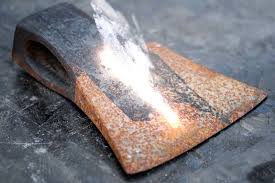
Laser technology takes away rust removal from metal by using laser ablation. The laser beam hits the rust and breaks its bonds. This makes the rust come off the metal with little damage. Many industries like this way to remove rust. It also cleans paint, oil, and other dirt. Laser cleaning is faster and generates less waste than sandblasting or scrubbing by hand.
| Metric | Laser Cleaning | Sandblasting | Manual Scrubbing |
|---|---|---|---|
| Time per m² (minutes) | 2–5 | 15–30 | 45–60 |
| Operator Labor Hours | 0.5 | 2.5 | 6 |
| Waste Generation | None | High | Moderate |
Car and airplane companies use lasers more now for careful rust removal cleaning jobs.
Key Takeaways
- Laser rust removal works quickly and well. It takes only 2-5 minutes for each square meter. Traditional methods take much longer, about 15-60 minutes.
- This technology is very accurate. It removes only rust and does not harm the metal underneath. This makes it safe to use in many places.
- Laser cleaning makes very little waste. It does not use dangerous chemicals. This makes it good for the environment.
- Operators must get training to use lasers safely. Training helps them use the equipment well and avoid accidents.
- Buying laser technology can save money over time. It lowers labor costs and makes cleaning faster and better.
Laser Rust Removal Process
How Laser Ablation Works
Laser ablation uses strong light to take off layers from metal. The laser aims at rust and other dirt with great accuracy. When the laser beam touches the rust, it sends energy in quick flashes. The rust takes in this energy much faster than the clean metal below.
High-energy, nanosecond pulses are aimed at iron oxide. Iron oxide soaks up the energy better than the base metal. It reaches its ablation threshold first. The rust layer heats up fast and turns into vapor. The metal under the rust does not get too hot. This is because the laser pulses are short and the energy is controlled well.
This way does not use chemicals or rough materials. The laser only hits the rust and leaves the metal safe. Since nothing touches the metal, there are no problems like grit getting stuck or the surface getting scratched.
Laser ablation can clean more than just rust. It also works on:
- Paint
- Corrosion
- Coatings
- Grease
- Mold
- Oxidation
Many companies use laser cleaning to keep things clean and free from leftover dirt. This helps keep metal parts in cars, airplanes, and medical tools in good shape.
Types of Lasers Used
There are different lasers for rust removal. The two main types are continuous wave (CW) lasers and pulsed lasers. Each kind has its own good points.
| Category | Continuous Wave (CW) Lasers | Pulsed Lasers |
|---|---|---|
| Price Range | $3,000 – $5,000 (up to $10,000 for high-power) | Starts at $5,000 (up to $20,000 for high-power) |
| Operational Costs | Low, mainly electricity (~$1/hour) | Low, but may need special training |
| Efficiency | Best for heavy-duty cleaning, large surfaces | Best for careful, small jobs |
| Speed | Up to 50 square meters per hour | Slower on big areas, great for tiny spots |
| Quick ROI | Payback often within a year due to efficiency | Takes longer to get your money back |
| Long-Term Savings | Durable with low maintenance costs | Makes products better, cuts down on fixing mistakes |
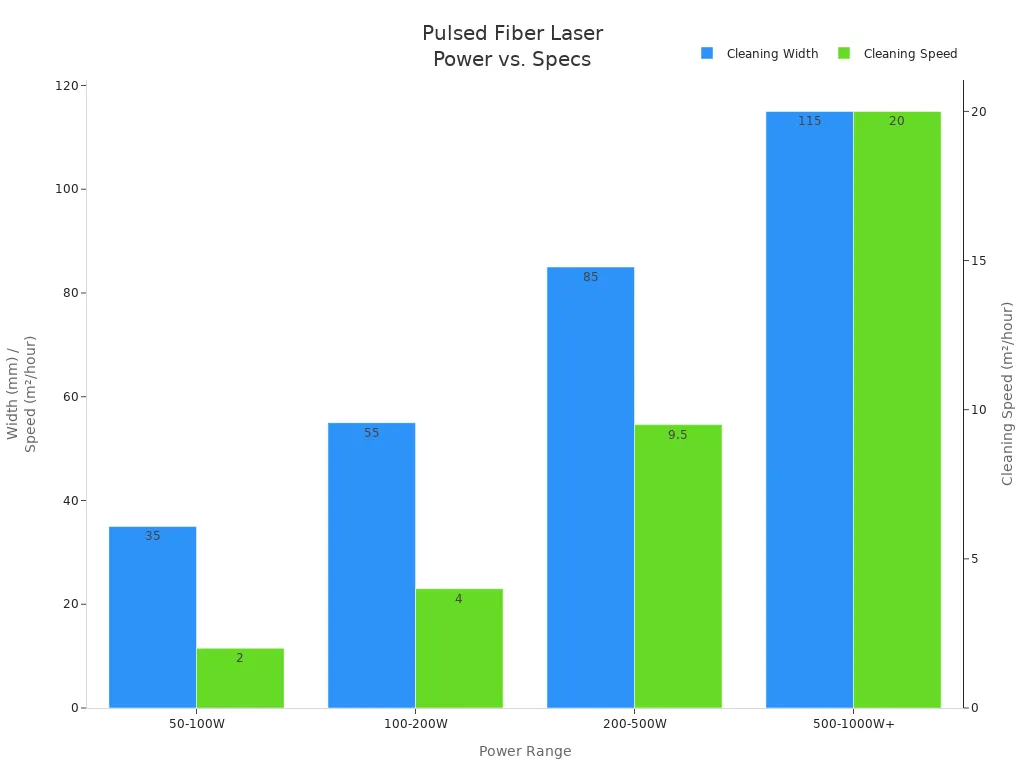
Pulsed fiber lasers are used most for careful rust removal. They send out energy in short, strong bursts. This gives good control and helps protect the metal. The power of these lasers can be different:
| Power Range | Cleaning Width | Cleaning Speed | Applications |
|---|---|---|---|
| 50-100W | 20-50mm | 1-3 m²/hour | Light rust, thin coatings |
| 100-200W | 30-80mm | 2-6 m²/hour | General rust removal, moderate coatings |
| 200-500W | 50-120mm | 4-15 m²/hour | Heavy-duty industrial cleaning |
| 500-1000W+ | 80-150mm+ | 10-30+ m²/hour | Maximum-duty industrial applications |
CW lasers are best for big, flat areas that need fast cleaning. Pulsed lasers are great for cleaning small or gentle parts.
Step-by-Step Rust Removal
Laser rust removal follows simple steps. Each step keeps the metal safe while the rust goes away.
- The operator gets the laser system ready and sets it for the right rust and metal.
- Pulsed laser energy is aimed at the rust.
- The rust soaks up the laser energy and heats up fast.
- The rust changes from solid to vapor and comes off the metal.
- The operator checks to make sure all the rust is gone and the metal is still good.
No chemicals or rough stuff are used in this process. The laser only heats the rust, not the metal. This keeps the metal safe and stops problems like dents or grit getting stuck.
Laser surface preparation systems use laser pulses to target rust layers. This method, called pulsed laser ablation, gives careful control. It does not use rough stuff or chemicals, so the metal stays safe.
Laser rust removal is safe for most metals. It works fast and leaves the surface clean for painting or other uses.
Benefits and Drawbacks
Advantages of Rust Removal
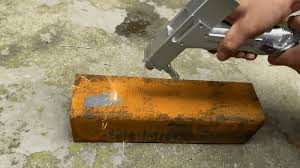
Laser technology has many good points for rust removal. It works fast and is very accurate. Operators can take off rust in just seconds or minutes. This is much quicker than doing it by hand. The laser only hits the rust, not the metal around it. This keeps important parts safe.
| Advantage | Description |
|---|---|
| Speed | Laser rust removal is done in seconds or minutes. It is much faster than doing it by hand. |
| Precision | The laser only treats the rust. It does not hurt other areas. This makes it very accurate. |
| Cost-Effectiveness | Less manual work and setup are needed. This lowers costs compared to old ways of cleaning. |
A new study on oil pipelines showed laser cleaning cut manual work by 98%. The metal did not bend, and rust came back much slower. Laser cleaning is gentle enough for soft surfaces. This makes it useful for many jobs.
Disadvantages and Risks
Laser rust removal also has some downsides and risks. The machines cost a lot, so small companies may not afford them. Operators must learn special skills to use lasers safely. Some metals or rust types do not work well with lasers. Strong lasers use more power, which can cost more money.
| Drawback/Risk | Description |
|---|---|
| High Equipment Cost | Buying laser rust removal machines costs a lot of money. |
| Training and Technical Expertise | Workers need special lessons to use the machines safely and well. |
| Material and Condition Limitations | Lasers may not work on all metals, especially shiny ones. |
| Energy Consumption | Strong lasers use more electricity, which can cost more. |
| Safety | There are risks like hurting eyes, burning skin, or breathing fumes. Safety gear is needed. |
| Surface Damage | If used wrong, lasers can change the metal’s surface in bad ways. |
| Limited Applications | Lasers do not work for every kind of rust or metal. |
| Limited Availability | Not every place has the right machines or trained workers. |
Safety tip: Operators should wear safety gear to protect their eyes and skin. Good airflow is needed to keep fumes away.
Environmental Impact
Laser rust removal is a clean way to work. It does not use chemicals or make dangerous waste. The process makes almost no waste and keeps dust in the air very low—less than 0.1 mg/m³, which meets tough air rules. Laser cleaning does not leave behind sand or chemical leftovers. This makes it safer for people and nature.
- No chemicals or dangerous stuff are used.
- No waste or bad leftovers are made.
- Dust in the air stays under strict limits.
- Laser cleaning saves energy because it is faster than old ways.
- No extra waste needs to be thrown away.
Laser rust removal helps companies be greener and keeps work areas cleaner.
Industrial Applications
Manufacturing Uses
Many companies now use laser technology to keep metal parts clean. This helps stop rust from forming. Car, airplane, ship, and oil companies use lasers in their work.
- Car makers use lasers to clean engine blocks and gears. This helps parts fit well and work better.
- Airplane companies use lasers on turbine blades and landing gear. The process does not hurt special heat-treated surfaces.
- Ship companies use lasers to clean ship hulls and fix parts touched by salty water. This makes repairs faster and easier.
- Oil companies use lasers to clean tanks and pipes. Workers are safer because they do not use strong chemicals.
Laser cleaning helps these companies work faster. It cuts the time needed to get metal ready by about 60%. Workers are safer since they do not touch dangerous stuff. The process also helps protect the environment.
Lasers clean many metal parts like car bodies, airplane pieces, ship hulls, and big machines. Laser cleaning machines help car makers build cars faster and keep quality high.
Laser cleaning is special because it is very exact and does not touch the part. It takes off rust and coatings without hurting soft parts.
Restoration and Maintenance
Laser technology is also important for fixing and caring for old things. Museums and repair teams use lasers to clean old items. The process keeps the original material safe, which is very important.
- Laser cleaning is good for public art and old statues. It keeps small details and words safe.
- The process makes almost no waste and does not use bad chemicals. This keeps both the item and the earth safe.
- City bridge teams use lasers to clean bridges without taking them apart. This means less traffic and saves time.
In car and airplane work, laser cleaning helps machines last longer. It lowers repair costs and keeps workers safe. The technology gives a safe, careful, and earth-friendly way to remove rust in many jobs.
Safety Considerations
Safety Precautions
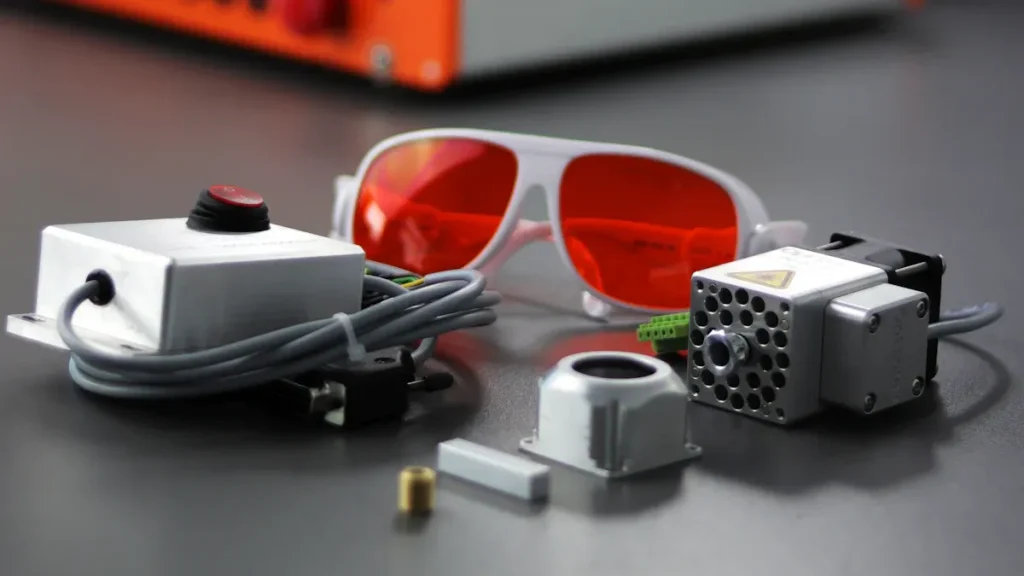
Laser rust removal systems use strong beams that can hurt people. Operators must follow safety rules to stay safe. Personal protective equipment (PPE) is very important. Operators wear laser safety glasses made for the machine’s light. They also wear heat-resistant gloves and clothes that cover their skin. Face shields or goggles protect from flying pieces.
A safe work area is needed too. Operators set up the laser in a place with good airflow. The room should have surfaces that do not reflect light. Fume extractors or air filters clean the air from dust and fumes. Signs and barriers warn others to stay away from the laser. The workpiece and machine must be steady to stop accidents.
Operators should check the machine’s settings before they start. They must follow the maker’s steps to turn the machine on and off.
Fire safety is very important. Workers keep flammable things away from the area. They have fire tools close by in case of a fire. Many machines are made to keep out dust and water so they do not break in tough places.
Key Safety Steps:
- Wear the right laser safety gear.
- Work in a place with good airflow.
- Make sure the workpiece and machine are steady.
- Know the beam settings.
- Follow the right steps to start and stop the machine.
- Keep the area free from things that can catch fire.
Operator Training
Good training helps operators use laser rust removal systems safely. Every operator takes laser safety training to learn about dangers and how to stay safe. Equipment training teaches how to use the machine and change settings for each job. Some workers get extra lessons for special materials or places.
Certification programs make work safer and better. These programs give different certificates:
| Certification Type | Benefits |
|---|---|
| Laser Safety Certificates | Teaches dangers of high-power lasers |
| Machine-Specific Training | Shows how to use the machine the right way |
| Operator Competency Documentation | Proves workers follow industry rules |
| Laser Safety Officer Certification | Gives more skills for safety management |
Operators who finish these programs work with more confidence. They help keep everyone at work safe.
Laser technology takes away rust by focusing just on the rust. The metal under the rust stays safe. This way is quick and saves money in the long run. It is also better for the earth. People should look at laser cleaning and other ways before picking one. The table below lists the main points:
| Advantage | Description |
|---|---|
| Precision | Only the rust is removed, not the metal |
| Efficiency | The job is fast and needs little setup |
| Environmental Impact | No bad waste or smoke is made |
People need to think about power, if the metal works with lasers, and the price. They must always follow safety steps and learn how to use the machine. Talking to an expert helps get the best results.
FAQ
What metals can laser rust removal clean?
Laser rust removal works best on steel, iron, aluminum, and copper. Most metals with rust on top can be cleaned well. Some shiny metals might need special settings to work right.
Does laser cleaning damage the metal surface?
Laser cleaning only removes the rust on top. The metal under the rust stays safe if the operator uses the right settings. Good training helps stop mistakes that could change the metal’s surface.
Is laser rust removal safe for indoor use?
Operators can use laser rust removal inside buildings. Good airflow and fume extractors help keep the air clean. Safety gear keeps eyes and skin safe from the laser light.
How much does a laser rust removal machine cost?
| Power Level | Price Range |
|---|---|
| Low (50-100W) | $3,000–$7,000 |
| Medium (100-500W) | $7,000–$15,000 |
| High (500W+) | $15,000–$30,000+ |
The price depends on how strong the machine is, the brand, and what features it has.