
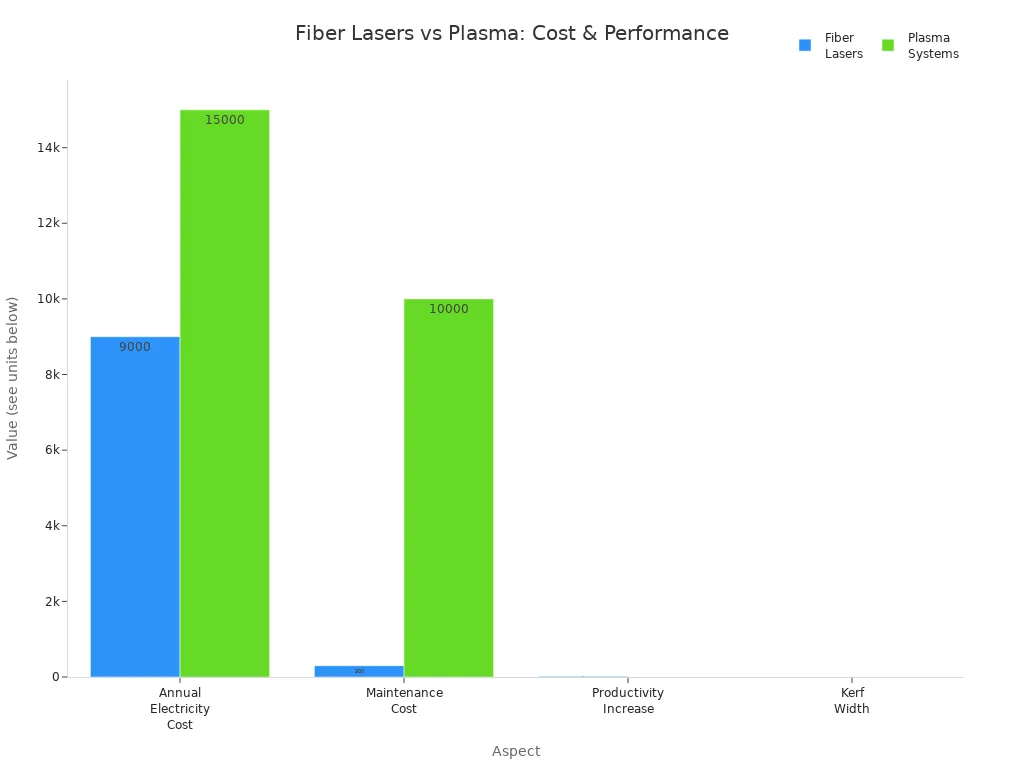
improve performance. These machines use up to 50% less electricity than older CO₂ lasers and achieve a photoelectric conversion rate of 40%. The narrow kerf leaves clean cuts, which means less wasted material and fewer secondary finishing steps. Labor expenses drop because automated systems need less human intervention and reduce errors. Maintenance costs remain low due to durable construction and fewer required repairs.
| Aspect | Fiber Lasers | Plasma Systems |
|---|---|---|
| Energy Consumption | 30-50% less power | Higher power usage |
| Annual Electricity Cost | ~$9,000 | ~$15,000 |
| Maintenance Cost | ~$300 | ~$10,000 |
Key Takeaways
- Fiber lasers use up to 50% less electricity than CO₂ lasers, leading to significant energy savings.
- Faster cutting speeds of fiber lasers can increase productivity, allowing shops to complete more jobs each day.
- Precision cutting with fiber lasers reduces material waste, lowering production costs and improving profitability.
- Automation in fiber laser systems decreases labor costs and minimizes the need for skilled workers.
- Investing in fiber laser technology can lead to payback on investment within one to three years.
Fiber Lasers and Efficiency
Faster Laser Cutting
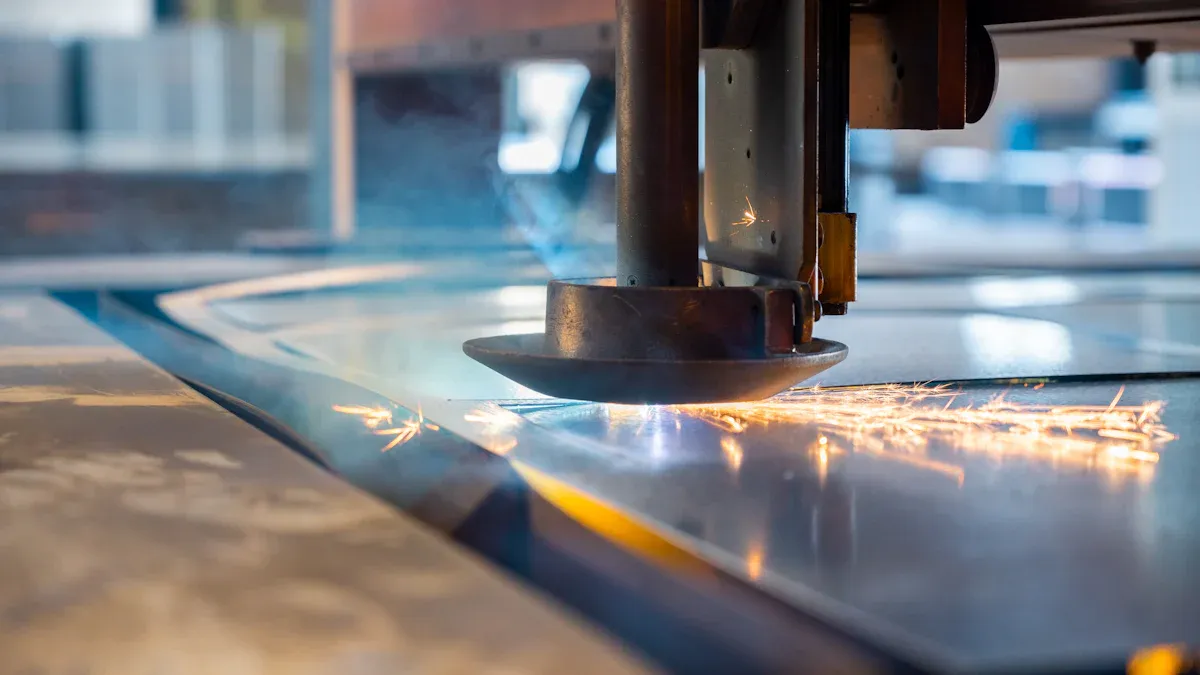
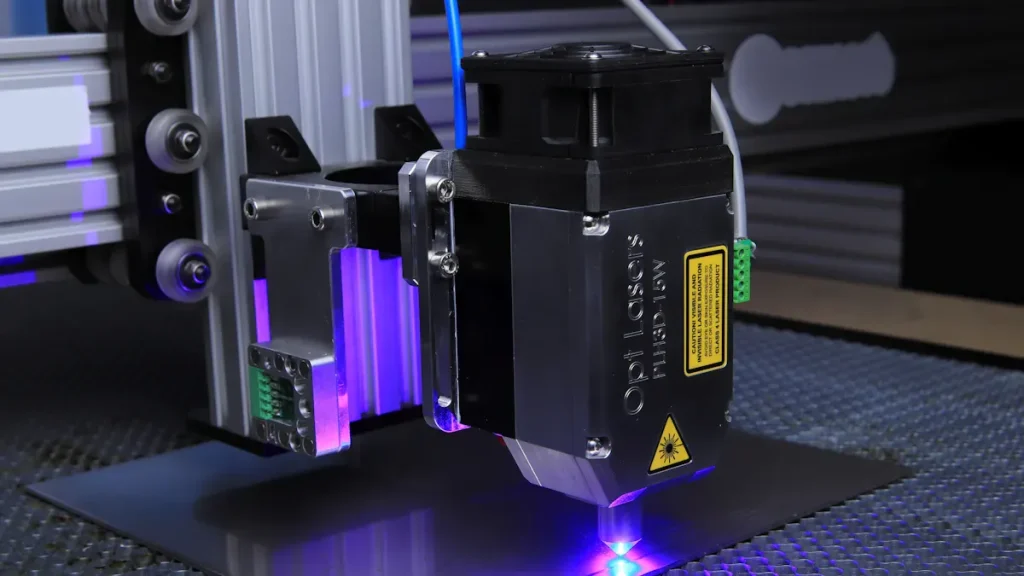
Laser cutting technology has changed how sheet metal shops operate. Fiber lasers deliver much higher speeds than older CO2 lasers. For materials under a quarter inch thick, fiber lasers can cut up to five times faster. This speed comes from the high power density at the laser’s focal point and the shorter wavelength, which allows for better absorption by metals. Shops can process more parts in less time, which means more jobs get completed each day.
Laser cutting with fiber lasers also works well on reflective metals like aluminum and copper. These metals are difficult for CO2 lasers, but fiber lasers handle them with ease. The narrow kerf produced by fiber laser cutting creates clean edges and reduces the need for extra finishing. Less time spent on post-processing means more time for actual production.
- Fiber lasers achieve cutting speeds up to five times faster than CO2 lasers.
- A 2-kW fiber laser has five times the power density of a 4-kW CO2 laser.
- Fiber lasers have 2.5 times greater absorption due to their shorter wavelengths.
- Laser cutting with fiber lasers excels at cutting reflective metals.
This increase in speed and versatility leads to higher throughput. For example, fiber laser systems can reach up to 277 parts per hour, while CO2 systems may only manage 64 parts per hour. Faster laser cutting helps shops meet tight deadlines and take on more work.
Increased Uptime
Efficiency in a sheet metal shop depends on more than just speed. Uptime, or the amount of time a machine is running and producing, plays a big role in lowering production costs. Fiber lasers have fewer moving parts than CO2 lasers, which means less maintenance and fewer breakdowns. This reliability keeps machines running longer and reduces downtime.
The energy efficiency of fiber lasers also lowers operational costs. These machines use up to 50% less electricity than traditional CO2 lasers. Lower energy use means lower utility bills and supports environmentally friendly practices. Maintenance costs drop as well, with fiber laser systems needing only $200 to $400 per year, compared to $1,000 to $2,000 for CO2 systems.
Tip: Increased uptime means more consistent production and fewer delays, which helps shops keep their promises to customers.
Here is a quick look at how fiber lasers impact key cost factors:
| Cost Factor | Impact of Fiber Lasers |
|---|---|
| Labor Costs | Automation reduces the need for hands-on labor |
| Material Costs | Precise cutting results in less scrap |
| Maintenance Costs | Fewer moving parts mean less downtime |
Enhanced productivity through faster cutting speeds and reduced turnaround times gives shops a competitive edge. Lower operating costs allow for more competitive pricing, which can attract new customers and grow the business. Over five years, total cost of ownership savings with fiber laser systems can exceed $520,000.
Laser cutting with fiber lasers improves both speed and uptime. These advantages combine to reduce production costs and help sheet metal shops stay ahead in a competitive market.
Reducing Material and Production Costs
Precision and Less Waste
Fiber lasers set a new standard for accuracy in sheet metal shops. The focused laser beam allows for extremely fine cuts, which means less material waste and better use of each sheet. High precision also leads to smooth, uniform edges that often need little or no post-processing. This level of quality helps shops deliver parts that fit together perfectly and look professional.
The table below shows how fiber lasers achieve these results:
| Feature | Benefit |
|---|---|
| High Precision | Achieves extremely fine cuts, reducing kerf width and maximizing material usage. |
| Minimal Heat Affected Zone | Concentrated energy minimizes thermal distortion, allowing closer nesting of parts. |
| Automated Nesting Software | Optimizes arrangement of parts, further reducing material waste. |
Laser cutting with fiber lasers also creates a minimal heat-affected zone. This reduces the risk of warping and allows parts to be placed closer together. As a result, shops can cut more pieces from each sheet, which lowers raw material costs and reduces waste disposal expenses.
Note: Smooth cut surfaces and tight tolerances are key signs of high-quality laser cutting. Customers notice these details first.
Optimized Nesting in Laser Cutting
Advanced nesting software is another advantage of fiber lasers. This software arranges parts on the sheet in the most efficient way possible. Laser cutting systems minimize gaps between parts and ensure maximum use of materials. The Tianchen Group reported a 25% reduction in material waste after switching to optimized nesting with fiber lasers.
- Laser cutting can reduce material waste by up to 30% compared to traditional methods.
- Stainless steel cutting sees waste reductions of up to 35%.
- Aluminum processing benefits from less oxidation and minimal heat-affected zones, with waste reduced by up to 25%.
- Carbon steel processing shows waste reductions of 20-30% due to optimized cutting parameters.
Lower waste means lower production costs. Shops spend less on raw materials and waste disposal. Improved operational efficiency leads to higher profitability. By supporting lean manufacturing principles, fiber lasers help shops streamline operations and minimize idle time.
Laser cutting with fiber lasers improves both material utilization and product quality. These benefits make a strong case for investing in this technology.
Lower Energy and Operating Costs
Power Consumption Savings
Laser cutting technology has made big strides in energy efficiency. Fiber lasers use less energy consumption compared to older CO2 laser systems. This difference shows up in both efficiency and cost. Fiber lasers can reach over 90% efficiency, while CO2 lasers operate below 90%. The table below shows how much energy each type uses and the related costs:
| Laser Type | Efficiency | Energy Cost per Hour | Annual Maintenance Cost |
|---|---|---|---|
| Fiber Laser | >90% | $3.50 – $4.00 | $200-$400 |
| CO2 Laser | <90% | $12.73 | $1,000-$2,000 |
Fiber lasers help shops save money every hour they run. Businesses that switch to fiber lasers can cut energy use by up to 50%. This means lower electricity bills and a smaller carbon footprint. Laser cutting also produces clean cuts in a single pass, which reduces the need for extra processing and saves even more energy.
Tip: Lower energy use not only reduces costs but also supports green manufacturing goals.
Assist Gas Efficiency
Laser cutting often uses assist gases to improve the quality of cuts and speed up the process. Fiber lasers work well with nitrogen or compressed air as assist gases. Shops can generate these gases in-house, which lowers the need to buy from outside suppliers. This change reduces operating costs and boosts cutting efficiency.
The table below highlights the main benefits of assist gas efficiency:
| Benefit | Description |
|---|---|
| Energy Efficiency | Lower operating costs compared to traditional methods. |
| Reduced Material Waste | Precision cuts lead to less waste and lower finishing work requirements. |
| Increased Throughput | Enhanced efficiency and speed improve overall economic benefits. |
Laser cutting with fiber lasers uses less energy and creates less waste. Advanced software helps nest parts closely together, which means more parts per sheet and less leftover scrap. These improvements lead to higher profits and a cleaner environment.
- Fiber lasers can achieve up to 70% energy efficiency.
- Laser cutting minimizes material waste and optimizes the use of expensive metals.
- Clean cuts reduce the need for secondary finishing, saving time and money.
Laser cutting with fiber lasers gives sheet metal shops a clear advantage in energy savings, cost control, and environmental responsibility.
Minimal Maintenance and Labor
Fewer Consumables Needed
Fiber lasers have changed maintenance routines in sheet metal shops. These machines do not need mirrors or lenses that require frequent cleaning. There are no bellows to check, and regular beam alignments are not necessary. Maintenance intervals are much longer, with some shops reporting years between major service needs. This technology eliminates the need for resonator gases and reduces assist gas usage. The table below shows how consumables are minimized:
| Consumable Type | Status |
|---|---|
| Resonator Gases | Eliminated |
| Assist Gas Usage | Minimized |
Shops using fiber lasers spend less time and money on service. There is no need for precise mirror alignment or gas management. The laser beam travels through fiber optics, which increases reliability and reduces downtime. One company saw a 40% drop in unexpected failures after switching to high-quality components and regular maintenance. Another manufacturer reduced downtime by 30% and cut maintenance costs by 20% with reliable fiber laser cutting machines.
Reduced Manual Labor
Automation with fiber lasers leads to reduced labor costs. Laser cutting requires less human intervention. Automated systems handle most of the work, which means fewer mistakes and less rework. One company reported a 60% reduction in manual labor after adopting automated fiber laser cutting solutions. The table below highlights this improvement:
| Labor Cost Reduction | Description |
|---|---|
| 60% | Reduction in manual labor after implementing automated systems. |
Automation also lowers the need for skilled labor. Laser cut parts come out with clean edges and precise dimensions. Many parts move straight to assembly, which eliminates many secondary finishing steps. This process saves time and ensures a high-quality finished product. Shops can deliver high quality results and maintain a reputation for quality. Customers receive a high-quality finished product with every order.
Tip: Automation helps shops keep labor costs low while producing laser cut parts that meet strict quality standards.
Fiber lasers help sheet metal shops lower costs through energy savings, reduced waste, and less manual labor. Many shops see payback on their investment in one to three years.
- Fiber lasers deliver precise cuts and cleaner edges, which means fewer defects and less rework.
- Upgrading to higher power models supports business growth and keeps operations flexible.
- Shops can handle more work and expand into new markets with consistent quality.
Investing in fiber laser technology gives shops a strong foundation for future success.
FAQ
What materials can fiber lasers cut?
Fiber lasers cut many metals, including stainless steel, aluminum, copper, and brass. They also work well with mild steel and titanium. Shops use fiber lasers for both thin and thick sheets.
How long does a fiber laser last?
Most fiber lasers last over 100,000 hours. The solid-state design has fewer moving parts. This means less wear and longer service life.
Do fiber lasers need a lot of maintenance?
Fiber lasers need very little maintenance. There are no mirrors to align or replace. Most shops only perform basic cleaning and occasional checks.
Can fiber lasers help reduce labor costs?
- Yes, fiber lasers automate many cutting tasks.
- Fewer workers are needed for setup and supervision.
- Shops save money by reducing manual labor.