
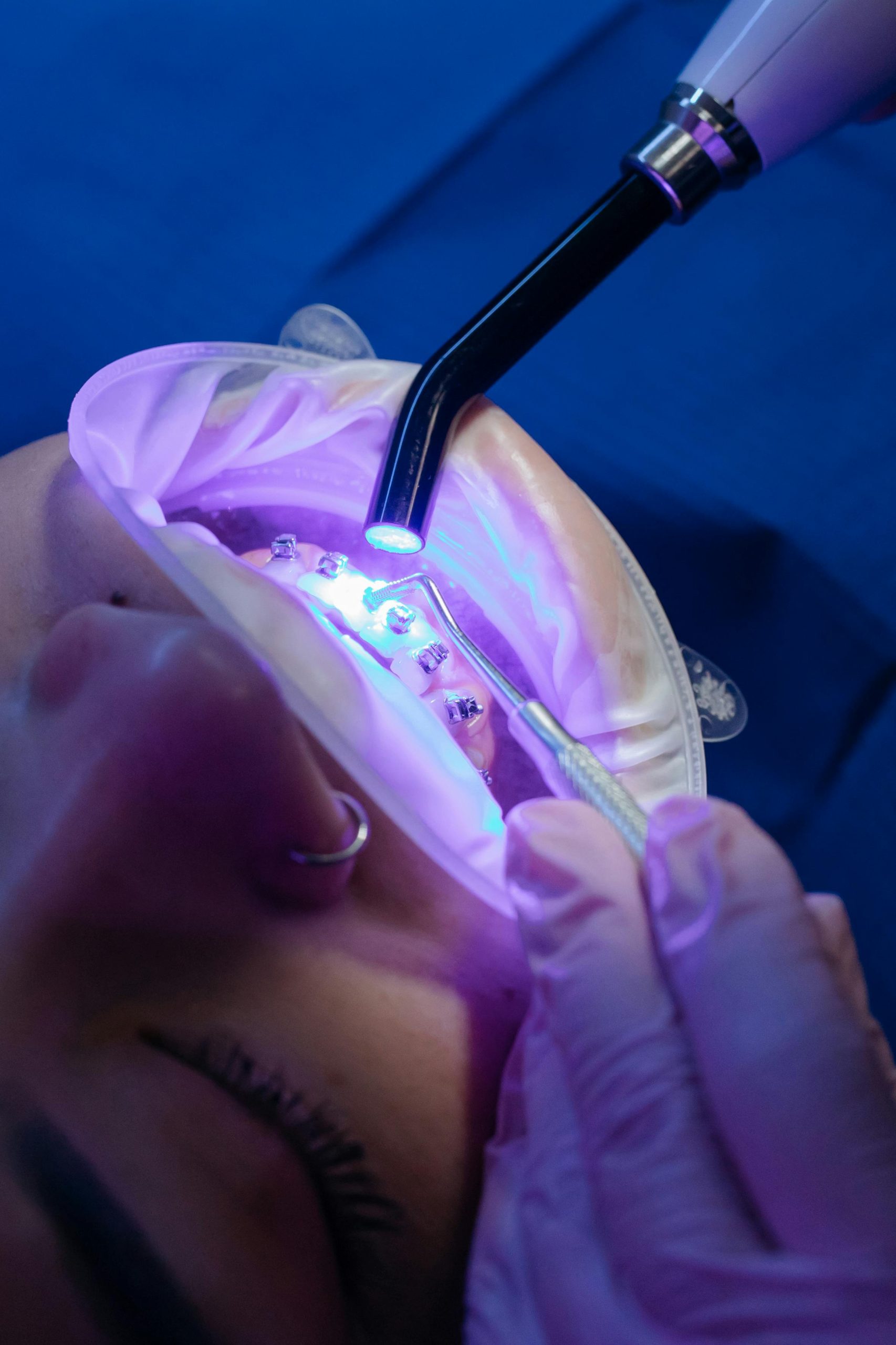
Fiber laser technology makes dental treatments different, particularly with the use of laser in dentistry. Dentists utilize lasers to focus on small spots very carefully, which results in patients feeling less pain and healing faster. Studies show better results and more comfort for patients.
| Study Title | Findings |
|---|---|
| Laser Technology in Periodontal Treatment | Laser therapy gives better results and enhances patient experiences. |
| Lasers in non-surgical periodontal treatment | Lasers may work better than traditional methods. |
Dentists work faster, and patients enjoy healthier teeth.
Key Takeaways
- Fiber laser technology makes dental treatments hurt less. Many patients do not need anesthesia. Lasers treat only the bad spots and keep healthy tissue safe. This helps patients get better results. People heal faster with fiber lasers. They can go back to normal life in one day. Traditional methods take longer to heal. Dental lasers help dentists work faster. Treatments finish quicker and need fewer visits. Safety is very important. Dental clinics use strict rules to keep fiber lasers safe for everyone.
Laser in Dentistry: How Fiber Lasers Work
Fiber Laser Basics
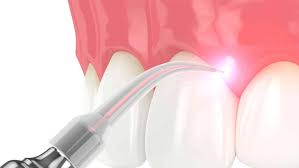
Fiber lasers are a big step forward in laser in dentistry. These lasers make energy at a certain wavelength. Water in body tissues soaks up this energy well. This helps dental lasers cut very carefully and avoid too much heat. Dentists use fiber lasers for surgery inside the mouth. They get good blood control and less burning. These things keep tissue safe during dental treatments. New changes have made fiber lasers easier to use and better for dentists. Many clinics now use dental lasers because they give more control and are safer. Dentists can treat small spots without hurting other tissue. Patients feel less pain and heal faster.
Fiber lasers send energy through optic fibers. This way is very exact and lowers problems. Dentists use laser in dentistry for better results and to help patients feel comfortable.
Comparison to Traditional Tools
Dental lasers are not the same as regular dental drills. Drills take away tissue by grinding, which shakes and uses force. This can make people feel pain and harm healthy parts. Dental lasers use energy in a thin beam. This beam hits only the tissue that needs work and keeps healthy parts safe.
“Regular dental drills grind tissue, which makes shaking and uses force to remove tissue. This way works but is not as exact as laser technology. Laser energy can be focused into a thin beam that only works on certain tissue, keeping other areas safe.”
Dentists see that dental lasers help them be more exact and make patients less nervous. The technology makes treatments smoother and gives better results. Clinics that use laser in dentistry say patients and workers are happier.
Dental Benefits of Fiber Laser Technology
Precision and Accuracy
Fiber laser technology helps dentists be very exact. Dentists can work on soft-tissue and hard-tissue with great care. This is because fiber lasers send energy in a special way. The laser in dentistry uses a focused beam for treatment. Only the area that needs help is touched. Healthy tissue stays safe.
- A clinical study used a pulsed fiber laser with a 1070 nm wavelength and 20 W power. The best cutting happened at 3 kW peak power and 50 kHz repetition rate.
- Fiber lasers keep tissues from getting too hot. This is very important for dental work.
- Femtosecond lasers help prepare teeth very carefully. They do not hurt nearby tissues much.
Dentists use dental lasers for many things. These include taking out cavities, shaping gums, and getting ready for osseointegration. The technology keeps other dental materials safe. Dentists see better results for fixing teeth and making them look nice.
Patient Comfort and Healing
Dental lasers help patients feel better during and after care. The focused energy means less pain and swelling. Many times, patients do not need anesthesia for these treatments. The gentle laser in dentistry helps people heal faster.
Patients say they feel less pain and worry with fiber lasers. The quiet sound and no shaking make the office calm.
Healing is better with dental lasers. The table below shows how fast people get better with different treatments:
| Treatment Type | Healing Time Comparison |
|---|---|
| Fiber Laser Procedures | People get better faster, sometimes in just one day. |
| Traditional Treatments | People may need weeks to heal and lots of rest. |
Dentists see fewer problems and infections. The laser cleans the area while working. This helps with both soft-tissue and hard-tissue care. Dental materials in fillings or implants fit better after laser treatment.
Speed and Efficiency
Fiber laser technology makes dental work faster and easier. Dentists finish treatments quickly and need fewer visits. Dental lasers work well because they turn more energy into useful work.
| Feature | Description |
|---|---|
| Efficiency | Fiber lasers use energy well, with over 30% pump to signal conversion. |
| Treatment Speed | They help dentists work faster and with more care. |
| Appointment Impact | Faster and better treatments mean fewer visits for common care. |
Dentists use dental lasers for many jobs. These include soft-tissue surgery, drilling hard tissue, and making teeth look better. The technology lets dentists switch jobs quickly. Patients spend less time in the chair. Dentists can help more people each day. This helps both the clinic and the patient.
Fiber laser technology is important for today’s dental care. It helps with soft-tissue and hard-tissue treatments. Dentists trust dental lasers for many jobs, from cleanings to big repairs.
Dental Procedures Enhanced by Fiber Lasers
Cavity and Caries Removal
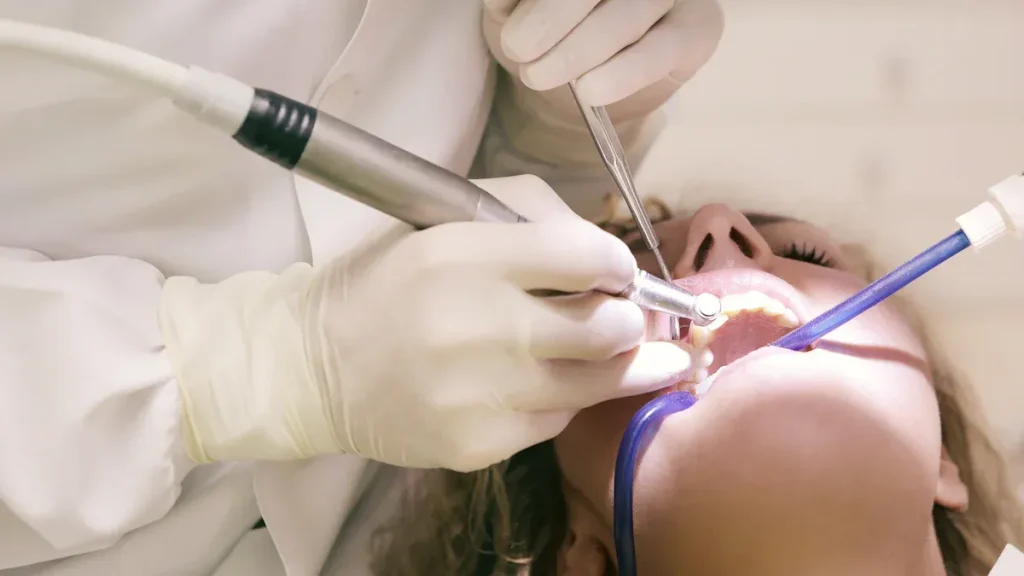
Dentists use dental lasers to take out cavities and caries very carefully. Fiber lasers only work on the decayed part and do not touch healthy hard-tissue. This way, people feel less pain and the treatment is faster. Dental lasers also clean the area, so there is less chance of infection. Dentists often use dental biomaterials with lasers to fix teeth. The laser works well for both soft-tissue and hard-tissue jobs, so removing cavities is safer and works better. Patients have less pain and heal faster. When dentists get teeth ready for implants, the laser makes a clean spot for dental biomaterials. This helps osseointegration get better.
Gum Treatments
Fiber lasers help dentists do more with gum treatments. They use them to shape gums, treat gum disease, and do soft-tissue surgery. The laser helps healing by making fibroblasts grow and lowering swelling. Pain is less after surgery because dental lasers stop swelling and make people feel better. The table below shows how laser gum treatments help:
| Evidence Type | Description |
|---|---|
| Mechanism of Action | Low-level lasers help healing and make repair faster. |
| Pain Control | Lasers give good pain relief after surgery. |
| Post-Operative Benefits | Diode lasers lower pain and swelling after gum work. |
Dentists say laser gum shaping causes little bleeding and no stitches are needed. People can go back to normal life fast, sometimes in just one or two days. Most people feel little or no pain after LANAP. Dental lasers make gum care easier and more comfortable.
- Laser gum shaping is easier on people than old ways.
- People feel less pain and swelling.
- After LANAP, most people go back to normal in a day or two.
- The treatment means less swelling, bleeding, and pain.
- Most people say they feel fine and get back to routines fast.
Teeth Whitening
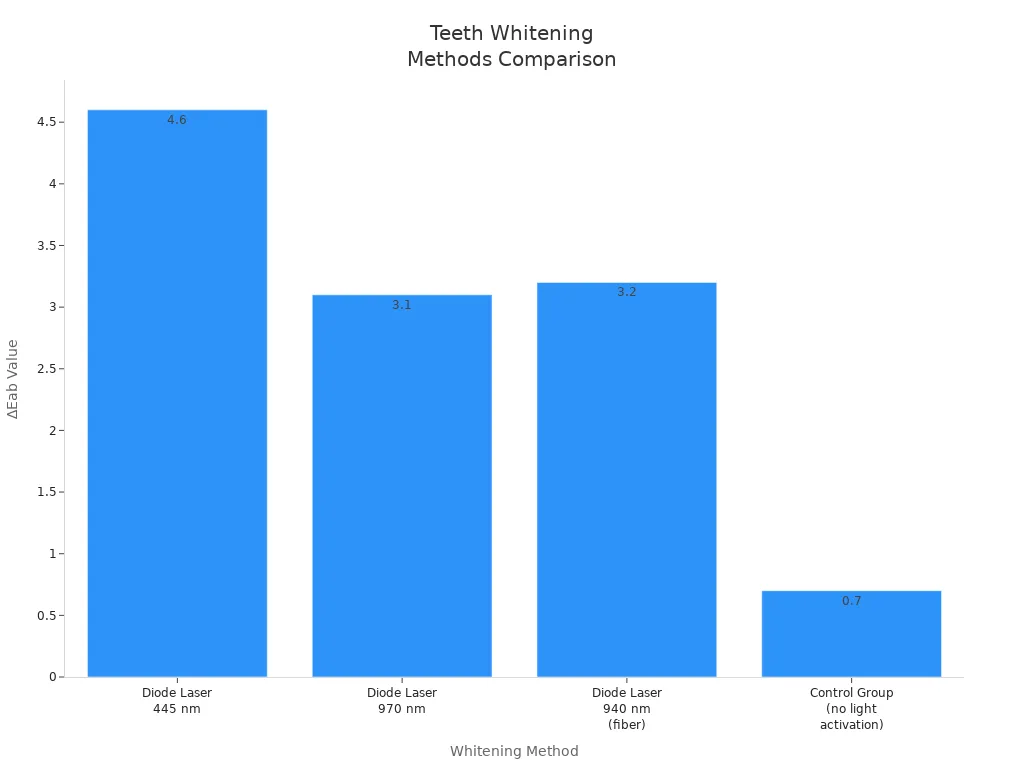
Fiber lasers make teeth whitening work faster and better. Dentists use dental lasers to start whitening agents on both hard-tissue and soft-tissue. Studies show diode lasers, like fiber lasers, make teeth change color more than old ways. The table below shows how well different whitening methods work:
| Whitening Method | ∆Eab Value | VITA Shades Change |
|---|---|---|
| Diode Laser 445 nm | 4.6 | 2.7 |
| Diode Laser 970 nm | 3.1 | N/A |
| Diode Laser 940 nm (fiber) | 3.2 | N/A |
| Control Group (no light activation) | 0.7 | -0.3 |
People say they do not feel pain or sensitivity during whitening. Dentists see no gum swelling or bad effects after whitening. Fiber lasers keep dental pulp safe and make people happy with their results. These uses make teeth whitening safer and more comfortable for everyone.
| Evidence Type | Description |
|---|---|
| Pain and Hypersensitivity | Score of ‘0’ for pain and sensitivity during whitening cycles. |
| Gingival Inflammation | No gum swelling seen after whitening. |
| Adverse Effects | No bad effects after whitening, so dental pulp stays safe. |
Considerations for Dental Patients
Suitability and Safety
Fiber laser technology helps many kinds of patients. Kids get help from dental lasers during tooth repairs and gum care. These lasers fight germs and help teeth get stronger. One study looked at 120 kids ages 5 to 8. They got diode laser pulpotomy and it worked well. Older people also do well with fiber lasers. They work for both gum and tooth treatments.
But safety is very important. Some dangers are eye injury, tissue burns, breathing in vapor, and fire. Dental clinics use strong safety rules to keep everyone safe. Groups check laser tools for safety by looking at tissue and healing. They compare healing before and after treatment. They use a risk and benefit check to make sure lasers are safe and work well.
Dental lasers need good safety steps to lower risks and help all patients get the best results.
Training and Accessibility
Dentists must learn how to use fiber lasers safely. Training teaches how lasers work, how to use them, and what dangers to look for. Dentists also learn what to do in emergencies. Hands-on practice helps dentists get used to the tools. Staff take new classes often to stay up to date.
| Training Component | Description |
|---|---|
| Basic Laser Physics | Learn how lasers work and their risks. |
| Operational Procedures | Follow safe use steps for Class 4 laser devices. |
| Hazard Identification | Spot hazards and use control measures. |
| Emergency Procedures | Know what to do in case of accidents. |
| Practical Training | Practice with equipment and safety steps. |
| Refresher Training | Stay current with ongoing education. |
Dental groups say fiber lasers are good for many jobs. Regular dentists can now do gum and tooth work that used to need a specialist. These jobs include gum shaping, cavity removal, and making better dental impressions.
Cost Factors
Fiber laser treatment costs about the same as old ways. For example, LANAP costs are close to regular surgery. Deep cleaning costs between $275 and $980 for each part of the mouth. Regular cleaning is about $95. Laser treatments use the same codes as other dental work. Insurance usually pays for some or all of the cost. Most health plans cover LANAP, but people should ask their provider. Cosmetic work may not be covered.
Fiber laser technology means fewer visits and less medicine, so some treatments save money over time.
Fiber laser technology makes dental care better in many ways. It helps people feel more comfortable and heal faster. Dentists can work with more care and accuracy. People say they have less pain with laser treatments than with old surgery.
| Treatment Method | Strongly Satisfied (%) | Postoperative Pain Score |
|---|---|---|
| Laser Treatment | 40 | Lower |
| Traditional Surgery | 10 | Higher |
Dental clinics all over the world use fiber lasers more now. The table below shows why more places are using them:
| Trend | Description |
|---|---|
| Technological Advancements | Lasers are easier to use and move, so more clinics use them. |
| Rising Oral Health Awareness | More people want to keep their teeth healthy. |
| Integration into Routine Care | Insurance helps pay for laser treatments, so dentists can offer them. |
New ideas will make dental visits even better soon. People should talk to their dentist about fiber laser choices for the best care.
FAQ
What is fiber laser dental treatment?
Fiber laser dental treatment uses a strong light beam. Dentists use this tool to help teeth and gums. The laser only works on the spot that needs help. It does not touch other areas.
Is fiber laser treatment safe for children?
Dentists use fiber lasers safely with kids. Studies show good results for children who need cavities fixed or gum care. Clinics have strict safety rules to keep kids safe.
Does fiber laser treatment hurt?
Most people feel little or no pain with fiber laser treatment. The laser is gentle and does not make loud sounds or shake. Many people do not need shots to numb their mouth.
How long does recovery take after fiber laser dental work?
- People usually heal fast.
- Many can go back to normal life the same day.
- Healing is often quicker than with old dental tools.