
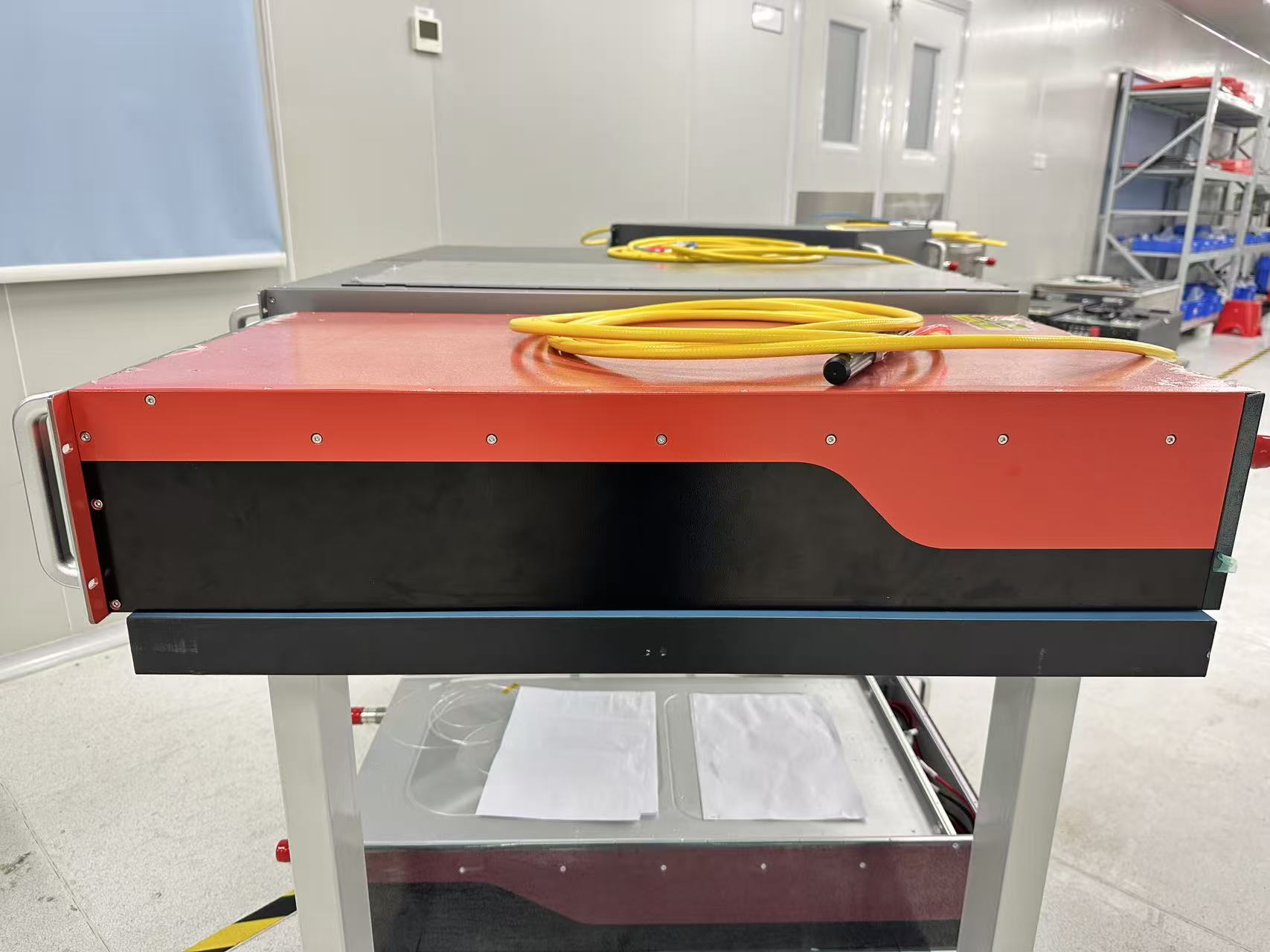
For years, the fiber laser industry has been driven by one simple question:
“How many kilowatts?”
As the fiber laser market expanded rapidly, laser power became one of the most visible indicators of performance. Equipment manufacturers often compared products primarily by output power and price, while higher power became closely associated with faster cutting and greater processing capacity.
But as manufacturing moves toward higher precision and more demanding applications, power alone is no longer enough.
Another fundamental parameter is becoming increasingly important:
Brightness.
Brightness determines how effectively laser power can be concentrated and delivered to the workpiece. For applications such as copper and aluminum welding, battery manufacturing, precision electronics, and additive manufacturing, a high-brightness laser can provide a much wider process window and better control than simply increasing output power.
1. From the Power Era to the Brightness Era
Laser light is characterized by excellent directionality, monochromaticity, coherence, and high brightness.
In practical laser processing, brightness is closely related to how much optical power can be delivered within a small beam area and solid angle.
This means that two lasers with the same output power can produce very different processing results if their beam quality and brightness are different.
For many years, fiber lasers were primarily used for metal cutting.
In this relatively power-driven market, increasing laser power could directly improve cutting speed and cutting thickness. As a result, the industry moved rapidly from kilowatt-level systems to multi-kilowatt and even ultra-high-power lasers.
However, the requirements of advanced manufacturing are different.
Applications such as:
- Battery welding
- Copper and aluminum processing
- Precision electronics
- 3D printing
- High-end automotive manufacturing
require not only more power, but also higher brightness and better beam quality.
2. Why Brightness Matters for Copper and Aluminum
Copper and aluminum are widely used in batteries, electrical systems, power electronics, and other advanced manufacturing applications.
However, they are also highly reflective materials, making them challenging to process with conventional laser systems.
Typical challenges include:
- Narrow process windows
- Unstable melt pools
- Excessive spatter
- Inconsistent penetration
- Welding defects
- Difficult process control
Simply increasing laser power does not necessarily solve these problems.
A higher-brightness beam can deliver energy into a smaller area with higher power density, enabling more precise control of the interaction between the laser and the material.
This is where single-mode and near-diffraction-limited fiber lasers become particularly valuable.
3. 2.2 kW Pure Single-Mode Output with M² < 1.1
Through optimized optical architecture and process engineering, our high-brightness laser technology has achieved:
- 2.2 kW pure single-mode output
- M² < 1.1
- 14 μm delivery fiber core
- NA: 0.07
- 7 m fiber delivery length
- Raman suppression ratio better than -35 dB
These developments provide the technical foundation for our 1–4 kW single-mode fiber laser platform.
The goal is not simply to achieve higher output power.
It is to achieve:
High Power + High Brightness + High Beam Quality + Stable Long-Term Operation
4. Why Does a 14 μm Core Make a Difference?
Compared with a 20 μm core, a 14 μm single-mode fiber can produce a significantly smaller focused spot under comparable optical conditions.
The result is a substantially higher power density at the workpiece.
In our analysis, the focused spot area can be reduced by approximately 51%, resulting in approximately 2× higher power density.
This provides an important advantage when processing highly reflective materials such as:
- Copper
- Aluminum
- Brass
Instead of simply increasing total laser power, higher brightness allows the available energy to be concentrated more efficiently.
Potential benefits include:
- Lower energy consumption for a given process target
- Higher welding speed
- Smaller heat-affected zones
- Reduced spatter
- Better melt-pool control
- Lower defect rates
5. Copper Welding Comparison: 14 μm vs. 20 μm vs. 50 μm
To evaluate the effect of beam quality and core size, we conducted copper welding tests using 2 kW laser sources with 14 μm, 20 μm, and 50 μm fiber cores.
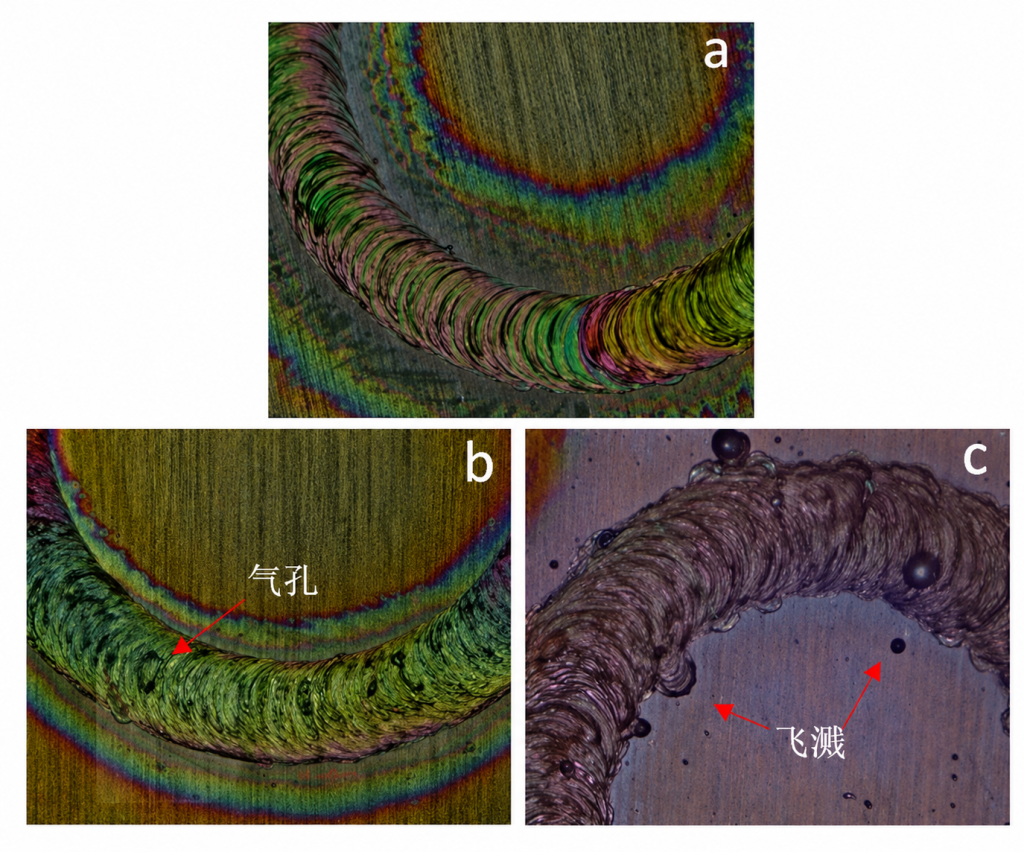
Under a comparable penetration depth of approximately 1.46 mm, the 14 μm single-mode laser demonstrated significantly higher welding performance.
The test results showed:
- 14 μm single-mode: No obvious welding defects
- Welding speed approximately 1.5× that of the 20 μm near-single-mode laser
- Welding speed approximately 4.5× that of the 50 μm multimode laser
These results demonstrate an important principle:
| Core diameter | Speed | Defect Status |
| 14μm | 450 mm/s | No obvious defects |
| 20μm | 300 mm/s | Predominantly porous |
| 50μm | 100 mm/s | Primarily splatter |
Higher laser power does not automatically mean higher processing efficiency.
Beam quality and brightness can be equally important—or even more important—for demanding welding applications.
6. Controllable Penetration with a Wider Process Window
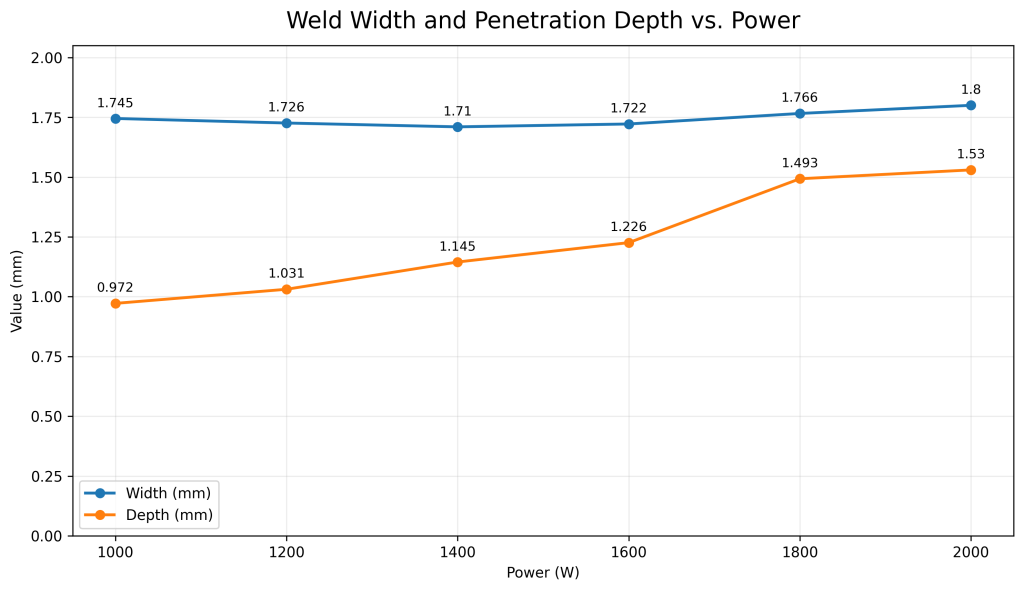
Another important advantage of the 14 μm single-mode laser is its ability to increase penetration depth while maintaining a relatively stable weld width.
This enables more controllable penetration during high-reflectivity material processing.
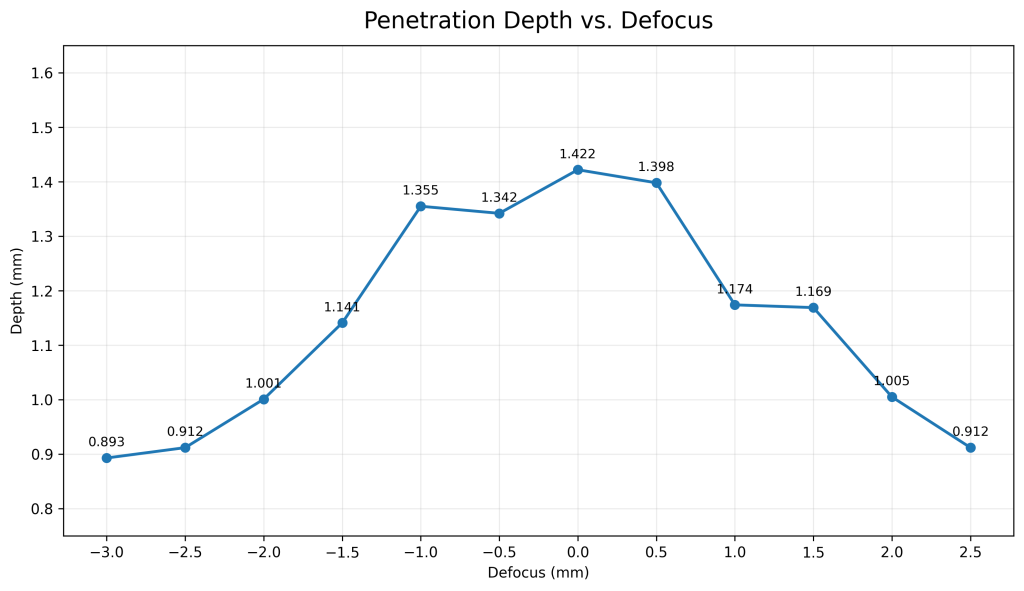
In addition, the penetration depth remained highly stable across a defocus range of approximately -3 mm to +2.5 mm, with penetration variation limited to approximately ±0.25 mm under the tested conditions.
A wider and more stable process window can help reduce the risk of:
- Incomplete fusion
- Inconsistent penetration
- Unstable weld formation
- Defective joints
This characteristic is particularly valuable in automated manufacturing, where process stability is essential for maintaining consistent production quality.
7. Long-Term Stability: Managing Photodarkening and Raman Effects
High-power fiber lasers must also address long-term reliability.
During extended operation, phenomena such as photodarkening and stimulated Raman scattering (SRS) can affect system performance.
A laser prototype may operate normally during initial testing, while power fluctuations can gradually appear as operating time increases.
To address these challenges, our engineering team developed:
DEC — Mode Purification Technology
Designed to improve mode control and maintain high beam quality during high-power operation.
RSF — Raman Suppression Technology
Designed to suppress unwanted Raman components and improve long-term optical stability.
Following multiple rounds of optimization and testing, the laser system successfully completed a 720-hour continuous aging test under the specified test conditions.
The result was improved long-term power stability and reliability.
8. From Power to Brightness
The development of high-brightness fiber lasers represents a shift in how we evaluate laser performance.
The question is no longer simply:
How much power can the laser produce?
It is increasingly becoming:
How efficiently and precisely can that power be delivered to the material?
For high-end applications, the combination of:
Power + Beam Quality + Brightness + Stability
can determine the real processing capability of a laser.
This is particularly important for:
- New energy battery manufacturing
- Copper and aluminum welding
- 3D printing
- Precision manufacturing
- Power electronics
- Advanced automotive applications
9. Toward the Next Generation of Laser Manufacturing
As manufacturing continues to move toward higher precision, higher efficiency, and more complex materials, the value of laser brightness will become increasingly apparent.
The industry is gradually moving:
From Power → To Brightness
And from simply increasing laser output to optimizing the complete optical and processing system.
Our high-brightness single-mode laser platform is designed for this transition, providing a foundation for demanding applications where beam quality, power density, process stability, and precision matter as much as output power.