
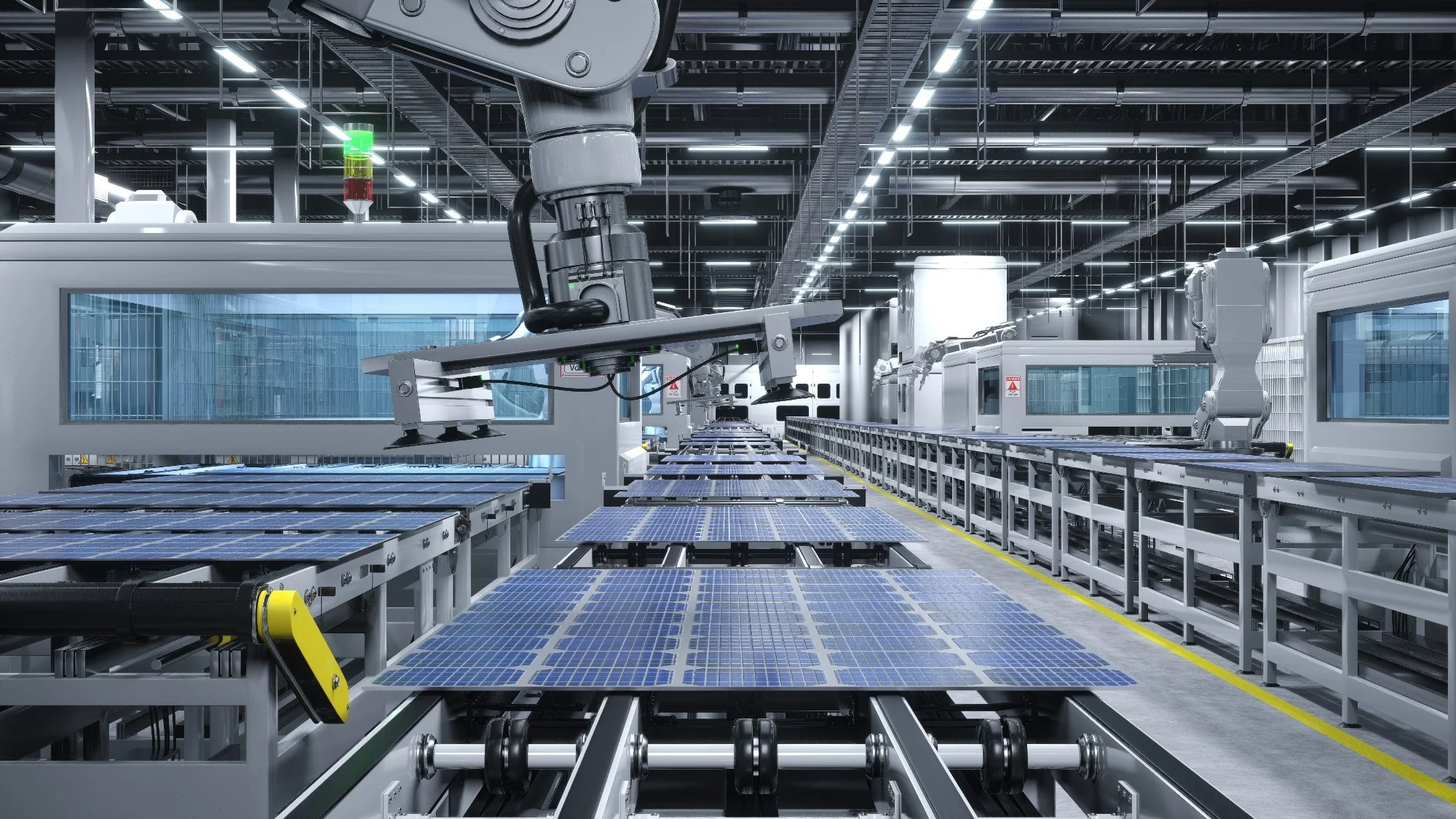
Fiber lasers play a key role in solar panel manufacturing by delivering stable power and eliminating the need for consumables. These systems support efficient and sustainable production. For example, laser edge deletion removes conductive coatings to prevent short circuits, while laser welding speeds up assembly. The table below shows how fiber processes improve efficiency, quality, and sustainability in solar manufacturing.
| Application | Benefit |
|---|---|
| Laser Edge Deletion | Removes conductive coatings to prevent short circuits, ensuring reliability and longevity. |
| Thin-Film Cleaning | Enhances adhesion quality and allows for recycling of valuable materials with high precision. |
| Laser Welding | Creates precise welds 10 times faster than traditional methods, improving production efficiency. |
| Laser Wafer Dicing | Offers a high-speed, damage-free process for separating chips, enhancing scalability. |
| Ingot and Component Marking | Ensures traceability without affecting cell performance, vital for quality control. |
Key Takeaways
- Fiber lasers enhance solar panel production by improving efficiency and reducing waste, making them a sustainable choice.
- Laser edge deletion prevents short circuits by removing unwanted coatings, ensuring the reliability of solar panels.
- Fiber lasers operate without consumables, lowering maintenance costs and supporting eco-friendly manufacturing practices.
- High-speed laser welding increases production rates, allowing manufacturers to meet growing demand for solar panels.
- The precision of fiber lasers minimizes defects, leading to higher quality panels and improved energy efficiency.
What Are Fiber Lasers?
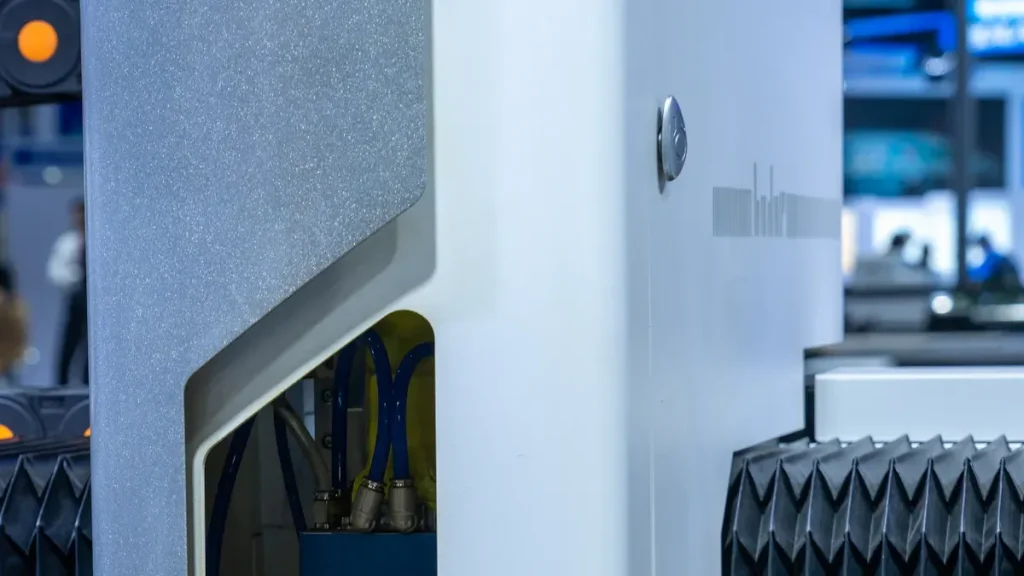
Principles and Features
Fiber lasers are advanced tools used in many industries, including the solar photovoltaics industry. These lasers create light by sending energy through a special fiber made of silica glass. The fiber acts as a guide for the laser beam, keeping it focused and stable. The process starts with semiconductor laser diodes that excite the fiber core. This causes the fiber to amplify the light, producing a powerful and precise laser beam.
The structure of fiber lasers helps them handle high power and heat. Double-clad fibers have two layers around the core, which allows more energy to enter and keeps the beam quality high. The long fiber length spreads out heat, so the laser stays cool and works longer. These features make fiber lasers reliable and efficient for industrial tasks.
Note: Fiber lasers do not need consumable parts like gas or crystals, so they are easier to maintain and more sustainable.
Here is a table showing the main components and their roles:
| Component | Description |
|---|---|
| Doped Optical Fiber | Guides laser light and removes heat efficiently. |
| Double-Clad Fiber | Allows high power input and keeps beam quality strong. |
| Laser Amplification | Uses excited fiber core to boost laser power. |
Relevance to Solar Panel Production
Fiber lasers are important in the solar photovoltaics industry because they offer several advantages for manufacturing. They provide high-quality beams and excellent thermal stability, which is crucial for delicate processes like thin-film photovoltaics. Their compact design makes them easy to fit into production lines.
Manufacturers use fiber lasers for tasks such as cutting, marking, and joining photovoltaic materials. These lasers enable contactless joining, which reduces stress on solar cells and improves reliability. Fiber lasers also help manage heat during interconnection, supporting the development of thinner and more efficient solar panels.
The table below explains why fiber lasers are suitable for solar panel production:
| Evidence Description | Reason for Suitability |
|---|---|
| Low-energy solutions for high-speed packaging with high yield | Ensures cost-effectiveness and quality in mass production |
| Optimized thermal management of interconnection process | Supports thinner solar cells in the industry |
| Contactless joining processes minimize thermal and mechanical stress | Reduces risk of damage and improves product reliability |
Fiber lasers play a key role in advancing the solar photovoltaics industry by improving efficiency, quality, and sustainability in photovoltaic manufacturing.
Applications of Fiber Lasers
Cutting and Scribing
Fiber lasers are essential tools for cutting and scribing in solar panel manufacturing. These lasers deliver stable power and high precision, which is important for shaping delicate materials like silicon wafers. The process uses a focused laser beam to cut or scribe lines without touching the material. This method reduces the risk of cracks and damage. Fiber lasers work quickly and repeatably, making production more efficient. Laser-based processes such as cutting, shaping, and scribing help advance solar cell production by improving quality and speed.
- Fiber lasers provide power stability and efficiency.
- Laser applications for thin-film solar panels include cutting and scribing for accurate cell separation.
- The process does not require consumables, which lowers maintenance costs.
Drilling and Delamination
Drilling and delamination are important steps in making thin-film solar panels. Fiber lasers enable precise drilling of holes and laser delamination of thin-film glass panels. The laser targets specific areas, removing layers without harming the surrounding material. This technique is fast and accurate, which helps increase production speed and quality. Laser delamination of thin-film glass panels is a precise method for separating thin-film layers, supporting advanced solar panel designs.
| Benefit | Description |
|---|---|
| Efficiency | Fiber lasers enable precise and rapid drilling and delamination, enhancing overall process speed. |
| Precision | The ability to target specific areas without affecting the surrounding material ensures high-quality results. |
| Eco-friendliness | The process minimizes waste and energy consumption, making it a more sustainable option for solar cell manufacturing. |
Laser cleaning of thin-film layer is another application that improves adhesion and allows recycling of valuable materials.
Edge Deletion
Laser edge deletion is a key process in solar panel manufacturing. This method uses a laser to remove edge coatings from thin-film panels. The process is non-contact and highly precise. Laser edge deletion improves the quality and durability of panels by ensuring consistent removal of unwanted materials. It also reduces waste and minimizes rework, which is important for producing reliable solar panels. Fiber lasers are used for edge isolation, edge deletion, crystal damage removal, and thin-film ablation.
Laser edge deletion enhances manufacturing quality and supports sustainable production by minimizing waste.
Laser edge deletion is performed quickly and efficiently, helping manufacturers meet high production demands. The process supports the creation of panels that last longer and perform better.
Marking and Labeling
Marking and labeling are vital for tracking and identifying solar panel components. Fiber laser marking system offers high precision and speed. Laser marking systems can mark a variety of materials without contact. The marks are permanent and resist heat, abrasion, and chemicals. Codes remain readable for the entire life of the product. Laser marks do not peel or fade, even after years of usage.
- Permanent product identification
- Resistant to harsh environments
- Maintains readability over time
- High precision and flexibility
Fiber lasers allow manufacturers to label panels quickly, ensuring traceability and quality control. The process is efficient and supports sustainable practices by reducing waste.
Fiber Lasers: Advantages
Precision and Quality
Fiber lasers deliver highly precise and repeatable results in solar panel manufacturing. This advanced laser technology allows for accurate cutting of silicon wafers, which improves the efficiency of solar cell production. The laser beam creates clean edges and reduces the risk of cracks or defects. Edge passivation treatment with fiber lasers lowers energy loss from 10-15% in traditional methods to just 2-3%. This improvement boosts cell performance and reliability. Wafer marking with laser systems is non-intrusive, helping with quality control and supply chain tracking. These features make fiber lasers a top choice for the photovoltaics industry.
- Advanced cutting techniques enhance wafer quality and reduce waste.
- Edge passivation treatment increases cell performance by minimizing energy loss.
- Non-intrusive wafer marking supports traceability and quality assurance.
Speed and Efficiency
Laser technology benefits for the photovoltaics industry include increased efficiency and faster production speeds. Fiber lasers operate quickly, allowing manufacturers to process thin-film materials and panels at a high rate. The laser beam works without contact, which reduces downtime and speeds up manufacturing. Fiber lasers can cut, scribe, and mark materials in seconds, making them ideal for large-scale production. This speed helps companies meet growing demand for solar panels and supports the development of new products.
- Fiber lasers enable rapid processing of thin-film materials.
- Laser systems reduce downtime and improve workflow.
- High-speed operations support large-scale manufacturing.
Cost and Sustainability
Fiber lasers offer significant cost savings and support sustainability in solar panel production. Their operational lifetime exceeds 100,000 hours, which means fewer replacements and lower maintenance costs. Unlike other laser types, fiber lasers have no moving parts or delicate optical components. This design reduces maintenance needs and keeps costs low. The table below compares operational lifetime and maintenance frequency among different laser types:
| Laser Type | Operational Lifetime (hours) | Maintenance Frequency |
|---|---|---|
| Fiber Laser | 50,000 – 100,000 | Low |
| CO2 Laser | 20,000 – 30,000 | Moderate |
| Crystal Laser | Frequent | High |
Fiber lasers use less energy and generate less waste than traditional mechanical or chemical methods. Laser cutting produces below 5% material waste, compared to 15-30% with older processes. Standby modes reduce energy usage by up to 80%. Closed-loop water systems decrease fresh water consumption by 95% while cooling laser operations. Advanced filtration systems remove hazardous airborne contaminants with 99.97% efficiency. Laser cutting also lowers carbon emissions, making fiber lasers an eco-friendly technology for solar manufacturing.
- Fiber lasers enhance efficiency and minimize waste generation.
- Laser systems align with sustainability goals in the renewable energy sector.
- Eco-friendly technology reduces energy consumption and carbon footprint.
- Closed-loop water circulation supports eco-friendly practices in manufacturing.
Fiber lasers help manufacturers produce panels that are both cost-effective and environmentally responsible. Their long operating life and reduced consumables make them a sustainable choice for the photovoltaics industry.
Case Studies
Successful Implementations
Many solar manufacturers have adopted laser technology to improve their production lines. One company installed laser systems for wafer cutting and marking. The new process allowed workers to cut panels faster and with fewer errors. Another factory used laser edge deletion to remove unwanted coatings from panels. This change reduced waste and improved the quality of finished panels. Some plants switched to laser drilling for thin-film panels. The laser made precise holes, which helped create advanced designs and increased the durability of panels.
Laser systems help companies produce panels with higher reliability and longer lifespans.
A few manufacturers also use laser marking for traceability. This method ensures that each panel can be tracked throughout its life. The marks stay readable even after years of use. These successful implementations show how laser technology supports quality and efficiency in solar panel manufacturing.
Measurable Outcomes
The integration of fiber lasers has led to clear improvements in solar panel production. Reports show that device efficiency increased by more than 30% after using pulsed laser systems. This boost comes from fewer deep-level defects in panels. The reduction in defects improves carrier lifetime and raises the short circuit current of the devices. Factories noticed higher yields and fewer rejected panels. The table below highlights some measurable outcomes:
| Outcome | Improvement |
|---|---|
| Device Efficiency | Over 30% increase |
| Defect Reduction | Fewer deep-level defects |
| Yield | Higher production yield |
| Panel Reliability | Longer lifespan |
Manufacturers now produce panels with better performance and less waste. Laser technology continues to drive progress in the solar industry.
Challenges and Future Prospects
Integration and Maintenance
Integrating fiber laser systems into automated solar panel manufacturing lines has evolved over time. Early methods used basic spot welding, but newer approaches include continuous seam welding and selective laser welding. Real-time monitoring systems now assess quality and adjust processes. Multi-beam laser welding and ultrafast techniques have improved speed and precision. AI helps optimize welding parameters. Maintenance is easier because fiber lasers have fewer moving parts. Modular and scalable laser systems allow quick reconfiguration for different cell designs. Companies benefit from flexible platforms that reduce initial costs and support rapid product development.
Modular laser systems make it easier to adapt to new solar cell architectures and improve material recovery in thin-film photovoltaic manufacturing.
Limitations
Despite many advantages, fiber lasers face some challenges. High initial investment can slow adoption, especially for smaller manufacturers. Training is needed to operate and maintain advanced laser equipment. Some materials may require special settings or additional processing steps. Environmental factors, such as dust or humidity, can affect laser performance. Companies must balance cost, efficiency, and eco-friendly practices. Government initiatives and regional innovation clusters help address these challenges by supporting innovation and reducing barriers.
| Challenge | Impact |
|---|---|
| High initial cost | Slows adoption |
| Training needs | Requires skilled workforce |
| Material variation | May need extra processing |
| Environmental factors | Can affect laser performance |
Future Trends
Fiber lasers are becoming more popular in solar manufacturing because they offer excellent beam quality and precision. These features are important for working with thin-film and delicate materials in photovoltaics. Compact design and adaptability allow seamless integration into automated lines, boosting efficiency. Advancements in photonics technology have led to high-efficiency multi-junction solar cells that absorb more light. Optical sensors and filters improve energy regulation and conversion. Photonics-based inspection, such as SWIR imaging, detects micro-cracks in PV cells, improving long-term performance. Environmental concerns drive the adoption of eco-friendly laser technologies. Companies like IPG Photonics and Coherent lead in high-efficiency modules that cut energy use. Sales are expected to rise as sustainability mandates increase. Modular systems enable rapid changes for new products, and government support encourages innovation.
- High-efficiency solar cells absorb more light, increasing energy conversion.
- Inspection technologies help detect defects, improving reliability.
- Flexible laser platforms reduce costs and speed up product development.
Fiber lasers improve solar panel manufacturing by increasing efficiency, raising product quality, and lowering costs. These lasers help companies use fewer resources and create less waste. New developments in fiber laser technology promise even greater benefits.
- Laser-induced texturing can boost solar panel efficiency by up to 5%.
- Advanced lasers reduce the need for chemical cleaning agents, supporting environmental sustainability.
Manufacturers continue to adopt these innovations, shaping a cleaner and more productive future for solar energy.
FAQ
What makes fiber lasers different from other lasers in solar manufacturing?
Fiber lasers use a flexible fiber to create a stable and powerful beam. They do not need consumables like gas or crystals. This makes them reliable and easy to maintain.
How do fiber lasers help reduce waste in solar panel production?
Fiber lasers cut and mark materials with high precision. This reduces material waste. Laser processes also use less energy and water, supporting eco-friendly manufacturing.
Can fiber lasers mark solar panels for traceability?
Yes. Fiber lasers create permanent marks on panels. These marks stay readable for years. Manufacturers use them to track panels and ensure quality control.
Are fiber lasers safe for delicate solar cell materials?
Fiber lasers use contactless methods. They do not touch the material. This prevents cracks and damage. The process keeps solar cells strong and reliable.