
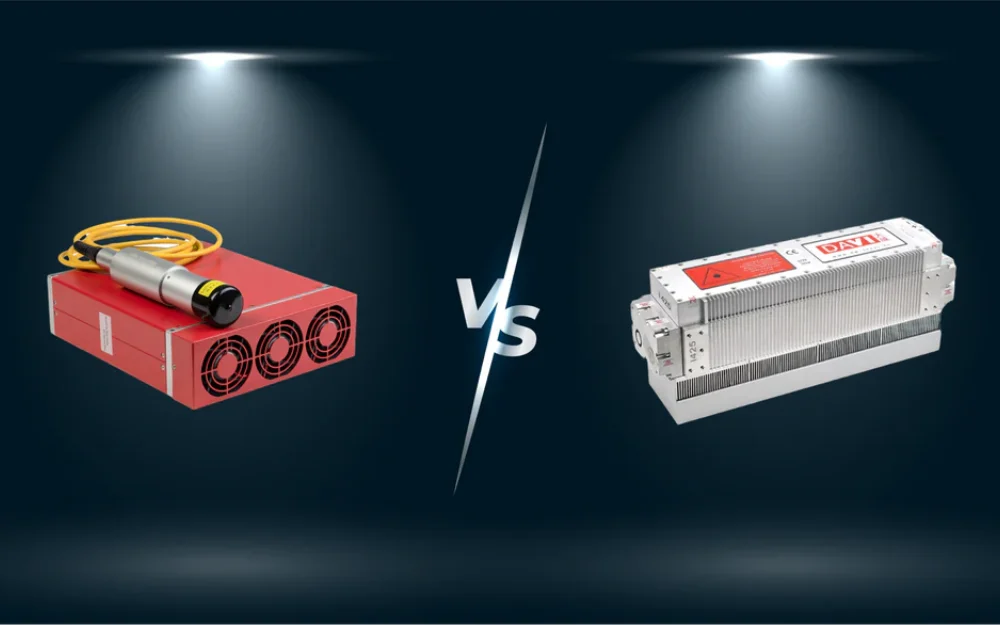
The fiber laser vs. CO₂ laser debate is not a question of which technology is better. It is a question of which technology fits your specific combination of materials, thicknesses, production volume, and existing equipment investment. This guide gives you a framework for that decision — with real numbers, honest analysis of where CO₂ still wins, and a structured way to evaluate an upgrade if you are already running CO₂.
Why this comparison is still worth making in 2025
Fiber laser has won the market share battle. The laser cutting landscape in 2025 has reached a decisive tipping point, with fiber lasers capturing approximately 60% of the market. For metal cutting in the thin-to-medium thickness range, that outcome reflects real performance and cost advantages that have become difficult to argue against.
But 60% market share means 40% of installations are still CO₂ — and that is not all inertia. CO₂ laser technology retains genuine advantages in specific applications that high-power fiber has not fully displaced. The decision for any individual production line depends on what that line actually cuts, how many shifts it runs, and what replacing or supplementing existing equipment would realistically cost and return.
What follows is a technology-neutral analysis. The goal is not to sell fiber laser, but to give you the information to make a defensible decision either way.
How the two technologies work — and why the difference matters for cutting
Why fiber laser absorbs into metal more efficiently than CO₂
The fundamental difference between fiber and CO₂ lasers is wavelength. Fiber lasers — specifically ytterbium-doped fiber lasers used in industrial cutting — operate at approximately 1064–1080 nm, in the near-infrared range. CO₂ lasers operate at approximately 10,600 nm (10.6 µm), in the far-infrared range.
Wavelength determines how efficiently a material absorbs the laser energy. Fiber lasers operate near ~1 µm wavelength; metals absorb this energy efficiently, enabling fast, stable cutting even on reflective alloys. CO₂ lasers operate near ~10.6 µm; non-metals such as wood, acrylic, paper, and polymers generally couple well to this wavelength, giving clean edges and polished finishes on organic materials.
This is not an engineering preference — it is physics. Steel, stainless steel, and aluminum absorb near-infrared light from a fiber laser far more efficiently than they absorb the far-infrared from a CO₂ source. This absorption efficiency difference is the root cause of fiber’s speed advantage on metals. Conversely, clear polymers and many organic materials are nearly transparent to near-infrared light, which is why fiber lasers perform poorly on acrylic, wood, and similar materials that CO₂ handles cleanly.
Why CO₂ beam path maintenance is structurally unavoidable
CO₂ lasers generate the beam in a gas resonator and then transmit it to the cutting head through a series of turning mirrors and focusing lenses contained in bellows. The CO₂ beam path must bounce off mirrors that must be perfectly aligned, kept clean, and protected from contamination. These mirrors get dirty, get burned, and absorb moisture over time.
Fiber lasers transmit the beam through a sealed optical fiber directly from the source to the cutting head. The fiber laser’s beam path is completely sealed, protecting the optics from contaminants. Because the beam alignment and beam size never change on a fiber laser, cutting parameters remain consistent from day to day without adjustment.
This architectural difference is the single most important practical distinction between the two technologies — not in the cut itself, but in what it costs to keep the machine running. The CO₂ mirror system requires regular human attention. The fiber delivery system essentially does not. Everything that follows from this difference — maintenance labor, downtime, parameter consistency — flows from this one structural fact.
Cutting speed: where fiber is faster, where it isn’t, and by how much
Thin sheet (< 5 mm): the range where fiber’s advantage is largest
On thin sheet metal, the speed difference between fiber and CO₂ is not marginal — it is transformative. A 4 kW CO₂ laser cutting 16-gauge mild steel with nitrogen has a recommended cutting speed of approximately 260 IPM. The same equipped fiber laser achieves approximately 1,417 IPM — a difference of more than five times.
The mechanism is beam quality combined with absorption efficiency. Fiber lasers produce a more stable and generally narrower beam that can be focused more precisely than CO₂, producing better-quality cuts at higher speeds on thin material. At these thicknesses, the fiber laser’s small focal spot delivers higher peak intensity at the kerf than a CO₂ source of equal rated power, which translates directly into faster cutting with less heat input to the surrounding material.
For production lines whose work is predominantly thin sheet — under 5 mm in steel, stainless, or aluminum — this speed differential is the primary economic argument for fiber. It does not just cut faster: it multiplies the number of parts the machine can produce per shift.
The transition zone (5–20 mm): what actually determines which is faster
This is the thickness range that most comparison articles handle superficially, and it is the range where many real production lines actually operate. In this transition range from 5 to 20 mm, the advantages of fiber lasers are less marked and the capabilities of CO₂ lasers can be beneficial.
The determining factors in this range are not simply power levels — they are material type, assist gas selection, and edge quality requirements:
Material type: Carbon steel in this range cuts well with both technologies when oxygen assist is used. Stainless steel with nitrogen tends to favor fiber at the lower end of this range (5–10 mm) due to fiber’s higher absorption efficiency. At 15–20 mm stainless with nitrogen, the comparison becomes more application-specific.
Edge quality requirements: CO₂ lasers have traditionally been preferred for thick plates because they left a slightly smoother edge finish. For applications where cosmetic surface finish on the cut edge is a contractual requirement — decorative metalwork, signage, visible structural components — CO₂’s edge quality advantage in this range remains real, though it has narrowed as fiber power levels and process control have improved.
The practical guidance for this range: if your 5–20 mm work is predominantly carbon steel cut with oxygen, the performance difference is small enough that total cost of ownership should drive the decision. If it is stainless or aluminum requiring nitrogen and clean edges, fiber is now the stronger choice across most of this range.
Heavy plate (> 20 mm): CO₂’s remaining territory
Above 20 mm, fiber lasers lose their value relative to CO₂ in standard configurations — materials like steel with thicknesses up to 100 mm typically need oxygen-assisted cutting, which CO₂ handles with established process parameters and smooth edge finishes. CO₂ also provides faster initial piercing at these thicknesses, which matters for cycle time on heavy plate jobs with many pierce points.
However, with the advent of 10 kW, 12 kW, and 20 kW high-power fiber lasers in 2025, this gap has significantly closed. Modern fiber machines can now cut 25 mm and above with excellent edge quality through advanced gas control and power scaling. For production lines that primarily cut above 25–30 mm, CO₂ remains competitive. For lines where heavy plate is a secondary application alongside a larger volume of thin-to-medium work, a high-power fiber laser now covers the full range without a dedicated CO₂ machine.
Materials: the clearest dividing line between the two technologies
Material type is the one dimension of this comparison where there is no ambiguity. The wavelength physics determine which technology is appropriate, and no amount of power scaling changes the underlying absorption characteristics.
| Fiber laser: right choice | CO₂ laser: right choice |
|---|---|
| Carbon steel (all thicknesses to ~30 mm at high power) | Acrylic / PMMA (clean polished edges, fiber passes through) |
| Stainless steel | Wood and plywood |
| Aluminum | MDF and composites |
| Copper and brass (with back-reflection protection) | Leather and fabric |
| Titanium | Paper and cardboard |
| Most metals including reflective alloys | Rubber |
| Glass (limited applications) | Most plastics and polymers |
| Acrylic (thin, limited quality vs CO₂) | Cork, foam, Corian |
| Non-resin wood and natural fibers |
CO₂ lasers are well suited to cutting many nonmetallic materials and nonferrous metals — acrylic, melamine, paper, mylar, plastic, rubber, wood, fabric, fiberglass, leather, and dense card. A fiber laser’s beam passes right through clear materials like acrylic, and it tends to burn or melt rather than cut other plastics and woods cleanly. If your production line processes a mixed material workload that includes significant volumes of organic non-metals, running CO₂ alongside fiber — or choosing CO₂ exclusively — is not a compromise. It is the technically correct choice.
For production lines that cut fiber laser sources exclusively into metals, the material table above has a clear answer.
Maintenance and downtime: the cost that doesn’t appear on the purchase order
What CO₂ beam path maintenance actually involves — and how much time it takes
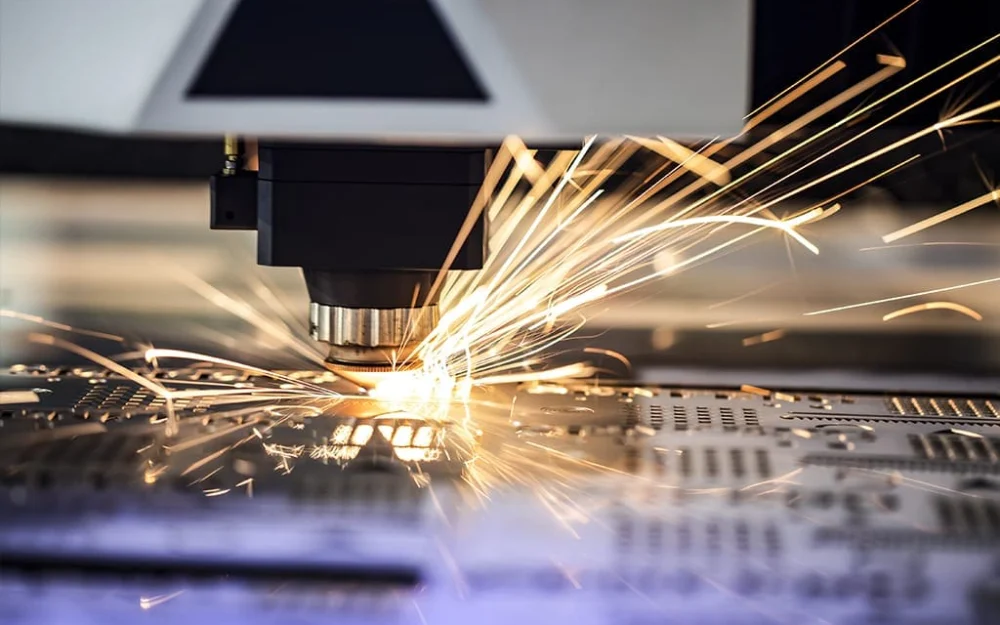
The CO₂ beam path requires regular maintenance that has no equivalent in fiber laser operation. The components involved are: turning mirrors (cleaning, alignment, eventual replacement), beam path bellows (cleaning, replacement when perforated by repetitive machine movement), vacuum pump oil changes, and periodically the laser tube itself.
CO₂ laser beam path maintenance — mirror and lens cleaning, bellows checks, and beam alignments — can consume 4 to 5 hours per week. It is common for a CO₂ laser to require 4 to 8 hours of unplanned maintenance downtime per month beyond the scheduled maintenance time. CO₂ laser glass discharge tubes require replacement every few years at a cost of $5,000 to $10,000 per replacement event. The cost of mirrors, bellows, and laser gas required to maintain the CO₂ beam path clean and functional adds approximately 70% on top of the power consumed by the CO₂ resonator and blowers.
How to calculate what your CO₂ maintenance downtime is actually costing you
The formula is straightforward, and most CO₂ operators have never run it explicitly:
Monthly maintenance cost = (scheduled maintenance hours + unplanned downtime hours) × machine hourly rate + technician labor cost
Example for a single-shift operation:
- Scheduled weekly maintenance: 4 hours × 4 weeks = 16 hours/month
- Unplanned downtime: 6 hours/month (midpoint of 4–8 hour range)
- Total: 22 hours/month of lost machine time
- At a machine hourly rate of $80/hour: $1,760/month in lost production capacity
- Plus technician labor at $50/hour × 22 hours: $1,100/month
- Combined monthly cost: $2,860 — or $34,320/year — attributable to beam path maintenance alone
This calculation does not include the cost of mirror replacements, tube replacements, or the gradual parameter drift that requires operator adjustment time as the beam path degrades between maintenance intervals. Because the beam alignment and beam size never change on a fiber laser, cutting parameters remain consistent without daily adjustment — a consistency advantage that has value in quality control even before the maintenance time savings are counted.
What fiber laser maintenance actually requires
A fiber laser has no beam path maintenance — no mirror or lens cleaning, no bellows checks, no beam alignments. The laser source itself is sealed and requires no user intervention under normal operating conditions. The only regular consumables on the cutting head are the nozzle and the protective window — components that take minutes to replace and cost a fraction of CO₂ beam path components. Fiber laser downtime for maintenance is measured in minutes per month, not hours.
CO₂ lasers also require a warm-up time of approximately 10–20 minutes before reaching operating condition each day. Fiber lasers are ready to cut instantly. For two-shift or three-shift operations, this warm-up time compounds into meaningful lost capacity over the course of a year.
Energy cost: the number that compounds over a machine’s lifetime
Wall-plug efficiency — the ratio of laser output power to total electrical input — differs dramatically between fiber and CO₂. Modern fiber laser systems can reach wall-plug efficiencies of 30–50%, whereas CO₂ lasers are typically only about 10–15% efficient. In concrete production terms: a 6 kW fiber laser draws approximately 22 kW of electrical power; an equivalent 6 kW CO₂ system draws approximately 65 kW.
The annual electricity cost difference at 6 kW output power:
- Power difference: 65 kW − 22 kW = 43 kW
- At 4,000 operating hours/year and $0.12/kWh: $20,640/year in electricity savings
- Over a 10-year machine life: $206,400 in electricity alone
This calculation also understates the full cost differential, because a less efficient source generates more waste heat, requiring a larger chiller with higher operating cost. The chiller cost difference between a system drawing 65 kW and one drawing 22 kW is substantial in both capital cost and ongoing electricity consumption.
The efficiency gap is widest at high power levels and high utilization rates. For low-volume operations running a few hours per day, the electricity differential is modest. For multi-shift high-volume operations, it is one of the strongest financial arguments for fiber.
Total cost of ownership: the 5-year calculation most buyers don’t do
Purchase price is where most comparisons begin and end. The full 5-year TCO picture looks substantially different.
Fiber laser systems typically achieve 12–18 month payback periods compared to 24–30 months for CO₂ lasers, with total cost of ownership savings exceeding $520,000 over five years for comparable systems in metal fabrication applications. While a fiber laser has a higher initial cost, the difference in total cost over 3 years is often only $5,200 when factoring in the higher productivity of 3–5× faster cutting speeds — with most businesses achieving ROI within 18–24 months.
| Cost category | Fiber laser (5 years) | CO₂ laser (5 years) | Notes |
|---|---|---|---|
| Purchase price | Higher | Lower | Fiber typically 2–3× higher upfront |
| Electricity | Lower | Higher | ~43 kW difference at 6 kW output |
| Scheduled maintenance labor | Very low | High | 4–5 hrs/week for CO₂ beam path |
| Unplanned downtime | Minimal | Moderate–High | 4–8 hrs/month for CO₂ |
| Consumables (mirrors, tubes, bellows) | Nozzle + protective window only | Mirrors, bellows, tubes ($5K–$10K each) | Major CO₂ cost item |
| Chiller operating cost | Lower | Higher | Proportional to waste heat |
| Production output value | Higher | Lower | 3–5× speed on thin sheet |
| Operator training and adjustment | Lower | Higher | CO₂ requires daily parameter management |
The table clarifies why the fiber premium on purchase price is recoverable: the purchase price difference is a one-time cost, while the electricity, maintenance, and productivity differences are recurring for the life of the machine.
When CO₂ is still the right answer in 2025
CO₂ is not obsolete. Three production scenarios exist where CO₂ remains the technically and economically correct choice, and conflating “fiber is the market leader” with “CO₂ is always wrong” leads to poor capital allocation decisions.
Scenario 1: Your primary material is non-metallic. If your production line cuts acrylic signage, wood furniture components, leather goods, fabric, rubber gaskets, or mixed non-metal materials, CO₂ is not the legacy option — it is the right tool. CO₂ lasers are ideal for a wide range of non-metallic materials including plastics, textiles, glass, acrylic, wood, and stone. Fiber laser cannot match CO₂ quality on these materials at any power level, because the material absorption physics do not change with power. A production line running primarily non-metals that installs fiber is over-investing in a technology that is structurally mismatched to the application.
Scenario 2: You cut heavy plate with strict edge quality requirements. CO₂ lasers maintain advantages for cutting thicker plates — greater than approximately 8–12 mm — where they deliver faster initial piercing times, smoother surface finish, and more established process parameters for oxygen-assisted cutting. For structural steel fabrication, pressure vessel work, or heavy industrial components where edge roughness specifications are tight and plate thickness is consistently above 15–20 mm, CO₂ process maturity is still a real advantage. This makes CO₂ ideal for applications requiring high-quality edge finishes, such as signage and decorative metal fabrication.
Scenario 3: Your existing CO₂ equipment has not reached its upgrade trigger. A functional CO₂ laser with a stable maintenance cost profile and a production mix that does not demand fiber’s thin-sheet speed advantage is an asset, not a liability. Replacing it before the financial case justifies it is a capital allocation error. The question of whether to upgrade is separate from the question of which technology is better in the abstract — and the upgrade decision requires its own analysis, covered in the next section.
For existing CO₂ users: how to decide whether to upgrade
The three signals that mean your CO₂ is costing more than a new fiber would
Analyzing the trend in maintenance costs is essential — whether it is a one-time large repair cost or a trend of increasing repair costs over time is critical, and lost machine revenue due to downtime should always be included with repair costs in this analysis. Three specific signals indicate that the financial case for upgrading has crossed the threshold:
Signal 1: Rising maintenance cost trend. If your annual maintenance spend on beam path components — mirrors, bellows, tubes, alignment labor — has increased year-over-year for two or more consecutive years, the machine is entering the high-cost phase of its lifecycle. This trend accelerates, not stabilizes.
Signal 2: Cost-per-part increasing relative to market pricing. Comparing the actual cost per part on your current CO₂ equipment against what that same part would cost on a new fiber laser machine reveals the competitive gap. If customers are receiving lower quotes from competitors running fiber, the cost gap is already affecting your business.
Signal 3: Thin-sheet work mix has increased. If the proportion of your work in the under-5 mm range has grown — driven by customer demand shifts toward lighter-gauge components, enclosures, or precision sheet metal — your CO₂ machine is the wrong tool for your current actual workload, regardless of what it was bought to do.
Any two of these three signals appearing simultaneously is a meaningful trigger for a formal upgrade analysis.
Should you replace CO₂ entirely, or run both technologies in parallel?
For production lines with genuinely diverse material and thickness mixes, complete replacement is not always the optimal answer. A parallel configuration — fiber handling thin-sheet high-speed work, CO₂ retained for thick plate or non-metal applications — often delivers better overall economics than forcing either technology to cover the full range.
The parallel approach makes particular sense when: your CO₂ machine is not fully depreciated, your non-metal or heavy-plate volume is substantial enough to justify dedicated capacity, and your fiber investment is sized for the thin-to-medium sheet work that justifies the upgrade financially. The decision is not binary — it is a capacity planning question that should be modeled against your actual order mix.
A production line decision framework
The right technology choice depends on three variables: primary material type, dominant thickness range, and production intensity. The matrix below gives a starting recommendation for the most common production line profiles.
| Production line profile | Primary recommendation | Rationale |
|---|---|---|
| Metal sheet, predominantly < 5 mm, high volume / multi-shift | Fiber laser | Speed advantage is largest here; maintenance savings and energy savings compound at high utilization |
| Metal sheet, mixed 3–20 mm, general fabrication | Fiber laser (3 kW – 6 kW) | Covers the full range competently; CO₂ no longer holds a meaningful advantage in this band at current fiber power levels |
| Heavy plate predominantly > 20 mm, structural steel | CO₂ or high-power fiber (12 kW+) | CO₂ process maturity for edge quality; high-power fiber viable if capital budget supports it |
| Mixed metal and non-metal (acrylic, wood, plastics) | CO₂, or fiber + CO₂ in parallel | CO₂ required for non-metal quality; fiber added if metal volume justifies it |
| Primarily non-metal (signage, woodworking, packaging) | CO₂ | Fiber is structurally wrong for these materials regardless of power |
| Existing CO₂, rising maintenance costs, thin-sheet growth | Upgrade to fiber | Signals indicate the financial case has crossed the threshold |
For machine builders specifying a high-power fiber laser source for a cutting machine that will serve customers across multiple of these profiles, the practical answer is often a fiber source sized at 6–12 kW with a zoom cutting head — covering the metal cutting range from thin sheet to medium-heavy plate without a second machine.
FAQ
Is CO₂ laser technology becoming obsolete? Not across all applications. CO₂ remains the correct choice for non-metallic materials — acrylic, wood, leather, fabric, most polymers — where fiber’s near-infrared wavelength is poorly absorbed or passes through entirely. In metal cutting specifically, CO₂ is losing market share to fiber across the thin-to-medium thickness range, and high-power fiber is now competitive even in heavy plate. “Obsolete” is the wrong frame; “increasingly specialized” is more accurate.
Can a high-power fiber laser (12 kW+) fully replace CO₂ for thick plate cutting? For most heavy plate metal cutting applications, yes — modern high-power fiber lasers at 12–20 kW can cut 25–30 mm carbon steel with edge quality that meets structural fabrication requirements. The remaining CO₂ advantage is in specific applications requiring the smoothest possible cut-edge surface finish at very heavy gauges, where CO₂’s oxygen-assisted process parameters are more mature. For production lines that need to cover both thin sheet and thick plate in a single machine, a high-power fiber source is now a credible solution.
What is the typical payback period when switching from CO₂ to fiber laser? Fiber laser systems typically achieve 12–18 month payback periods in metal fabrication applications, driven by a combination of higher throughput on thin sheet, lower electricity consumption, and reduced maintenance downtime. The actual payback period for a specific operation depends on: current CO₂ utilization rate, proportion of work in the thin-sheet range where speed advantage is greatest, local electricity cost, and current CO₂ maintenance burden. Operations with high utilization, high thin-sheet volume, and escalating CO₂ maintenance costs will see payback at the short end of this range.
Can I use a fiber laser source to cut acrylic or wood? Not effectively. A fiber laser’s beam passes through clear materials like acrylic, and it tends to burn or melt rather than cut other organics like wood cleanly. This is a wavelength absorption issue, not a power or quality issue — increasing the fiber laser power does not fix it. For production lines that must process both metal and non-metal materials, the practical solution is either a dedicated CO₂ machine for non-metals, or a dual-source system that switches between fiber and CO₂ sources depending on the material loaded.