Key Takeaways
- Power density matters more than rated power in copper welding.
- BPP can be more informative than M² when evaluating real-world focusing performance.
- Fiber lasers can replace TIG welding in many thin-sheet applications.
- Contaminated or damaged fiber connectors are among the most common causes of laser failures.
1. How Much Laser Power Do You Need for Copper Welding?
Answer:
Less than you might think—provided you have the right beam quality.
Copper reflects approximately 95% of 1070 nm light at room temperature. Overcoming this high reflectivity and establishing a stable keyhole requires a sufficiently high power density, typically on the order of ~100 MW/cm² under the conditions described below.
In practical terms:
- 14 μm single-mode @ 1,500 W → ~100 MW/cm² ✅ Around the threshold
- 100 μm multi-mode @ 6,000 W → ~50 MW/cm² ❌ Below the threshold
For thin copper (0.2–2 mm), a 1.5–3 kW single-mode laser can outperform a 6–10 kW multi-mode system when high power density and precise focusing are required.
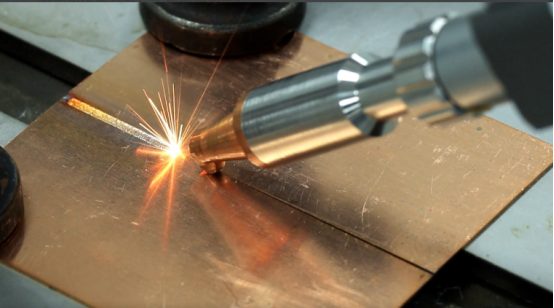
Power density is the key—not rated power alone.
2. Single-Mode or Multi-Mode—How Do You Choose?
Ask yourself one question:
Precision or penetration?
Single-mode (M² < 1.3):
- Thin copper or aluminum (<3 mm)
- Tight weld geometry required
- EV batteries, hairpin/flat-wire motors, medical components
- Typical power range: 1–4 kW
Multi-mode:
- Thick plates (>5 mm)
- High-throughput applications requiring deep penetration
- Weld appearance is less critical
- Typically 6 kW+
Define the application requirements first, then select the appropriate beam quality.
3. Why Am I Getting So Much Spatter When Welding Copper?
There are three major causes, roughly in order of likelihood:
① Power density below the keyhole threshold
Insufficient power density prevents a stable keyhole from forming.
Solution: Increase power density with a smaller spot size, higher laser power, or both.
② Unstable keyhole geometry
A single beam can generate an asymmetric vapor plume, causing the keyhole opening to become unstable.
Solution: Consider ring-mode / FRM beam shaping. In copper busbar welding, FRM beam shaping has been reported to reduce spatter by 60–80% compared with single-mode beam profiles, depending on process conditions.
③ Surface contamination
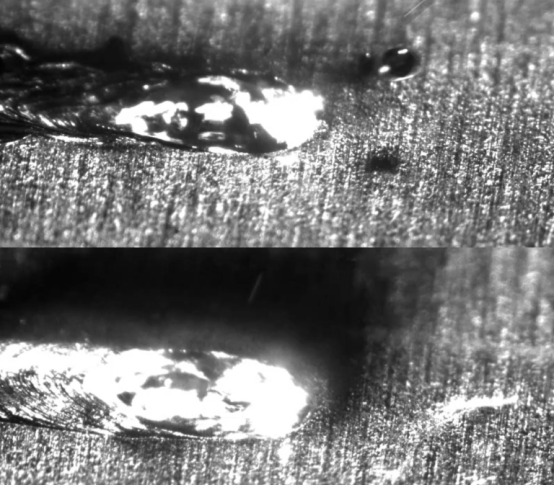
Even slight oxidation or contamination can change local absorptivity and destabilize the welding process.
4. What Causes Porosity in Aluminum Laser Welding?
There are three fundamental causes:
① Hydrogen porosity
Dissolved hydrogen becomes trapped as the weld pool solidifies.
Solution: Thorough surface preparation, dry filler wire, and high-purity argon (99.999%).
② Keyhole porosity
The keyhole collapses before trapped gas can escape.
Solution: Optimize power modulation or apply slight defocusing to improve keyhole stability.
③ Insufficient power density
If the process operates below the stable keyhole regime, penetration and keyhole stability can suffer.
For aluminum, the stable keyhole threshold can be above ~3.5 MW/cm², depending on material and process conditions.
5. What Is BPP, and Why Can It Be More Important Than M²?
M² describes how closely a beam approaches an ideal Gaussian beam and is useful for comparing lasers under consistent measurement conditions.
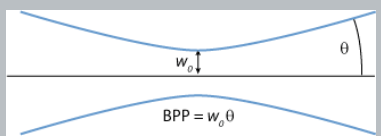
BPP (Beam Parameter Product) provides a practical measure of beam quality and focusing performance:
BPP = Beam Waist Radius (mm) × Half-Angle Divergence (mrad)
Examples:
- 14 μm / 0.065 NA → BPP ≈ 0.45 mm·mrad
- 50 μm / 0.12 NA → BPP ≈ 3.0 mm·mrad
Generally:
Lower BPP → tighter focusing → higher achievable power density
For demanding copper welding applications at 3 kW, a BPP of approximately ≤0.5 mm·mrad can be advantageous.
6. Can Fiber Lasers Replace TIG Welding?
For many thin-sheet applications, yes.
Speed: Fiber laser welding can be 5–20× faster than TIG for comparable applications and process conditions.
Heat input: Laser welding delivers a narrower and more localized heat-affected zone, resulting in less distortion and a smaller HAZ.
Automation: TIG relies heavily on skilled operators, while fiber laser welding can be highly automated and integrated with robotic systems.
For components with wall thicknesses below 4 mm, the economic payback of switching from TIG to laser welding can often be achieved within 12–18 months, depending on production volume and equipment configuration.
7. Which Shielding Gas Should Be Used for Laser Welding?
Argon (Ar)
A versatile choice for:
- Copper
- Aluminum
- Stainless steel
- Titanium
Advantage: Cost-effective and widely available.
Helium (He)
Suitable for:
- High-power applications >4 kW
- Deep penetration
- Applications requiring stronger plasma suppression
Disadvantage: Higher cost.
Ar/He Mixtures
Can be considered for:
- 6 kW+ applications
- Stainless steel
- Titanium
Nitrogen (N₂)
Can be used for non-critical carbon steel applications and offers low cost.
Avoid nitrogen for stainless steel or highly reactive metals when metallurgical properties are critical.
8. How Do You Choose the Right Delivery Fiber Diameter?
The delivery fiber diameter affects the minimum achievable focused spot size and the maximum achievable power density.
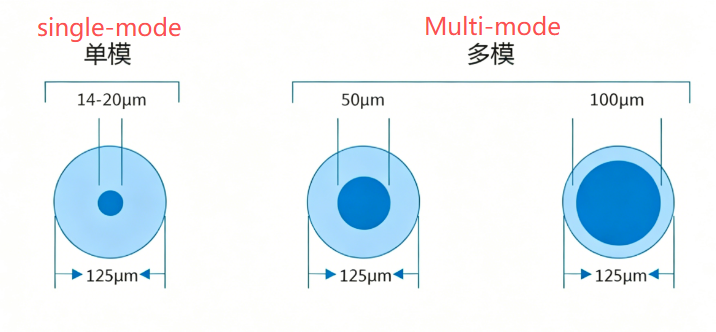
14–20 μm
- Copper welding
- Precision applications
- 1–4 kW
50 μm
- General welding
- Thin-sheet processing
- 3–10 kW
100 μm
- Thick-plate welding
- Structural components
- 6–20 kW
Important:
Smaller fiber cores generally require smaller minimum bend radii.
This is especially important when integrating the laser into robotic or collaborative-robot welding heads.
9. Conduction Welding vs. Keyhole Welding—What’s the Difference?
Conduction Welding
<1 MW/cm²
Laser energy is absorbed at the surface and transferred through thermal conduction.
Typical characteristics:
- Wide, shallow weld pool
- Lower penetration
- Low spatter
Keyhole Welding
Typically >1–5 MW/cm², depending on the material and process conditions.
The laser vaporizes material and creates a vapor-filled cavity, significantly increasing energy coupling.
Typical characteristics:
- Narrow weld
- Deep penetration
- Higher power density
For copper, the actual keyhole transition depends strongly on wavelength, surface condition, beam profile, spot size, and process parameters. Therefore, a single universal threshold should not be assumed.
10. How Do You Know When a Fiber Laser Needs Maintenance?
Immediate attention required:
- Output power drops by >5%
- Noticeable beam-quality degradation
- Unexpected thermal shutdown
- Photodetector or internal alarm
Quarterly inspection:
- Clean and inspect all fiber-optic connectors according to IEC 61300-3-35
- Inspect the delivery fiber for damage
- Verify cooling-system performance
- Check optical interfaces for contamination or damage
One of the most common causes of fiber-laser damage:
Contaminated or damaged fiber connectors.
Always inspect and clean the connector before every reconnection.
Final Takeaway
For fiber laser welding, beam quality, power density, process stability, and optical cleanliness can matter just as much as—and sometimes more than—rated laser power.