
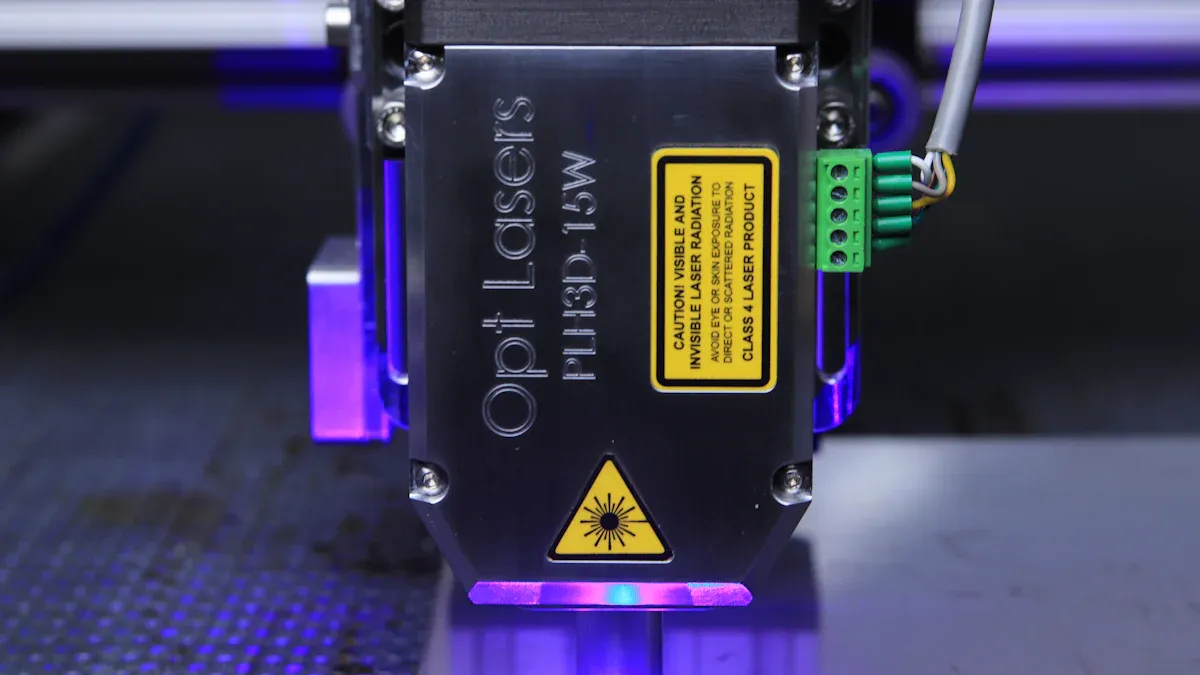
Choosing the right blue fiber laser means looking at a few key things. Many companies use blue fiber lasers now. They are good for metals like copper and aluminum. These lasers have wavelengths from 400 to 480 nm. This helps the metals absorb the laser better. It also lets people use the lasers in more ways. The market for blue lasers is getting bigger. It is worth billions of dollars. Many factories want these lasers. To pick the best one, buyers should think about what they will use it for, how strong the laser is, what materials it works with, safety, speed, the size of the work area, and which supplier to choose. A blue lasers buying guide or a laser engraver buying guide can help match your needs to the laser’s features.
- Main things to think about:
- What you will use it for (cutting, engraving, marking)
- How strong the laser is
- What materials you will use
- Safety
- Speed
- Size of the work area
- Which supplier to pick
A step-by-step checklist makes it easier to choose and helps make sure the laser is right for you.
Key Takeaways
- Figure out what you need before picking a blue fiber laser. Think about what jobs you want to do, like cutting, engraving, or marking.
- Check the laser’s power and speed for your materials. You need more power to cut metals. Less power works for engraving softer things.
- Make sure the blue fiber laser works with your materials. Metals like copper and aluminum work best. Plastics and wood need careful settings so they do not get damaged.
- Safety is very important when using a fiber laser. Always wear safety gear and follow rules to stay safe and healthy.
- Pick a supplier who is reliable and gives help and training. A good supplier can make your experience better and help you use your laser well.
What Is a Blue Fiber Laser?
Principles and Features
Blue fiber laser technology uses optical fiber as its main part. Engineers add rare earth ions to the fiber. This makes the gain medium. The fiber laser makes light by stimulated emission. To make blue light, the system uses frequency doubling. This means it takes infrared laser light and sends it through a special crystal. The crystal changes the light’s frequency and turns it blue. When light waves mix in the crystal, the frequency multiplies. This lets the fiber laser make blue light between 400 and 480 nm. These blue wavelengths help metals soak up the laser energy better.
- Blue fiber lasers have rare earth ions inside the fiber.
- Stimulated emission makes the laser light.
- Frequency doubling changes infrared light to blue light.
- Nonlinear optical crystals help multiply the frequency.
Fiber laser systems are very precise and work well. The technology makes the system efficient and steady. The fiber laser can run for a long time without losing quality. Many industries use fiber lasers for cutting, engraving, and marking.
Benefits for Fiber Laser Systems
Blue fiber laser systems have many good points over other types. They help metals like copper and gold absorb more energy. This gives better welding and uses less energy. The base material and melt pool take in about the same power. This makes melting easier to control. The system lowers problems like voids and spatter. It also makes things stronger and helps electricity flow better.
| Material | Absorption Increase (%) | Energy Consumption Reduction (%) |
|---|---|---|
| Copper | 10-60% | 84% lower in welding |
| Gold | 10-60% | 92% lower in welding |
- Blue fiber lasers help materials absorb more energy.
- They cut down on voids and spatter in welds.
- Welding uses less energy.
Fiber laser systems use less energy and make fewer mistakes. The technology helps companies save money and make better products. The fiber laser works with many materials and is fast.
Blue Fiber Laser vs. Other Fiber Laser Systems
Comparison with Traditional Fiber Lasers
Blue fiber laser systems have some clear benefits over traditional fiber lasers. Engineers use fiber laser technology to make very exact beams. Blue fiber lasers work better with metals like copper. Copper takes in 65% of the blue laser beam at 450 nm. Traditional fiber lasers at 1.064 µm only let copper take in 5%. This means blue fiber lasers can work faster and use less energy.
Blue fiber lasers need smaller cooling units. Traditional fiber lasers need bigger cooling systems because they waste more energy. Blue fiber lasers also have a smaller beam waist. This helps them cut and mark with more accuracy. Many factories pick blue fiber lasers for jobs that need to be very exact.
- Blue fiber lasers work well with copper.
- Traditional fiber lasers need more cooling.
- Blue fiber lasers are more accurate.
Fiber laser systems help companies save money and make better products. Blue fiber laser systems also help with new uses in electronics and medical devices.
Comparison with CO2 and Solid-State Lasers
Blue fiber laser systems are different from CO2 and solid-state lasers. CO2 lasers use gas to make light. Fiber laser systems use fiber as the gain medium. Blue fiber lasers turn electrical power into light power better. This helps factories spend less money to run them.
Solid-state lasers use crystals or glass. Fiber laser systems use fiber, which makes them steady. Blue fiber lasers can vaporize at a rate of 3.4 mm³/s. This is as good as or better than other lasers for cutting and surgery. Using Tm fiber and blue diode lasers together makes cutting better and helps with blood clotting in medical work.
| Laser Type | Efficiency | Precision | Cooling Needs | Material Absorption |
|---|---|---|---|---|
| Blue Fiber Laser | High | High | Low | Excellent (Copper) |
| Traditional Fiber | Medium | Medium | High | Low (Copper) |
| CO2 Laser | Medium | Medium | Medium | Low (Copper) |
| Solid-State Laser | Medium | Medium | Medium | Medium |
Blue fiber lasers give factories more ways to do their work. They help process metals and other things with less waste. Blue fiber lasers also help with new ideas in medicine and electronics.
Blue fiber laser systems are more efficient, more accurate, and cost less than traditional fiber lasers, CO2 lasers, and solid-state lasers.
Fiber Laser Applications and Materials
Cutting, Engraving, and Marking Uses
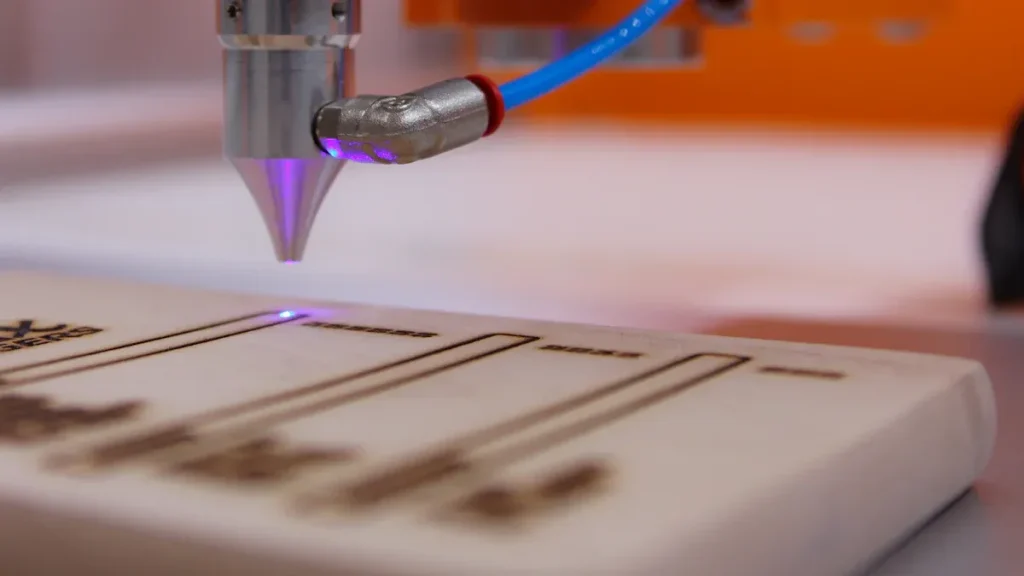
Fiber laser systems are used in many jobs. They help cut, engrave, and mark things. The laser beam is strong and can cut metal sheets. Factories use fiber laser systems to make car and electronic parts. Cutting with a fiber laser makes smooth edges and saves time. Engraving puts logos or numbers on tools and devices. Marking adds codes or labels to products so companies can track them.
Blue fiber laser systems are good for special tasks. They help weld copper in electric motors. They also join small parts in portable electronics. In battery factories, fiber laser systems put together thin foils for lithium-ion batteries. These fiber laser applications show how helpful the technology is today.
Tip: Fiber laser systems can cut, engrave, and mark many shapes and designs. This makes them great for custom work.
Compatible Materials
Fiber laser systems work with lots of materials. Stainless steel is often used for cutting and engraving. Grades like 304 and 316 are common in factories. Mild steel and carbon steel also work well with a fiber laser engraver. Aluminum is another good material for fiber laser systems. Many companies use fiber laser systems for brass and copper. These metals need special care, but fiber laser technology makes it easier.
A fiber laser can cut, engrave, and mark different materials fast and accurately. The fiber in the laser system helps control the beam for each material. This means the fiber laser can do many jobs without changing tools.
| Material | Cutting | Engraving | Marking |
|---|---|---|---|
| Stainless Steel | ✅ | ✅ | ✅ |
| Mild Steel | ✅ | ✅ | ✅ |
| Aluminum | ✅ | ✅ | ✅ |
| Brass | ✅ | ✅ | ✅ |
| Copper | ✅ | ✅ | ✅ |
A blue fiber laser works better for copper and aluminum. Fiber laser systems let people work with many materials and get clean, strong cuts and marks.
Selection Criteria for Blue Fiber Laser
Picking the right blue fiber laser for a business takes careful steps. Each business should look at things like laser power, speed, working area, materials, safety, and which supplier to choose. This part shows how to match these things to what you need for cutting, engraving, and marking.
Laser Power and Speed
Laser power and speed are very important for how well a fiber laser works. The best laser power depends on what you want to do and what material you use. For example, cutting metal needs more power than engraving wood. The table below shows good power and speed settings for different materials:
| Material | Speed (mm/min) | Power (%) |
|---|---|---|
| Wood | 500-1000 | 15-40 |
| Plastic | 1000-1500 | 10-30 |
| Acrylic | 1000-1500 | 20-50 |
| Metal | 500-1000 | 50-100 |
If a business wants to cut metal, it should pick a high-power blue diode laser. Engraving or marking wood or plastic does not need as much power. Marking speed also changes how good the finished product looks. Going too fast can save time, but it might make the marks less clear. Studies show that changing laser power and speed can help welds go all the way through and make better joints. Blue fiber lasers can make strong joints and use less energy than other lasers. This is good for businesses that want to save energy and get good results.
Working Area and Precision
The working area tells how big a piece the fiber laser can work on. Businesses should pick a working area that fits their biggest parts. The table below shows some common working area sizes for blue fiber lasers:
| Processed Area Size | Dimensions |
|---|---|
| Area 1 | 3.54″ x 3.54″ [90 mm x 90 mm] |
| Area 2 | 0.71″ x 0.71″ [18 mm x 18 mm] |
| Area 3 | Φ0.236″ [6 mm] & Φ0.119″ [3 mm] |
| Area 4 | 2.76″ x 1.77″ [70 mm x 45 mm] |
| Area 5 | 3.74″ x 2.68″ [95 mm x 68 mm] |
| Area 6 | 3.54″ x 3.54″ [90 mm x 90 mm] |
| Area 7 | 2.76″ x 1.77″ [70 mm x 45 mm] |
Precision is just as important as the working area. Fiber lasers can make a very small beam spot. This helps with detailed engraving and marking. Many fiber laser engraver models can mark with high precision. Some use MOPA or Non-MOPA technology for even better results. These systems can make marks that last on metal and other materials. Laser marking systems with high precision help businesses put clear logos, numbers, and codes on products.
Tip: A good fiber laser engraver with a big working area and high precision can do many jobs, from cutting to detailed engraving.
Material Compatibility
It is important to know if the blue fiber laser works with your material. Not all materials react the same way to laser energy. The table below shows how different materials work with fiber lasers:
| Material Type | Compatibility | Key Considerations |
|---|---|---|
| Metals | Highly Compatible | High thermal conductivity, effective for rust and paint removal. Reflective metals may need higher energy lasers. |
| Stone | Uneven Compatibility | Variable absorption rates; risk of thermal cracking if energy density is too high. |
| Glass | Low Compatibility | High risk of surface damage; generally not suitable for laser cleaning. |
| Plastics | Mixed Results | Risk of melting; requires careful selection of laser type. |
| Wood | Selective Applications | High sensitivity; requires controlled energy delivery to avoid damage. |
Blue fiber lasers work best with metals like copper and aluminum. These metals soak up blue light well, so cutting, engraving, and marking are easier. For plastics and wood, you need to use the right settings so you do not damage them. Businesses should always check if the material works with the laser before starting a new job.
Safety Considerations
Safety is very important when using a fiber laser. Blue fiber lasers can hurt people if not used the right way. The main safety risks are:
- The strong laser light can hurt your eyes or burn your skin.
- Fumes and dust in the air can be bad for your health.
- There is a fire risk when cutting or engraving things that can burn.
Businesses must follow safety rules and use the right safety gear. Important safety rules include:
- ANSI Z136.1 for general laser safety.
- FDA/CDRH rules for laser products.
- OSHA rules for workplace safety.
- ANSI Z136.3 for healthcare places.
- ANSI Z136.9 for factories.
Note: Always wear safety glasses and make sure there is good air flow when using a fiber laser engraver.
Supplier Selection Criteria
Picking the right supplier helps businesses get the best laser for their needs. A good supplier gives more than just the machine. They also give help, training, and good service. The table below shows what to look for in a supplier:
| Criteria | Description |
|---|---|
| Technical Capability | Assess expertise in material science and machining precision relevant to laser applications. |
| Quality Verification | Look for certifications like ISO 9001 and inquire about internal QC procedures and testing methods. |
| Production Capacity | Evaluate equipment capabilities and lead time consistency to meet volume requirements. |
| Supplier Communication | Prioritize responsiveness and flexibility in handling custom requirements for effective project management. |
Checking the supplier’s skills makes sure you get a good fiber laser. Businesses should also look for good support after buying. Many suppliers offer different help plans, like spare parts, online help, and loan machines if needed. Good service after buying includes setup, training, and help any time.
Picking the right supplier can help your business do better and succeed for a long time.
A business that follows these steps can find the best blue fiber laser for cutting, engraving, and marking. This way, they get better quality, work faster, and stay safe.
Practical Checklist and Summary Table
Step-by-Step Checklist
A business can use a simple checklist to pick the right blue fiber laser. This checklist shows each step and makes things easy to follow.
- Find out what materials you need to work on, like steel, aluminum, or plastics.
- Decide what you want to do, such as cutting, marking, or engraving.
- Figure out how many items you need to process each day.
- Set a budget for buying the laser and for future costs.
- Write down what you need, like types of materials, how many, and how exact the marks must be.
- Make a list of vendors who have good reviews and lots of experience with fiber laser systems.
- Ask suppliers for prices so you can compare them.
- Go to factories or demo centers to watch the laser machines work and check their quality.
- Test the laser on real materials to see if it marks and cuts well.
- Look at the money details and see how long it will take to earn back your investment.
- Talk about contracts and make clear rules for service to protect your business.
- Get the place ready for the laser, making sure the building and power are okay.
- Help with setting up the machine and check that it works right.
- Start using the laser, make the process better, and check the quality of marking and cutting.
Using a checklist helps a business make smart choices and makes sure the fiber laser does all the marking and cutting jobs needed.
Key Specifications Table
The table below lists important things to look for in a blue fiber laser. A business can use this table to compare models and pick the best one for marking and engraving.
| Specification | Value |
|---|---|
| Wavelength | 619 nm |
| Output power | 1-100 mW |
| Operation Mode | CW |
| Polarization Extinction Ratio | 18 dB |
| Power stability | <1% |
| Laser linewidth | <200 kHz |
| Beam quality | TEM00, M2~1.0 |
A business should check these things to make sure the fiber laser gives good marks and works well. The right engraver will help get strong results for both marking and engraving.
Picking the right blue fiber laser helps a business make clean marks and cuts. The table below shows important things to look at when picking a laser for your business:
| Factor | Blue Laser | Green Laser | Fiber Laser |
|---|---|---|---|
| Absorption Efficiency | Highest absorption rate (60%) | Mid-range efficiency | Lowest efficiency |
| Weld Stability | Ensures uniform melt dynamics | Provides steady weld pools | Often unstable initially |
| Power Capability | Rapid power increase, lower max | Low power, focuses on precision | Highest power output |
| Equipment Cost | Higher initial cost, lower operational costs | Higher initial cost, efficiency reduces long-term costs | Lowest cost per watt, economical for high power needs |
A business should always check if the laser’s features fit its marking and cutting jobs. Good suppliers and helpful support are important. The checklist and summary table give quick help for any business.
Here are the next steps for buyers:
- Think about the size and shape of your materials.
- Make a plan for moving and setting up the laser.
- Try out supplier demos and ask about support.
- Look at the warranty and training that come with the laser.
- Budget, size, and what materials you use are important for every business.
- Desktop fiber lasers are good for small shops. Bigger models work well in factories.
If a business follows these steps, it can pick the best fiber laser for marking, cutting, and doing well for a long time.
FAQ
What makes a blue fiber laser different from other lasers?
A blue fiber laser has a special wavelength. Metals like copper can absorb this light very well. This helps factories and shops cut and mark things faster. Other lasers do not work as well with these metals.
Can a fiber laser engraver mark both metal and plastic?
A fiber laser engraver can mark metals like steel and aluminum. It can also mark some plastics. You must change the settings for each material. This helps stop damage or bad marks.
How does a business choose the right fiber laser power?
A business thinks about the material and the job. Cutting thick metal needs more power. Engraving or marking uses less power. The right power helps the laser work fast and make clean marks.
What safety steps should workers follow when using a fiber laser?
Workers must wear safety glasses to protect their eyes. They should keep the area clean and clear. Good airflow helps remove fumes. The laser can burn skin or hurt eyes. Safety rules keep everyone safe.
Does a fiber laser need much maintenance?
A fiber laser needs cleaning and checks often. The system can run for many hours and still work well. Maintenance helps the laser last longer and stops problems.