
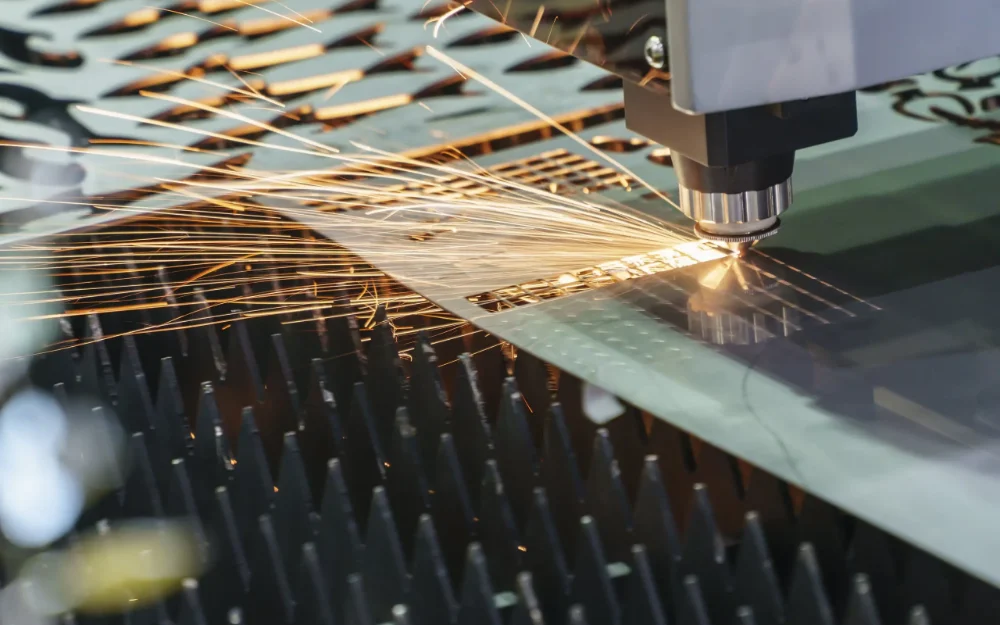
The 100,000-hour figure attached to nearly every fiber laser source product page is real, but it is widely misunderstood. This guide explains what that number actually measures, the physics behind why temperature and power loading affect lifespan as dramatically as they do, and the specific operating practices that determine whether your source reaches the high end or the low end of its realistic service life.
How many hours does a fiber laser source actually last?
There is no single answer — actual lifespan depends on operating temperature, power loading, duty cycle, and maintenance quality, and these variables can shift real-world service life by a factor of two or more in either direction from the commonly cited figure. The 100,000-hour number itself is a real statistical measurement, but it describes a specific, narrow condition that most production environments do not match exactly.
The 100,000-hour figure represents a theoretical maximum rather than a guaranteed service life, and the actual longevity of fiber laser systems is a complex interplay of multiple variables including the quality of the pump diodes, the operating environment, duty cycle intensity, and maintenance practices. In an ensemble pump-diode design with built-in redundancy, fiber lasers emitting several hundred watts can be constructed with a combined MTBF greater than 100,000 hours — a design detail that matters enormously for interpreting what the number means, covered in the next section.
Is the 100,000-hour MTBF figure real, or is it a marketing number?
It is a real, measurable statistic — but it measures something narrower than “how long the source will work.” It is the statistical mean time before failure for an ensemble of pump diodes under controlled laboratory conditions, corresponding to the point where output power has degraded by a defined threshold, not the point where the source stops functioning.
What does MTBF actually measure, and why is it an “ensemble” figure?
A fiber laser source does not rely on a single pump diode. Fiber laser systems are built using ensembles of pump sources with built-in redundancy, allowing the overall system MTBF to exceed 100,000 hours even though individual diode lifetimes vary within that ensemble. This redundant architecture is precisely why a source can continue operating even as individual diodes within it begin to degrade — the ensemble’s combined output is what the MTBF figure describes, not any single component’s lifespan.
The MTBF measures the reliability of a laser by indicating how many hours the laser is expected to function before a failure occurs — and even after reaching that point, a high-quality industrial laser can often continue to operate well past its MTBF rating before failure risk rises sharply. This is a statistical distribution, not a hard cutoff: some units will show degradation earlier, some considerably later, and the published MTBF describes the statistical center of that distribution under the ensemble’s defined test conditions.
Why does “end of life” mean 20% power loss, not total failure?
The 100,000-hour MTBF figure does not correspond to the source ceasing to function. It typically corresponds to the point where the diode’s output power has dropped by about 20%. The laser may still function at that point, but it becomes less efficient and may struggle to cut materials at the same speed or thickness as when new.
This distinction matters for two practical reasons. First, it means the warranty or MTBF figure on a datasheet is not a service-life guarantee in the way a mechanical component’s wear-out rating might be — it is a defined degradation threshold, after which the source remains operational but at reduced capability. Second, it means that monitoring output power over time — not waiting for a failure event — is the correct way to track where your specific source sits relative to its rated MTBF. A source that has lost 15% of its rated power has not failed, but it is approaching the statistically defined threshold that the 100,000-hour figure describes.
Why does temperature have such a dramatic effect on laser source lifespan?
Temperature is the single most influential variable in pump diode lifespan, and the relationship is not a rough rule of thumb — it follows a well-established physical model from semiconductor reliability science. Operating a laser diode even modestly above its rated temperature accelerates degradation exponentially, not linearly.
Reliability studies show that operating a laser diode just 10°C above its rated temperature can reduce its lifetime by approximately half, a behavior consistent with Arrhenius-based degradation models. The Arrhenius model describes degradation as a thermally activated process — meaning the rate at which the semiconductor’s internal defects and degradation mechanisms progress increases exponentially with temperature, not proportionally. This is why temperature management has an outsized effect compared to most other variables in the system: a small temperature increase does not produce a small reduction in lifespan, it produces a compounding one.
Independent industry data from pump diode manufacturers reinforces the same pattern at a different temperature interval: AlGaInAs-based pump laser diode technologies typically show a failure rate that roughly triples for every 20°C increase in operating temperature, consistent with the same underlying thermally activated degradation physics described by the Arrhenius relationship.
The mechanism behind this sensitivity is specific: high-power laser diode facet oxidation is particularly sensitive to temperature and optical power density, and elevated junction temperature accelerates this and related degradation pathways within the semiconductor structure. The practical takeaway is that chiller performance and ambient operating temperature are not secondary maintenance items — they are the single largest lever you have over your source’s realistic service life.
| Operating temperature relative to rated spec | Approximate lifespan impact | Basis |
|---|---|---|
| At rated design temperature | Baseline (statistical MTBF as published) | Manufacturer test conditions |
| +10°C above rated temperature | ~50% reduction in expected lifespan | Arrhenius-based degradation model |
| +20°C above rated temperature | Failure rate approximately 3× baseline | AlGaInAs pump diode reliability data |
| Below rated temperature, properly cooled | Lifespan at or above published MTBF | Consistent with thermally activated degradation models running in reverse |
Does running a laser source at full power shorten its lifespan faster than running at partial power?
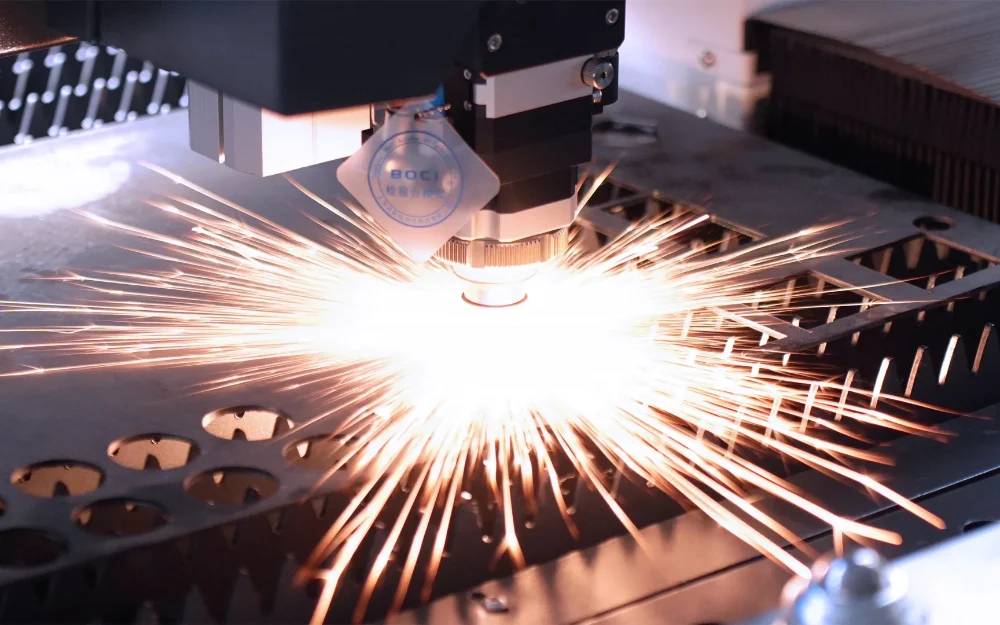
Yes, and the effect is large enough to be measured in orders of magnitude, not percentages. Driving a pump diode beyond its rated current to extract maximum output power trades a small gain in power for a substantial loss in service life.
A pump laser operating at its recommended maximum current may have an estimated lifetime greater than 10,000 hours; overdriving that same pump laser with just 20% more current can reduce the estimated lifetime to less than 1,000 hours. This is not a marginal trade-off — a relatively small increase in drive current produces an order-of-magnitude reduction in expected operating life. The relationship is consistent with the same thermally activated degradation physics discussed above: higher drive current means higher power dissipation at the junction, which means higher operating temperature, which accelerates degradation exponentially rather than linearly.
The practical implication for production operation is that running a source continuously at its absolute rated maximum — rather than at 80–85% of rated output — is not a neutral choice. It is a decision that meaningfully shortens expected service life in exchange for a relatively small gain in available power or cutting speed. For applications where the extra margin is not consistently needed, operating with headroom below the rated maximum is one of the most direct levers available for extending source lifespan.
Does duty cycle — continuous vs. intermittent operation — affect lifespan?
Yes, independently of average operating temperature. Continuous, high-intensity production schedules introduce a degradation pathway — repeated thermal cycling — that does not appear in the average temperature figure alone, even when the source spends most of its time within its rated temperature range.
Each time a source powers up from cold and reaches operating temperature, or cycles between standby and full-power states, the semiconductor materials inside the pump diodes undergo thermal expansion and contraction. Repeated over tens of thousands of cycles, this mechanical stress contributes to degradation mechanisms — dislocations and defect propagation within the semiconductor structure — that are distinct from, and additive to, the steady-state thermal degradation described by the Arrhenius model above. This is consistent with semiconductor laser diode reliability research showing that degradation occurs through multiple parallel pathways, with thermally activated gradual degradation as the dominant mechanism but cycling-related stress contributing independently.
In practice, this means two sources with identical average operating temperatures can show different degradation profiles if one runs in long continuous shifts and the other cycles frequently between standby and full power throughout the day. Minimizing unnecessary power cycling — keeping the source at a stable standby state between jobs rather than fully powering down and restarting — reduces this additive stress, though it must be balanced against the energy cost of maintaining standby readiness.
Is it true that letting a fiber laser source sit idle damages it?
No — this claim, which circulates periodically among machine operators, has no basis in the physics of how fiber laser sources work, and it does not appear in any peer-reviewed or manufacturer reliability literature on solid-state pump diode degradation. The pump diodes and gain fiber inside a fiber laser source are solid-state components; they do not have moving parts, fluids, or chemical processes that would deteriorate from simple inactivity in the way an internal combustion engine’s seals might.
This specific question has come up directly among machine operators — on the Practical Machinist forum, a user asked whether it is detrimental for fiber lasers to sit dormant for long periods because “the molecules in the laser sources tend to weaken,” a claim that other experienced operators in the same thread immediately and correctly identified as having no technical basis. The degradation mechanisms described throughout this article — thermally activated semiconductor decay, current overdrive, thermal cycling stress — all require the source to be operating, generating heat, and carrying current. None of them progress during idle time.
What can be a legitimate concern after extended idle periods is not degradation, but verification: confirming chiller coolant levels and quality, checking that fiber connectors and optics have not accumulated dust or contamination, and verifying alignment and output power before returning the source to full production use. These are maintenance checks following storage, not evidence that idle time itself causes wear.
How does fiber laser source lifespan compare to CO₂ laser lifespan?
Fiber laser source lifespan substantially exceeds the lifespan of the equivalent core component in a CO₂ laser system, and this is one of the clearest long-term cost advantages of fiber technology when comparing total cost of ownership between the two.
A CO₂ laser’s core component, the resonator, typically has a shorter lifespan, often in the range of 8,000 to 15,000 hours, before it requires a major service or refurbishment — and CO₂ lasers also have more consumables, such as resonator gas and internal mirrors, that require periodic replacement. Against a fiber laser source’s realistic operating life of tens of thousands of hours before meaningful degradation — even accounting for the temperature, loading, and duty cycle factors discussed above — this is not a close comparison. A CO₂ resonator reaching end of life multiple times over the operational lifetime of a single fiber laser source is the typical pattern, not an edge case.
This comparison is one of the structural reasons fiber laser technology has displaced CO₂ across most metal cutting applications: the source component lifespan difference compounds with the maintenance and efficiency differences covered elsewhere in fiber-vs-CO₂ comparisons into a substantial total cost of ownership gap over a machine’s service life.
What actually determines whether your source reaches the high end or low end of its lifespan range?
Three variables — operating temperature, power loading relative to rated maximum, and duty cycle pattern — interact to determine where any individual source falls within its realistic lifespan distribution, and they are not independent of each other.
A source running near its rated temperature ceiling and near its rated maximum power simultaneously experiences the compounding effect of both degradation pathways at once: the elevated temperature from inadequate cooling and the elevated junction temperature from current overdrive both accelerate the same underlying thermally activated degradation process. Conversely, a source with strong thermal management (chiller performance with margin, clean operating environment, stable ambient temperature) running at 80–85% of rated power rather than the absolute maximum, with minimized unnecessary power cycling, is positioned to meet or exceed its published MTBF rather than fall short of it.
The practical reality is that two identical fiber laser sources purchased at the same time, installed in different facilities with different cooling discipline and different operating habits, can show meaningfully different degradation timelines — not because either unit was defective, but because the variables described in this article compound differently in each operating environment.
How to maximize your fiber laser source’s lifespan — a practical checklist
The degradation mechanisms covered above translate into a small number of concrete operating practices that meaningfully extend realistic service life.
| Action | Specific recommendation | Why it matters |
|---|---|---|
| Chiller performance | Size chiller with margin above minimum rated coolant flow and temperature spec; verify coolant quality regularly | Temperature is the dominant degradation variable; a 10°C deviation can halve expected lifespan |
| Power loading | Operate at 80–85% of rated maximum during normal production rather than continuous full-rated output | Current overdrive of even 20% can reduce expected diode life by an order of magnitude |
| Ambient environment | Keep the source enclosure in a climate-controlled area; avoid placement near other heat-generating equipment | Ambient temperature directly affects the thermal margin the chiller has to work with |
| Duty cycle management | Minimize unnecessary full power-down and restart cycles between jobs; use standby mode where available | Thermal cycling contributes an additive degradation pathway independent of average temperature |
| Contamination control | Keep delivery fiber connectors and cutting head optics clean; follow manufacturer cleaning intervals | Contamination increases back reflection risk and can cause localized heating at the fiber interface |
| Power output monitoring | Track output power over time against the source’s rated specification, not just functional on/off status | Degradation is gradual; monitoring lets you plan replacement before it affects production quality |
| After extended idle periods | Verify coolant condition, check optics for contamination, confirm output power before resuming full production | Idle time itself does not cause degradation, but unmonitored systems can develop issues during storage |
When should you start planning for source replacement?
The 20% power degradation threshold associated with the published MTBF figure is a useful planning marker, not an emergency trigger — production-relevant planning should begin well before output has degraded that far.
Tracking output power against the source’s original rated specification at regular intervals — rather than waiting for a visible quality or speed problem in production — gives you the lead time to plan a replacement or rebuild around your production schedule rather than reacting to an unplanned capability shortfall. A source showing 5–10% power loss from its rated specification is not yet at end of life by the MTBF definition, but it is the point at which budgeting for replacement should begin, particularly for production lines where cutting speed margin is already tight relative to current order volume.
FAQ
Does a fiber laser source stop working completely at the end of its MTBF rating? No. The 100,000-hour MTBF figure typically corresponds to approximately 20% output power degradation, not functional failure. The source continues to operate past this point, though with reduced power output and potentially reduced cutting speed or thickness capability, and failure risk increases as the source moves further past its rated MTBF.
Can I run my fiber laser source at 100% power continuously without damaging it? You can run it at rated power without exceeding manufacturer specifications, but doing so continuously trades available lifespan for available power. Overdriving a pump diode by just 20% above its recommended current can reduce its expected lifetime from over 10,000 hours to under 1,000 hours, illustrating how sensitive diode lifespan is to power loading. Running at 80–85% of rated maximum during normal production, reserving full rated power for applications that specifically require it, meaningfully extends realistic service life.
How can I tell if my fiber laser source is approaching end of life? Track output power against the source’s original rated specification at regular intervals rather than waiting for a visible production problem. A gradual decline of 10–20% from rated output, combined with the source needing more input current to maintain the same output level, are the characteristic signs of approaching the MTBF-defined degradation threshold — the same pattern described in pump diode reliability literature where diminishing output requires progressively more drive current to compensate.
Is it true that idle fiber laser sources degrade from sitting unused? No. Fiber laser source degradation mechanisms — thermally activated semiconductor decay, current overdrive effects, and thermal cycling stress — all require the source to be operating and carrying current; none of them progress during idle time. This is a claim that circulates among equipment operators without a basis in solid-state laser diode physics; the legitimate concern after extended idle periods is verifying coolant condition and optical cleanliness before resuming use, not degradation from the idle time itself.