


Rise time describes how quickly a fiber laser reaches its full power after turning on. Fall time measures how fast the laser drops to zero when it turns off. These parameters help users understand how lasers respond during operation. Accurate measurements support better performance and application results.
- Rise time and fall time affect the quality of laser output.
- Users should check these values when choosing fiber laser sources.
Key Takeaways
- Understand rise time and fall time to improve laser performance. Shorter times lead to sharper marks and cleaner cuts.
- Choose lasers with fast driver circuits and clean optics. These factors enhance response times for better results.
- Regular maintenance and calibration keep lasers operating at peak efficiency. This ensures optimal rise and fall times for various applications.
Rise Time and Fall Time Basics in Lasers
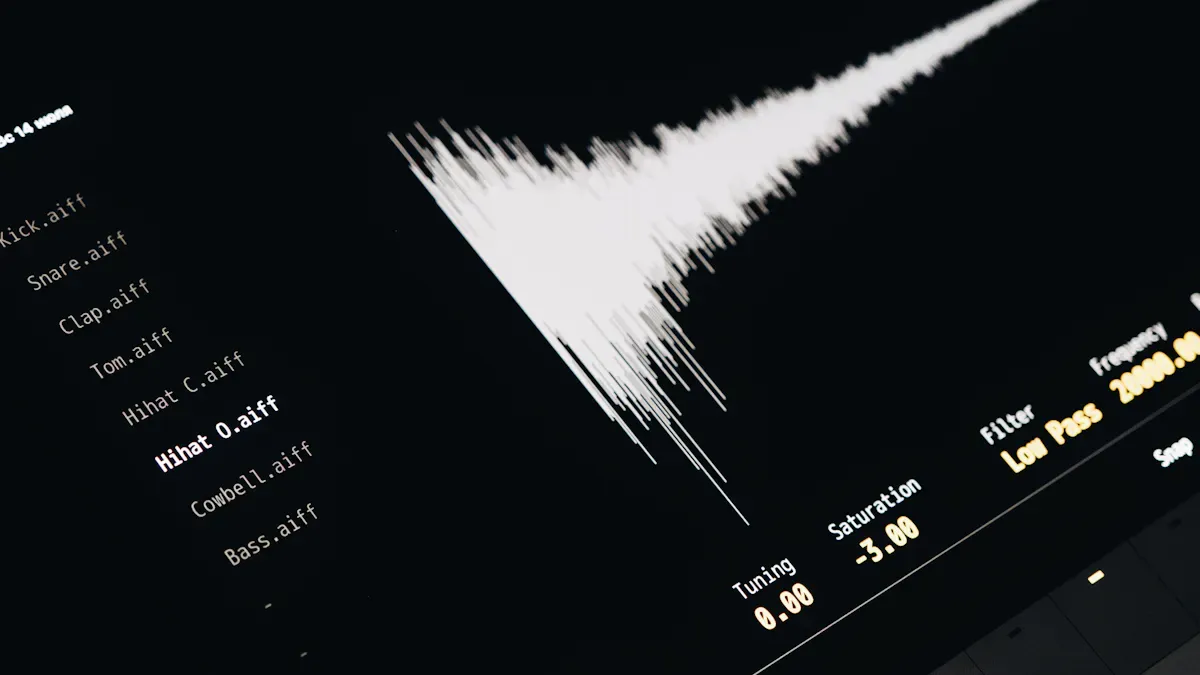
What Is Rise Time in a Laser?
Rise time describes how fast a laser output increases from a low level to its maximum value. In most cases, engineers measure rise time from 10% to 90% of the final output power. Some systems use a 20% to 80% range instead. A short rise time means the laser can start emitting light very quickly. This feature is important for applications that need fast and precise control, such as laser marking or high-speed communication.
What Is Fall Time in a Laser?
Fall time is the opposite of rise time. It shows how quickly the laser output drops from its maximum value back to a low level. Like rise time, fall time can be measured from 90% to 10% or from 80% to 20% of the output. A short fall time allows the laser to stop emitting light almost instantly. This helps prevent unwanted marks or errors in tasks like laser cutting.
Measurement Methods and Thresholds
Engineers use oscilloscopes or fast photodetectors to measure rise time and fall time. They look at the laser output signal and record how long it takes to move between the chosen thresholds. The most common thresholds are 10% to 90% and 20% to 80%. The choice depends on the application and the type of laser. There is an inverse relationship between rise time and bandwidth. A laser with a shorter rise time has a higher bandwidth, which means it can handle faster signals. Rise time is not the same as slew rate. Slew rate measures the maximum speed of change, while rise time measures the total time to go from one level to another.
Tip: Always check the measurement thresholds when comparing laser specifications.
Why Rise and Fall Times Matter for Laser Applications
Impact on Laser Performance
Rise time and fall time play a key role in how a laser performs in real-world tasks. When a laser switches on, the rise time shows how quickly it reaches its peak output. A short rise time means the laser can deliver energy almost instantly. This is important for marking, where sharp, clear lines are needed. If the rise time is too long, the laser may not reach its peak before the next command, causing weak or uneven marks.
Fall time is just as important. When the laser turns off, a fast fall time ensures the output drops quickly to zero. This prevents extra marks or unwanted heat. In marking, a slow fall time can blur the edges of a design. For pulsed laser systems, both rise time and fall time control how well the laser can create short, powerful bursts. These bursts are needed for marking and other high-speed uses.
Factors Affecting Rise and Fall Times
Several factors can change how fast a laser reaches its peak or drops to zero. The design of the laser source matters. Fiber lasers with advanced electronics often have shorter rise and fall times. The type of driver circuit also affects these times. Some circuits can switch the laser on and off faster than others.
The quality of the optical components inside the laser can make a difference. Clean, well-aligned optics help the laser reach its peak faster. The temperature of the system can also play a role. High temperatures may slow down the response of the laser, making the rise time and fall time longer.
Note: Regular maintenance and calibration help keep the laser working at its best speed.
Application Examples: Marking, Cutting, Communications
Marking is one of the most common uses for fiber lasers. In laser marking applications, the laser must reach its peak quickly to make sharp, clear marks. Each time the laser fires, it needs to hit its peak and then drop to zero before the next mark. If the rise time or fall time is too slow, the marks can look faded or have rough edges. Marking machines often use pulsed laser sources to get the best results.
In cutting, the laser must deliver high energy at its peak for a short time. A fast rise time ensures the laser starts cutting right away. A quick fall time stops the cut cleanly. This helps prevent extra heat from spreading to nearby areas.
Communications use lasers to send signals. Here, the laser must switch between on and off states very quickly. Short rise and fall times allow the laser to send more data in less time. This is important for fiber optic networks that need to move large amounts of information.
The table below shows how rise time and fall time affect different applications:
| Application | Importance of Rise Time | Importance of Fall Time | Peak Requirement |
|---|---|---|---|
| Marking | Very High | Very High | Sharp, clear marks |
| Cutting | High | High | Clean, fast cuts |
| Communications | Critical | Critical | Fast data transfer |
Optimizing Rise and Fall Times
To get the best results from a fiber laser, users can take steps to improve rise time and fall time. Here are some practical tips:
- Choose a laser with a fast driver circuit. This helps the laser reach its peak quickly.
- Keep the optical path clean and well-aligned. Dust or misalignment can slow down the laser response.
- Use pulsed laser sources for marking and other tasks that need sharp, quick bursts.
- Monitor the temperature of the laser system. Cooling systems can help keep the laser at the right temperature for fast response.
- Regularly check and calibrate the laser. This keeps the rise time and fall time within the desired range.
Tip: For marking, always test the laser on sample materials first. This helps ensure the rise time and fall time are fast enough for sharp, high-quality marks.
By understanding and controlling rise time and fall time, users can improve the speed, precision, and quality of their laser systems. This leads to better results in marking, cutting, and communications.
Understanding rise and fall times in fiber lasers helps users control power, pulse energy, and pulse duration. Fast response improves welding, cleaning, and texturing. High peak power and short duration boost welding and cleaning. Cleaning needs precise power and pulse energy. Texturing uses controlled pulse duration. Welding, cleaning, and texturing all depend on peak power, pulse energy, and duration.
- Cleaning: 6 times
- Welding: 4 times
- Texturing: 4 times
- Power: 10 times
- Duration: 9 times
- Pulse energy: 7 times
- Pulse duration: 6 times
- Peak power: 9 times
- Laser: 1 time
Always check power, pulse energy, and peak power when selecting a laser for welding, cleaning, or texturing.
FAQ
What is the difference between pulse duration and rise time in a laser?
Pulse duration measures how long the pulse lasts. Rise time shows how quickly the laser reaches full laser power during the start of the pulse.
How does wavelength affect pulse quality in fiber lasers?
Wavelength controls how the pulse interacts with materials. Different wavelengths can change pulse absorption, pulse marking quality, and pulse efficiency for each laser application.
Why is laser power important for pulse applications?
Laser power sets the energy in each pulse. Higher laser power can create stronger pulses, improve pulse cutting, and allow for faster pulse processing at the right wavelength.