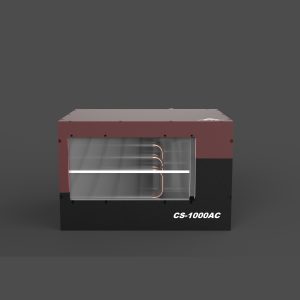
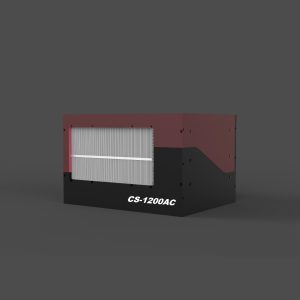
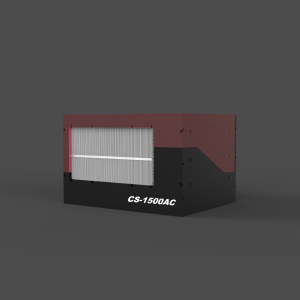
Additive Manufacturing - Laser Cladding and Laser Hardening
Laser Cladding Solutions:
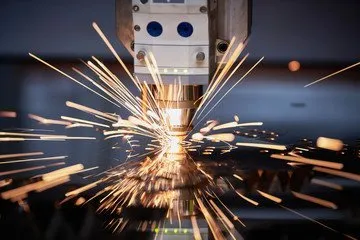
In the modern industrial landscape, the enhancement and protection of component surfaces is of paramount importance. Laser cladding, with its unique capabilities, has emerged as a leading solution in this domain.
Understanding Laser Cladding
Laser cladding is a process wherein a layer of material, often in powder or wire form, is fused onto the surface of a substrate using a laser as the heat source. This method not only provides protection to the underlying material but can also enhance its mechanical and physical properties.
Advantages of Laser Cladding
Precision: Allows for targeted application, ensuring minimal wastage and maximum adherence.
Versatility: Compatible with a wide range of materials, from metals to ceramics.
Durability: Offers enhanced wear, corrosion, and heat resistance to the treated surface.
Efficiency: Due to its localized treatment capability, it ensures minimal distortion of the substrate.
Quality: Produces a strong metallurgical bond, ensuring long-lasting protection and enhancement.
Laser Cladding Machine Video
Applications
Laser cladding solutions stand at the forefront of surface enhancement technologies, offering a harmonious blend of protection, enhancement, and efficiency. As industries continue to push the boundaries of material performance, laser cladding will undoubtedly play a pivotal role in meeting these challenges, ensuring longevity and reliability of components across various sectors.
- Industrial and Heavy Machinery
- Aerospace and Automotive
- Energy and Specialized Applications
Wear Protection: Enhancing surfaces of mining equipment, drilling tools, and other machinery exposed to extreme wear.
Corrosion Resistance: Treating surfaces of components used in chemical, maritime, and other corrosive environments.
Repair and Restoration: Restoring worn-out or damaged components to their original specifications, extending their service life.
Engine Components: Enhancing surfaces of turbine blades, combustion chambers, and other critical engine parts to withstand high temperatures and stresses.
Gear and Transmission: Improving wear resistance of gears, shafts, and bearings.
Surface Modification: Altering surfaces for specific functionalities, such as reduced friction or improved heat dissipation.
Oil and Gas: Protecting drilling bits, valves, and other equipment exposed to abrasive and corrosive environments.
Nuclear: Enhancing surfaces of components exposed to radiation and high temperatures.
Biomedical: Creating specialized surfaces for medical implants, ensuring biocompatibility and wear resistance.
Laser Hardening Solutions:
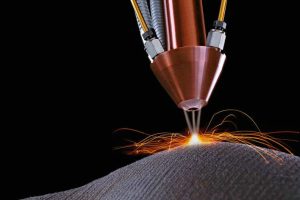
Laser Hardening is a surface hardening technology that uses a high-energy laser beam to rapidly heat the metal surface, followed by self-quenching (or external cooling), forming a hardened martensite layer with high wear resistance and hardness.
Working Principle of a Laser Hardening
Laser Heating: A laser beam (CO₂ or fiber laser) scans the metal surface with high energy density (10³~10⁵ W/cm²), raising the temperature to austenitizing range (e.g., 900~1200℃ for steel). Rapid Cooling: After the laser moves away, heat dissipates quickly into the substrate, causing ultra-fast cooling (10⁴~10⁶ ℃/s) and martensitic transformation in the surface layer.
Advantages of Laser Hardening
Precision: Controlled hardening depth (0.1~2mm)
Minimal Distortion: Narrow heat-affected zone (HAZ)
Eco-Friendly: No oil pollution
Hybrid Processing: Compatible with cladding/alloying
Key Features of Laser Hardening
High Precision: Localized treatment with minimal heat-affected zone (0.1~2mm) and negligible distortion.
Eco-Friendly: No quenching media (e.g., water/oil) required.
Enhanced Properties: Surface hardness increases by 20%~200% (e.g., 45 steel from HRC20 to HRC60).
Materials: Medium/high-carbon steels, alloy steels, cast iron (e.g., gears, molds, shafts).
Application
Automotive: Engine cylinders, crankshafts, gear hardening.
Mold Industry: Extending lifespan of stamping/injection molds.
Aerospace: Wear-resistant coatings for turbine blades, landing gear.