
Laser cleaning machines are primarily classified into continuous laser cleaning machines and pulsed laser cleaning machines based on their laser output modes. Each type has its unique features and applicable scenarios.

Whats is a Laser Cleaning Machines?
Laser cleaning machines are an emerging high-tech cleaning device that uses high-energy laser beams to clean the surfaces of objects, effectively removing dirt, oxides, coatings, and other contaminants. Compared to traditional cleaning methods, laser cleaning technology offers advantages such as efficiency, environmental friendliness, precision, and non-contact operation, making it widely used in various industries.
Working Principle of Laser Cleaning Machines
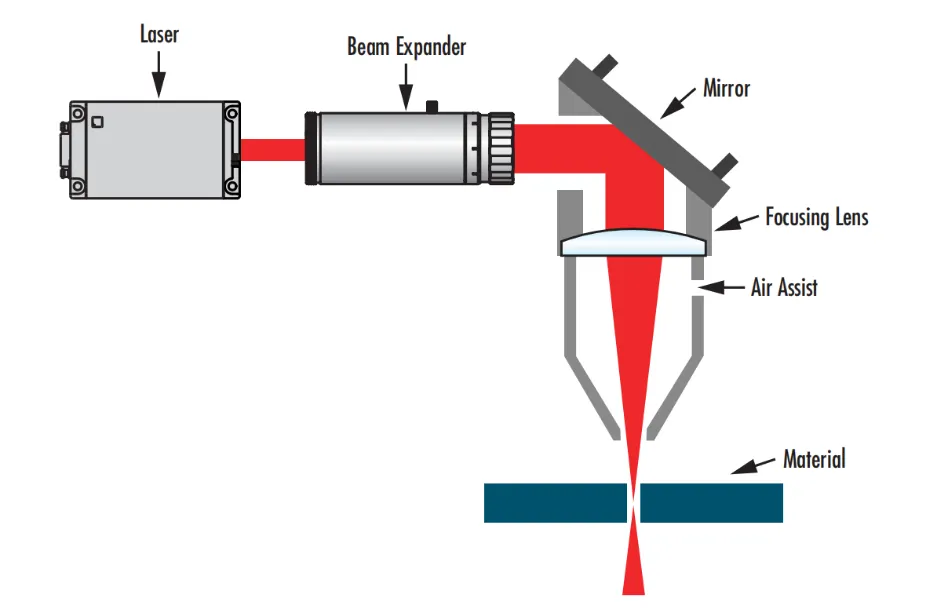
The working principle of a laser cleaning machine is based on focusing high-energy laser beams on the surface of an object. The laser energy is absorbed by surface contaminants, causing rapid thermal expansion and evaporation, which results in the contaminants peeling off or decomposing. Specifically, the laser cleaning process involves the following steps:
- Laser Irradiation: The laser beam is focused on the surface to be cleaned, and the laser energy is absorbed by the contaminants.
- Thermal Expansion and Evaporation: The absorbed energy causes the contaminants to heat up rapidly and expand or even evaporate into gas.
- Contaminant Removal: Due to thermal expansion and evaporation, the contaminants detach from the substrate surface, achieving the cleaning effect.
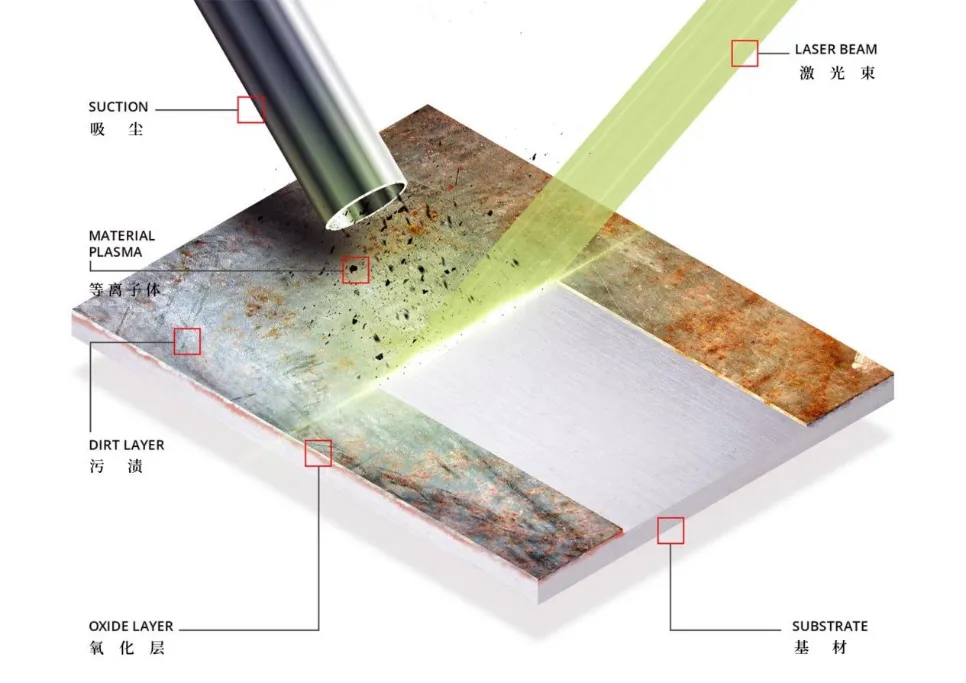
This non-contact cleaning method does not cause mechanical damage to the substrate and is suitable for cleaning various materials.
Main type of Laser Cleaning Machines
CW Laser Cleaning Machines
- Laser Output Mode: Continuous output with relatively uniform laser energy.
- Power and Efficiency: Typically have higher average power, suitable for large-area rapid cleaning.
- Thermal Impact Zone: Due to continuous laser output, the thermal impact zone is larger, potentially causing more heat impact on the substrate.
- Applicable Materials: Suitable for materials with good heat resistance, such as metals and large equipment.
Application:
- Large-area cleaning: Such as steel structures, ship surfaces, and building surfaces.
- Heavy contamination removal: Such as thick rust layers, oil stains, and coatings.
- Industrial applications: Suitable for industrial cleaning tasks requiring high efficiency and speed.
-1.png)